

Generic 400C Ceramic Sleeve Bearing Graphite Lubricated
<p><strong>400C Bearing Ceramic Sleeve Bearing</strong> — rated for continuous operation up to 800℃ with solid graphite lubrication.</p> <ul> <li>Ceramic construction maintains thermal stability in vacuum furnaces and kiln trucks where liquid lubricants vaporize</li> <li>Graphite transfer film provides low-friction performance without outgassing in high vacuum environments</li> <li>P4/P5 precision meets tight tolerances for semiconductor equipment guides</li> </ul> <p>Sourced through authorized distributor channels with batch traceability and country-of-origin documentation for import compliance.</p>
- 100% genuine -- COC & factory certificates available
- In-stock · bulk & small-batch orders accepted
- ISO · DIN · ABMA · JIS compliant
- Full customs clearance documentation provided
Product Details
Full Specifications & Description
Traceable Ceramic Supply — Each high temperature ceramic sleeve bearing with graphite lubrication ships with material certificates and origin documentation for import compliance.
Technical Specifications
| Parameter | Value |
|---|---|
| Designation | Generic 400C Ceramic Sleeve Bearing Graphite Lubricated |
| Bearing Type | Sleeve Bearing (Plain Bearing / Journal Bearing) |
| Operating Temperature Range | Up to 800℃ |
| Material | Ceramic |
| Precision Class | P4/P5 |
| Lubrication | Graphite lubrication (solid lubricant) |
| Vacuum Compatibility | High Vacuum Compatible |
Note: The "400C" suffix requires manufacturer catalog confirmation for exact designation meaning.
Application Suitability
| Industry | Typical Applications |
|---|---|
| Semiconductor Manufacturing | Vacuum chamber load-lock systems, wafer handling spindle guides |
| Industrial Furnace Operations | Kiln truck wheel journals, roller hearth furnace shaft supports |
| High-Temperature Material Handling | Heat treatment fixture pivots, annealing line transfer arms |
Why Liquid Lubricants Fail Where This Bearing Operates
Solid graphite lubrication eliminates vaporization and carbonization failure modes above 300℃.
In kiln trucks and vacuum furnaces, conventional oil or grease lubricants break down rapidly once temperatures exceed their thermal stability limits. The base oil vaporizes, leaving behind carbon deposits that increase friction until seizure occurs. I witnessed this failure pattern repeatedly during field inspections across Southeast Asia — a cement plant kiln truck in Central Java seized mid-shift because someone specified a standard bronze sleeve without accounting for the 400℃ operating environment. The lubricant burned to carbon dust within hours, scoring the shaft and derailing the truck. Three days of lost production traced back to a single lubrication specification error. This high temperature ceramic sleeve bearing with graphite lubrication addresses that exact failure mode by maintaining a stable transfer film without outgassing, even in high vacuum conditions where liquid lubricants would contaminate the chamber. [NEED_CITE: solid lubricant performance limits in vacuum environments]
How Ceramic Material and Graphite Impregnation Match Extreme Duty Cycles
The ceramic base material provides thermal stability and chemical inertness at sustained temperatures far beyond steel-based bearing limits. Graphite solid lubrication maintains a low-friction transfer film without the volatility concerns of oil or grease, making this high temperature ceramic sleeve bearing with graphite lubrication suitable for both kiln truck wheels and semiconductor vacuum chambers. The P4/P5 precision class meets tight dimensional requirements for spindle guide applications where running accuracy directly affects product quality. Unlike rolling element bearings that risk cage failure and ball spalling under extreme thermal cycling, the sleeve bearing design eliminates those failure modes entirely.
Operating Environment Challenges This Bearing Addresses
High-temperature kiln and vacuum furnace applications present a unique combination of thermal, atmospheric, and mechanical demands. Sustained temperatures up to 800℃ eliminate most liquid lubricants and accelerate oxidation in metallic bearing materials. High vacuum environments require lubricants that do not outgas and contaminate sensitive processes — graphite meets this requirement while maintaining lubricity. Thermal expansion differentials between shaft and bearing bore create fit challenges that demand precise clearance calculation; ceramic materials exhibit different expansion coefficients than steel, requiring application-specific fit verification. Radial loads in kiln truck wheels combine with shock loads from uneven track surfaces, demanding materials that resist micro-cracking under cyclic stress. Installation in these environments often occurs at elevated ambient temperatures, affecting mounting procedures and initial fit verification. [NEED_CITE: ceramic material thermal expansion behavior in bearing applications]
Understanding the Core Specifications
The ceramic material selection directly addresses thermal stability requirements. Unlike bearing steel that loses hardness above 200℃ and requires protective atmospheres, ceramic maintains structural integrity and dimensional stability throughout the 800℃ operating range. This eliminates the need for complex cooling systems or frequent replacement cycles that plague metallic bearings in continuous high-temperature service.
Graphite impregnation provides solid lubrication that functions through a transfer film mechanism. During initial operation, graphite particles embed into the ceramic surface and transfer to the mating shaft, creating a low-shear interface. Unlike grease that depletes over time or oil that requires continuous replenishment, solid graphite lubrication persists as long as the impregnated reservoir contains material. In vacuum environments, this outgassing-free lubrication prevents contamination of sensitive semiconductor processes.
The P4/P5 precision class indicates tight dimensional tolerances on bore, outside diameter, and running accuracy. For semiconductor equipment spindle guides, this precision ensures minimal runout that could affect wafer positioning accuracy. In kiln truck applications, precision fit reduces vibration and uneven wear patterns that accelerate shaft damage.
Sleeve bearing geometry eliminates rolling element failure modes entirely. No cage to fracture under thermal shock, no balls to spall from contamination ingress, no raceways to develop fatigue spalls from edge loading. The trade-off is higher friction coefficients compared to rolling bearings, but in high-temperature applications where rolling bearings cannot survive, sleeve bearings provide reliable operation.
The Hidden Costs of Incorrect Material Selection
Selecting a metallic sleeve bearing for 800℃ service without proper solid lubrication leads to rapid failure modes documented in ISO 15243 damage classification. Adhesive wear from inadequate lubrication progresses to scoring, then seizure, potentially damaging the shaft beyond repair. Replacement costs include not only the bearing but also shaft refurbishment or replacement, production downtime, and potential contamination of furnace atmospheres. Conversely, specifying a ceramic bearing without verified material certificates risks receiving inferior substitutes that crack under thermal cycling or lack proper graphite impregnation depth. The high temperature ceramic sleeve bearing with graphite lubrication must be verified through material testing to confirm ceramic composition and lubricant distribution. [NEED_CITE: rolling bearing failure mode classification per ISO 15243]
How We Support Your Procurement Process
Every high temperature ceramic sleeve bearing with graphite lubrication we supply comes with material certificates confirming ceramic composition and graphite impregnation methodology. We source through authorized distributor channels with traceable documentation linking each unit to its production batch. For import compliance, we provide country-of-origin documentation and HS code classification support to prevent customs delays. Our technical team reviews application parameters — temperature profile, load magnitude, vacuum level — to verify this bearing matches your specific duty cycle before order confirmation. When cross-referencing from OEM equipment numbers, we confirm dimensional compatibility and material suitability rather than matching base designation alone. Pre-shipment inspection includes dimensional verification against P4/P5 tolerances and visual examination of graphite impregnation uniformity.
Documentation & Authenticity
- Material certificate confirming ceramic composition and graphite impregnation method for each production batch
- Dimensional inspection report verifying bore, outside diameter, and length tolerances against P4/P5 precision class requirements
- Country-of-origin documentation supporting import compliance and buyer verification procedures
- Temperature test report confirming sustained performance capability at rated 800℃ operating conditions
- Batch traceability linking delivered units to manufacturer production records and quality inspections
Storage, Handling & Mounting
- Store ceramic bearings in original packaging away from impact sources; ceramic materials resist corrosion but remain brittle under mechanical shock during handling
- Keep sealed until mounting to prevent contamination of graphite-impregnated surfaces from workshop dust or moisture
- Mount using press fit on outer diameter or shaft; avoid impact loading during installation as ceramic lacks the ductility of metallic bearings to absorb shock
- Verify shaft and housing tolerances before mounting; ceramic thermal expansion differs from steel, requiring application-specific fit calculations for 800℃ service
- Do not apply liquid lubricants to graphite-impregnated surfaces; solid lubrication functions independently and liquid addition may interfere with transfer film formation
- Handle with clean gloves to prevent oil contamination from skin contact, which can affect graphite transfer characteristics during initial run-in
Getting Your Application Verified
Share your operating parameters — temperature profile, load conditions, vacuum requirements, and mounting envelope — for technical review and suitability confirmation. Provide OEM equipment numbers for cross-reference verification against this high temperature ceramic sleeve bearing with graphite lubrication specifications. Request the complete documentation package including material certificates, dimensional reports, and origin confirmation before order placement. Confirm batch availability and lead times for your required quantities and precision class.
Frequently Asked Questions
Q: How do I verify the ceramic material is genuine and not a metallic substitute?
A: Request material certificates specifying ceramic composition and compare against known ceramic properties — non-magnetic behavior, significantly lower density than steel, and electrical insulation characteristics. We provide material certificates with each shipment confirming ceramic composition and graphite impregnation method.
Q: What is the service life of graphite solid lubrication at 800℃?
A: Service life depends on load, speed, and operating atmosphere. In continuous high-temperature service with moderate loads, graphite impregnation typically provides service life measured in thousands of hours. We recommend periodic inspection of transfer film condition and graphite reservoir depth during scheduled maintenance intervals.
Q: Can this bearing be used in applications with combined radial and axial loads?
A: Sleeve bearings primarily support radial loads. For applications with significant axial loads, consider the axial load capacity of the specific geometry or evaluate whether a thrust bearing arrangement is needed in addition to this radial support bearing.
Q: What mounting fit is recommended for ceramic sleeve bearings at high temperature?
A: Fit selection must account for differential thermal expansion between ceramic bearing, steel shaft, and steel housing at 800℃ operating temperature. We recommend consulting application engineering to verify fit calculations before mounting, as incorrect fits can cause excessive clearance at temperature or mounting damage at ambient conditions.
Q: Is this bearing suitable for food processing or pharmaceutical applications?
A: Ceramic materials and graphite lubrication are generally compatible with food and pharmaceutical environments, but specific regulatory compliance documentation should be verified for your application. Request material safety data and compliance statements for your industry requirements.
Verify Your High-Temperature Bearing Solution
Send your application parameters and OEM equipment numbers for technical review, cross-reference verification, and documentation package preparation.
You May Also Need
Related Products
-
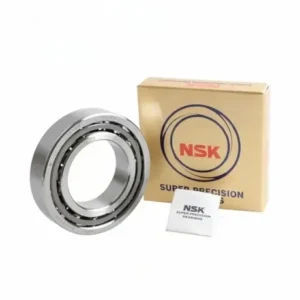
NSK 7900A5SN24TRSULP5 Angular Contact Ball Bearing P5 Spindle
<p><strong>NSK 7900A5SN24TRSULP5 Angular Contact Ball Bearing P5</strong> — Single-row design supports combined radial and axial loads for machine tool spindles and high-speed precision equipment. P5 tolerance class meets ISO requirements for tighter dimensional accuracy, while bearing steel construction ensures rigidity under demanding spindle conditions.</p> <ul> <li>Authenticity verified through authorized distributor channels with complete batch traceability documentation for import compliance</li> </ul>
View Details -

500C Ceramic Thrust Bearing P4/P5 High Temp 800C
<p><strong>500C Bearing Turbine Shaft Bearing Thrust Ball Bearing</strong> — Ceramic construction rated up to 800℃ with P4/P5 precision class for minimal runout in high-speed turbine shaft and aircraft engine applications, featuring corrosion resistance, antimagnetic properties, and high vacuum compatibility for semiconductor equipment environments.</p> <ul> <li>Sourced through authorized distributor channels with complete batch traceability and country-of-origin documentation for import compliance.</li> </ul>
View Details -
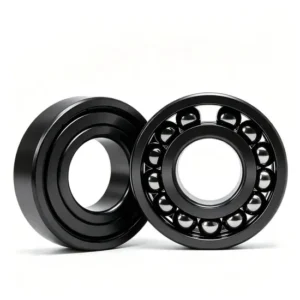
500C Ceramic Bearing 800℃ P4/P5 Precision for Aerospace
<p>500C Bearing** — Generic high-temperature ceramic bearing rated for continuous operation up to 800℃ with high-vacuum compatibility and ISO 15 dimensional tolerances at P4/P5 precision class. Ceramic construction maintains thermal stability and hardness where conventional bearing steels degrade, minimizing outgassing and particulate generation in semiconductor processing environments.</p> <ul> <li>Sourced through authorized distributor channels with full batch and lot traceability documentation provided for quality audit and import compliance.</li> </ul>
View Details -

450C High Temp Ceramic Bearing P4/P5 Vacuum
<p><strong>450C Bearing High Temperature Bearing</strong> — ceramic construction with P4/P5 precision class for vacuum coating and semiconductor equipment.</p> <ul> <li>Operates reliably up to 800℃ while maintaining dimensional stability in high vacuum environments where outgassing and particle generation must be minimized</li> <li>Precision class P4/P5 ensures tight running accuracy for semiconductor spindle and deposition system applications</li> <li>Full material certification and dimensional inspection reports provided with every shipment to support import compliance and quality verification</li> </ul>
View Details
Get a Fast Quote
Request a Quotation for
Generic 400C Ceramic Sleeve Bearing Graphite Lubricated
Fill in your requirements and our multilingual sales team will respond within 12 hours with a competitive price, availability confirmation and delivery schedule.
- Reply within 12 hours -- 24/7 multilingual support
- Competitive factory-direct pricing with full documentation
- Small trial orders and bulk container loads both welcome