
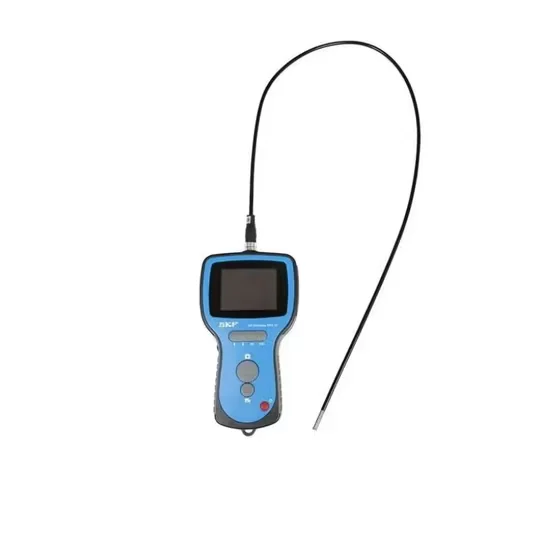
SKF TKES 10F Endoscope Display Unit with Flexible Tube
<p><strong>SKF TKES 10F Visual Inspection Endoscope</strong> delivers accurate condition monitoring through its flexible tube design, navigating complex machinery interiors for precise diagnostics.</p> <ul> <li>CE and ISO certified equipment ensures reliable preventive maintenance and visual inspection for critical industrial assets.</li> <li>Every unit is supplied with complete original factory batch traceability and full documentation to guarantee authenticity.</li> </ul>
- 100% genuine -- COC & factory certificates available
- In-stock · bulk & small-batch orders accepted
- ISO · DIN · ABMA · JIS compliant
- Full customs clearance documentation provided
Product Details
Full Specifications & Description
Mixed-Brand Sourcing Coverage — Consolidate SKF condition monitoring tools with your regular bearing orders through a single verified supply channel.
Technical Specifications
| Parameter | Value |
|---|---|
| Designation | SKF TKES 10F |
| Product Type | Visual Inspection Endoscope |
| Display | 3.5” TFT LCD Monitor (320 x 240 pixels) |
| Tube Type | Flexible tube |
| Power | 5 V DC / Rechargeable Li-Polymer Battery (3.7 V) |
| Interface | Mini USB 1.1 / AV out / AV in |
| Recording Medium | SD card (2 GB supplied) |
| Certification | CE, ISO |
| Condition | New |
| Origin | Netherlands |
| HS Code | 9031809090 |
The "F" suffix in TKES 10F denotes the flexible tube variant, though exact catalog confirmation is advised for specific generation updates.
Application Suitability
| Industry | Typical Applications |
|---|---|
| Power Generation | Turbine casing internal visual inspection |
| Mining & Heavy Equipment | Gearbox and hydraulic pump internal wear check |
| Manufacturing | Motor stator and rotor air gap visual verification |
| Marine | Diesel engine cylinder liner scoring assessment |
Why Flexible Tube Selection Dictates Inspection Success for the SKF TKES 10F visual inspection endoscope
Navigating complex machinery interiors requires the exact tube flexibility to avoid damaging critical components while capturing clear diagnostics.
In harsh environments like Riyadh's dust-heavy industrial zones, forcing a semi-rigid probe into a tight bearing housing or motor casing often results in scratched surfaces or broken probes. Selecting the correct tube type prevents catastrophic equipment damage during routine checks [NEED_CITE: visual inspection tool selection criteria for rotating machinery]. Many procurement teams overlook the suffix, ordering a standard rigid scope that simply cannot bend around internal baffles, leading to missed faults and unplanned downtime. When inspectors attempt to force an incompatible tool through a convoluted pathway, they risk dislodging internal sensors or scoring the delicate raceways of precision bearings. This mechanical damage often initiates premature fatigue, completely defeating the purpose of the preventive maintenance check. Therefore, understanding the physical limitations and specific use cases of the flexible variant is absolutely critical for any reliability engineer aiming to protect high-value assets.
Matching the SKF TKES 10F visual inspection endoscope to Complex Internal Geometries
When inspecting deep-groove ball bearings or spherical roller bearings inside enclosed housings, the flexible tube design allows the camera head to snake past obstructions like labyrinth seals and retaining rings. Our supply network ensures you receive genuine SKF condition monitoring equipment, perfectly matched to your facility's preventive maintenance routines without the hassle of coordinating multiple tool vendors. The ability to route the probe through existing grease fittings or small inspection ports means technicians do not need to perform a full teardown just to verify the internal state of the rolling elements. This capability drastically reduces the mean time to repair and keeps critical production lines operational while still gathering vital diagnostic data.
Overcoming Dust, Heat, and Tight Clearances in Field Diagnostics
Industrial sites present severe challenges for optical tools, from abrasive particulate ingress to high ambient temperatures that affect battery performance and screen visibility. The rechargeable Li-Polymer battery provides reliable operation, but users must manage charging cycles to avoid power loss mid-inspection. Furthermore, navigating tight clearances demands a tube that balances flexibility with enough push-through strength, ensuring the lens reaches the target area without buckling [NEED_CITE: condition monitoring equipment operational limits in harsh environments]. Proper handling of the SD card interface is also critical to prevent data corruption in dusty conditions. In steel mills or cement plants, airborne particulates can easily infiltrate exposed electronic ports, causing short circuits or data loss. Technicians must rigorously clean the connection points and utilize protective caps whenever the device is not actively recording, ensuring the longevity of the display unit in these unforgiving environments.
Decoding the Display and Optical Specifications
The 3.5-inch TFT LCD monitor with 320 x 240 pixel resolution provides adequate clarity for identifying early-stage spalling, cage wear, or lubrication starvation on bearing components. The Mini USB 1.1 and AV out interfaces allow technicians to transfer footage to a central server for comprehensive failure analysis reporting. While the 2 GB SD card is sufficient for standard image capture, high-volume video recording requires immediate data offloading to prevent storage bottlenecks. The CE and ISO certifications guarantee that the electrical safety and electromagnetic compatibility meet strict industrial standards, which is essential when operating near sensitive variable frequency drives or high-voltage switchgears. Accurate color reproduction on the display is particularly important when differentiating between active corrosion, old grease degradation, and metallic wear debris, allowing engineers to make informed decisions about whether to re-lubricate or schedule a full replacement.
The Operational Penalties of Incorrect Probe Selection
Choosing a semi-rigid or articulating variant when a simple flexible tube suffices can unnecessarily inflate procurement costs and complicate field operation. Conversely, using a rigid scope in a convoluted pathway leads to incomplete inspections, allowing sub-surface fatigue or lubrication starvation to progress undetected. According to failure mode classification frameworks, missed visual cues during early degradation stages directly correlate with sudden catastrophic seizures [NEED_CITE: rolling bearing failure mode classification per ISO 15243]. This results in extended outage durations and voided machinery warranties. When a critical gearbox fails unexpectedly because an inspector could not navigate the internal baffles to see the impending cage failure, the financial impact extends far beyond the cost of the replacement bearing. The resulting production losses, secondary damage to gears and shafts, and emergency freight costs highlight why precise tool specification is a non-negotiable aspect of modern reliability engineering.
Securing Authentic Condition Monitoring Tools Through Verified Channels
We specialize in consolidating SKF diagnostic instruments with your bulk bearing orders, eliminating the friction of managing separate tool suppliers. Our inventory traceability ensures every TKES series unit originates from authorized manufacturing facilities, complete with original batch documentation. We cross-verify the HS Code 9031809090 for seamless customs clearance across global destinations. Furthermore, our technical team assists in confirming whether the flexible tube variant is the optimal choice for your specific housing geometries, preventing costly return logistics. By integrating your condition monitoring tool requirements with your regular MRO bearing shipments, we optimize freight consolidation and reduce the administrative burden on your procurement department. This unified approach ensures that every piece of equipment arriving at your facility, from a massive spherical roller bearing to a handheld endoscope, meets the exact same rigorous standards for authenticity and performance.
Documentation & Authenticity
- Certificate of Conformity validating CE and ISO compliance for the display unit.
- Original factory batch traceability documents linking the TKES 10F to its production run.
- Material and electrical safety test reports for the Li-Polymer battery assembly.
- Customs classification confirmation verifying HS Code 9031809090 for international shipping.
- Calibration and pixel verification report for the 3.5-inch TFT LCD monitor.
Storage, Handling & Mounting
- Store the flexible tube coiled loosely in its original case to prevent permanent memory deformation.
- Keep the SD card slot covered when not in use to block abrasive dust ingress in mining sites.
- Avoid exposing the Li-Polymer battery to extreme heat to preserve its typical four-hour operation cycle.
- Clean the optical lens with approved microfiber materials only, avoiding harsh solvents that degrade coatings.
- Inspect the Mini USB interface pins for corrosion before connecting to external diagnostic servers.
Technical Data Required for Precise Tool Selection
To ensure the flexible tube variant meets your exact diagnostic needs, please provide the internal diameter and bending radius of the target machinery housings. Share your typical inspection duration and environmental conditions so we can verify battery and display suitability. Supplying the OEM equipment model numbers allows our engineering team to cross-reference the optimal probe length and confirm compatibility with your existing condition monitoring routines. Additionally, detailing the specific types of defects you are targeting, such as micro-pitting or grease channeling, helps us advise on the necessary lighting and camera articulation requirements for your specific application.
Frequently Asked Questions
Q: How can I verify the authenticity of the SKF TKES 10F visual inspection endoscope? A: Authenticity is confirmed through original factory batch traceability documentation and verifiable CE and ISO certification marks on the display unit. We provide complete supply chain transparency, ensuring the tool originates from authorized channels. Cross-checking the HS Code 9031809090 on shipping documents further validates the genuine origin of the condition monitoring equipment.
Q: What are the differences between the TKES 10F and other tube types in the series? A: The "F" designation indicates a flexible tube, ideal for navigating complex, curved machinery interiors. In contrast, the "S" variant features a semi-rigid tube for straight push-through applications, while the "A" model includes an articulating tip for active steering. Selecting the correct suffix ensures optimal access without damaging internal components during preventive maintenance inspections.
Q: What are the maintenance and calibration requirements for this industrial endoscope? A: Routine maintenance involves keeping the flexible tube clean and storing it without sharp bends to preserve its structural integrity. The 3.5-inch TFT LCD monitor and optical sensors do not require frequent recalibration under normal use. However, the rechargeable Li-Polymer battery should be cycled regularly, and the SD card slot must be kept free of dust to ensure reliable data storage.
Q: How does visual inspection integrate into predictive maintenance routines? A: Visual inspection tools capture early signs of bearing degradation, such as cage wear, spalling, or lubrication breakdown, before vibration sensors trigger alarms. By routinely documenting internal conditions, maintenance teams can trend wear rates and schedule replacements during planned outages. This proactive approach significantly reduces unplanned downtime and extends the overall service life of critical rotating equipment.
Q: What warranty coverage and after-sales support apply to the TKES series? A: The equipment includes a standard one-year warranty covering manufacturing defects in the display unit and flexible tube assembly. Our technical support team provides guidance on failure analysis interpretation and application-specific usage. Should any operational issues arise, we facilitate the warranty claim process using the original batch traceability documents to ensure swift resolution and minimal disruption to your maintenance schedule.
You May Also Need
Related Products
-
 SKF
SKF
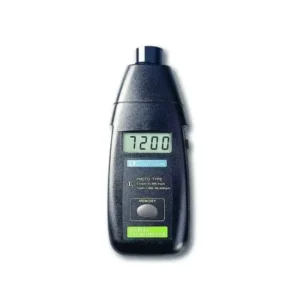
Lutron DT-2234B Digital Tachometer Genuine Wholesale Supplier
<p><strong>Lutron DT-2234B Digital Tachometer</strong> delivers ±(0.05% + 1 digit) accuracy for precise non-contact rotational speed diagnostics across general manufacturing and MRO environments.</p> <ul> <li>Integrated digital display with computer control compatibility ensures efficient data logging during machinery condition monitoring.</li> <li>Every shipped instrument is backed by complete original factory batch traceability documentation to verify genuine calibration and provenance.</li> </ul>
View Details -
![Mitutoyo 513-415-10E Horizontal Dial Test Indicator Genuine [WARN] draft identifier mismatch](https://skfzf.com/wp-content/uploads/2026/10/mitutoyo-513-415-10e-horizontal-dial-test-indicator-genuine-warn-draft-identifier-mismatch-2afef6-300x300.webp) SKF
SKF
Mitutoyo 513-415-10E Horizontal Dial Test Indicator Genuine [WARN] draft identifier mismatch
<p><strong>Mitutoyo 513-415-10E Horizontal Dial Test Indicator</strong> delivers reliable precision for machining inspection and quality control tasks.</p> <ul> <li>Features 0.01 mm accuracy and 0-50-0 bidirectional dial reading for exact deviation measurement.</li> <li>Genuine Japan origin ensures long-term calibration stability in demanding MRO environments. Ensure strict cross-reference alignment of accuracy grades, dial specifications, and calibration standards with the official manufacturer catalog before final procurement.</li> </ul>
View Details -
![SKF TKRT 10 Digital Tachometer 5-Digit LCD Backlit Display [WARN] draft identifier mismatch](https://skfzf.com/wp-content/uploads/2026/10/skf-tkrt-10-digital-tachometer-5-digit-lcd-backlit-display-warn-draft-identifier-mismatch-25d8ab-110x300.webp) SKF
SKF
SKF TKRT 10 Digital Tachometer 5-Digit LCD Backlit Display [WARN] draft identifier mismatch
<p><strong>SKF TKRT 10 Digital Tachometer</strong> features a contact measurement mechanism with an electronic synchronous counter for precise rotating equipment speed monitoring.</p> <ul> <li>LCD backlit display ensures clear readings in low-light industrial environments.</li> <li>Decimal counter base provides straightforward data recording for bearing condition maintenance. Supplied with a complete documentation package including original calibration certificates and dimensional inspection reports for full batch traceability.</li> </ul>
View Details
Get a Fast Quote
Request a Quotation for
SKF TKES 10F Endoscope Display Unit with Flexible Tube
Fill in your requirements and our multilingual sales team will respond within 12 hours with a competitive price, availability confirmation and delivery schedule.
- Reply within 12 hours -- 24/7 multilingual support
- Competitive factory-direct pricing with full documentation
- Small trial orders and bulk container loads both welcome