
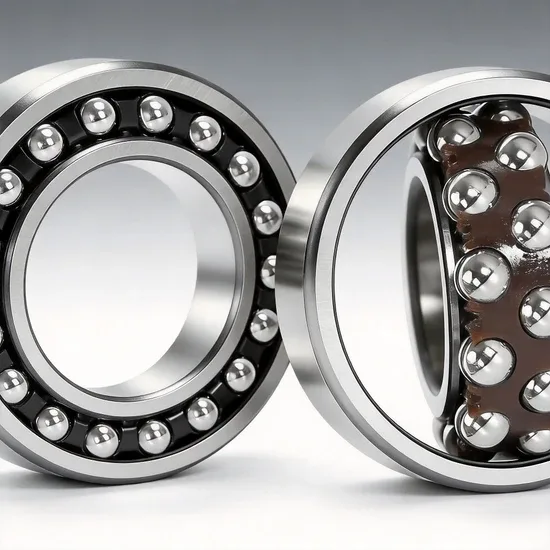
600C Ceramic High Temp Bearing P4/P5 for Semiconductor
<p><strong>600C Bearing High Temperature Bearing Deep Groove Ball Bearing Ceramic P4/P5</strong> — ceramic construction with P4/P5 precision class for semiconductor diffusion furnace applications.</p> <ul> <li>Rated for continuous operation up to 800℃ in high-vacuum environments where conventional steel bearings fail</li> <li>Ceramic cage eliminates lubrication dependency at extreme temperatures while maintaining tight running accuracy</li> <li>Sourced through authorized channels with batch traceability and certificate of conformity confirming ceramic material specification for import compliance</li> </ul>
- 100% genuine -- COC & factory certificates available
- In-stock · bulk & small-batch orders accepted
- ISO · DIN · ABMA · JIS compliant
- Full customs clearance documentation provided
Product Details
Full Specifications & Description
Sourced via authorized channels — Each High Temperature Ceramic Bearing 600C for Semiconductor Diffusion Furnace ships with batch-level material traceability and supplier Certificate of Conformity confirming ceramic composition and thermal rating.
Technical Specifications
| Parameter | Value |
|---|---|
| Designation | 600C Bearing High Temperature Bearing |
| Bearing Type | Deep Groove Ball Bearing |
| Cage Material | Ceramic |
| Operating Temperature Range | Up to 800℃ |
| Precision Class | P4/P5 |
| Vacuum Compatibility | High Vacuum Compatible |
| Application Focus | Semiconductor Diffusion Furnace |
The "C" suffix in this high-temperature ceramic designation does not correspond to standard angular contact or clearance suffix tables; buyers should confirm internal design specifics with the manufacturer's current catalog before finalizing specifications.
Application Suitability
| Industry | Typical Applications |
|---|---|
| Semiconductor Manufacturing | Diffusion furnace wafer transport spindles |
| Semiconductor Manufacturing | High-temperature vacuum deposition chamber rollers |
| High-Temperature Vacuum Processing | Furnace boat drive mechanisms operating above 600℃ |
| Semiconductor MRO | Replacement bearings for quartz tube support assemblies |
What Happens When Standard Bearings Enter a Diffusion Furnace
A conventional chrome steel bearing will cage-warp and seize within weeks at 600℃ thermal cycling — the raceway scores, outgassing contaminates the wafer batch, and the entire furnace tube must be pulled for unplanned maintenance.
I once got a call at two in the morning from a client whose diffusion furnace bearings failed after three weeks. The specification called for standard chrome steel without accounting for thermal cycling extremes. The cages warped, the raceways scored, and the whole batch had to be replaced mid-production run. Conventional lubricants degrade, cage materials soften, and the resulting particulate contamination destroys wafer yields in ways that only show up after the damage is done [NEED_CITE: bearing failure modes in high-temperature vacuum environments per ISO 15243].
Matching the Bearing to Furnace Thermal Cycling Demands
The High Temperature Ceramic Bearing 600C for Semiconductor Diffusion Furnace addresses the core problem: conventional bearing steel loses dimensional stability far below the temperatures diffusion processes demand. Full ceramic construction — rings, rolling elements, and cage — maintains structural integrity through repeated thermal ramps without softening or outgassing. The P4/P5 precision class ensures the tight running accuracy that wafer transport mechanisms require, preventing micro-vibration that can misalign quartz boat positioning. When we source these for semiconductor MRO buyers, we cross-check the thermal rating against the specific furnace zone temperature profile rather than relying on catalog maximums alone.
Thermal Expansion, Lubrication, and Vacuum Constraints
Diffusion furnaces cycle between ambient and extreme heat repeatedly, creating thermal expansion differentials that standard clearance classes cannot absorb. A bearing specified at room temperature with CN clearance will bind when the inner ring expands faster than the housing at process temperature. Ceramic materials exhibit lower coefficients of thermal expansion than steel, which shifts the clearance calculation entirely. Lubrication is another failure vector: at 800℃, no grease or oil survives, so the ceramic cage must operate dry without galling. High vacuum compatibility adds a further constraint — any outgassing from residual machining fluids or non-ceramic components will contaminate the diffusion atmosphere and compromise film uniformity across the wafer lot [NEED_CITE: outgassing requirements for semiconductor vacuum process bearings].
Decoding the Specifications That Matter
The ceramic cage eliminates the single weakest link in high-temperature bearing design. Brass cages soften above 250℃, polyamide cages degrade near 150℃, and even machined steel cages oxidize and lose dimensional accuracy at sustained furnace temperatures. A full ceramic cage maintains geometry and surface finish without lubrication dependency. The P4/P5 precision class controls bore and outside diameter tolerances to levels necessary for semiconductor transport spindles where even minor runout causes wafer positioning errors. High vacuum compatibility means the bearing has been processed to minimize volatile residues — critical because diffusion furnace atmospheres must remain chemically controlled to achieve uniform dopant profiles.
The Hidden Cost of a Material Mismatch
When a bearing fails inside a diffusion furnace, the direct replacement cost is the smallest line item. The furnace must be cooled, opened, and cleaned — a process that can take the tool offline for extended periods. Contaminated wafer batches represent sunk processing costs with no yield recovery. Using bearings without verified ceramic composition or documented temperature ratings introduces failure risk that ISO 281 life calculations cannot predict, because those models assume material properties remain stable within the operating envelope [NEED_CITE: ISO 281 bearing life calculation limitations at extreme temperatures]. Premature cage failure, raceway scoring, and particulate generation all fall outside standard fatigue life models.
How We Reduce Procurement Risk on Specialty Bearings
We source High Temperature Ceramic Bearing 600C for Semiconductor Diffusion Furnace units through authorized distributor channels, which means every shipment carries traceable documentation back to the production batch. Our cross-reference database matches not just the base designation but also clearance class, cage material, and precision level — so substitutions maintain thermal and vacuum performance, not just dimensional fit. For buyers importing into regions with strict origin documentation requirements, we provide country-of-origin certificates and HS code support with each order. Material composition declarations accompany every shipment, confirming ceramic grade rather than leaving it to assumption.
Documentation & Authenticity
- Supplier Certificate of Conformity specifying ceramic material composition and maximum rated temperature for each batch
- Third-party material testing report verifying ceramic grade against claimed thermal and vacuum performance
- Batch and lot traceability documentation linking each bearing to its production run for quality consistency verification
- Country-of-origin documentation package supporting import compliance and customs clearance
- Dimensional inspection report confirming P4/P5 bore and OD tolerances before shipment
Storage, Handling & Mounting
- Retain original sealed packaging until installation to protect ceramic surfaces from impact damage; ceramic is hard but brittle and edge chipping compromises vacuum performance
- Store in climate-controlled conditions below the rated temperature threshold; thermal shock from rapid ambient changes can induce micro-fractures in ceramic rings
- Use clean, lint-free gloves during handling — skin oils and particulates on bearing surfaces become outgassing sources once the furnace reaches process temperature
- Mount using controlled press-fit or thermal expansion methods appropriate for ceramic; induction heating used for steel bearings does not apply to non-conductive ceramic rings
- Verify housing and shaft tolerances account for ceramic thermal expansion coefficients, which differ from the steel housings typically used in furnace assemblies
Request a Specification Review
Share your furnace zone temperature profile and process atmosphere details so we can confirm the High Temperature Ceramic Bearing 600C for Semiconductor Diffusion Furnace matches your specific thermal cycling duty. If you are replacing an existing bearing, provide the OEM equipment number or current bearing designation for cross-reference verification including clearance and material confirmation. We will return a quotation with lead time, minimum order quantity, and the full documentation package available for your import requirements.
Frequently Asked Questions
Q: How do I verify that the ceramic material and temperature rating claims are genuine? A: Request the supplier Certificate of Conformity with explicit material composition declaration and third-party material testing report. Genuine high-temperature ceramic bearings ship with batch-level traceability that links each unit to its production lot and material certification.
Q: What makes ceramic bearings different from steel for high-temperature applications? A: Ceramic maintains structural integrity and dimensional stability at temperatures where steel softens and conventional lubricants degrade. The lower thermal expansion coefficient and absence of lubrication dependency eliminate two of the most common failure modes in furnace applications.
Q: How should I choose between P4 and P5 precision for semiconductor equipment? A: P4 provides tighter running accuracy suitable for wafer transport spindles where positioning precision directly affects yield. P5 is appropriate for less critical support roles. Confirm the specific runout tolerance your equipment requires before specifying.
Q: What documentation confirms high vacuum compatibility? A: Request outgassing test data or vacuum compatibility certification from the supplier. The bearing should ship with processing records confirming that volatile residues have been minimized to levels compatible with semiconductor diffusion atmospheres.
Q: What are typical lead times and minimum order quantities for these bearings? A: Lead times depend on current inventory and production scheduling for specialty ceramic bearings. Contact us with your required quantity and timeline for a specific quotation including documentation package details.
Confirm Your Furnace Bearing Specification Send your operating parameters — temperature profile, vacuum level, and load conditions — and we will verify material suitability and return a complete quotation with traceability documentation.
You May Also Need
Related Products
-
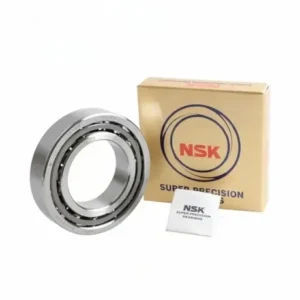
NSK 7900A5SN24TRSULP5 Angular Contact Ball Bearing P5 Spindle
<p><strong>NSK 7900A5SN24TRSULP5 Angular Contact Ball Bearing P5</strong> — Single-row design supports combined radial and axial loads for machine tool spindles and high-speed precision equipment. P5 tolerance class meets ISO requirements for tighter dimensional accuracy, while bearing steel construction ensures rigidity under demanding spindle conditions.</p> <ul> <li>Authenticity verified through authorized distributor channels with complete batch traceability documentation for import compliance</li> </ul>
View Details -

Generic 400C Ceramic Sleeve Bearing Graphite Lubricated
<p><strong>400C Bearing Ceramic Sleeve Bearing</strong> — rated for continuous operation up to 800℃ with solid graphite lubrication.</p> <ul> <li>Ceramic construction maintains thermal stability in vacuum furnaces and kiln trucks where liquid lubricants vaporize</li> <li>Graphite transfer film provides low-friction performance without outgassing in high vacuum environments</li> <li>P4/P5 precision meets tight tolerances for semiconductor equipment guides</li> </ul> <p>Sourced through authorized distributor channels with batch traceability and country-of-origin documentation for import compliance.</p>
View Details -

500C Ceramic Thrust Bearing P4/P5 High Temp 800C
<p><strong>500C Bearing Turbine Shaft Bearing Thrust Ball Bearing</strong> — Ceramic construction rated up to 800℃ with P4/P5 precision class for minimal runout in high-speed turbine shaft and aircraft engine applications, featuring corrosion resistance, antimagnetic properties, and high vacuum compatibility for semiconductor equipment environments.</p> <ul> <li>Sourced through authorized distributor channels with complete batch traceability and country-of-origin documentation for import compliance.</li> </ul>
View Details -

450C High Temp Ceramic Bearing P4/P5 Vacuum
<p><strong>450C Bearing High Temperature Bearing</strong> — ceramic construction with P4/P5 precision class for vacuum coating and semiconductor equipment.</p> <ul> <li>Operates reliably up to 800℃ while maintaining dimensional stability in high vacuum environments where outgassing and particle generation must be minimized</li> <li>Precision class P4/P5 ensures tight running accuracy for semiconductor spindle and deposition system applications</li> <li>Full material certification and dimensional inspection reports provided with every shipment to support import compliance and quality verification</li> </ul>
View Details
Get a Fast Quote
Request a Quotation for
600C Ceramic High Temp Bearing P4/P5 for Semiconductor
Fill in your requirements and our multilingual sales team will respond within 12 hours with a competitive price, availability confirmation and delivery schedule.
- Reply within 12 hours -- 24/7 multilingual support
- Competitive factory-direct pricing with full documentation
- Small trial orders and bulk container loads both welcome