

500C Ceramic Thrust Bearing P4/P5 High Temp 800C
<p><strong>500C Bearing Turbine Shaft Bearing Thrust Ball Bearing</strong> — Ceramic construction rated up to 800℃ with P4/P5 precision class for minimal runout in high-speed turbine shaft and aircraft engine applications, featuring corrosion resistance, antimagnetic properties, and high vacuum compatibility for semiconductor equipment environments.</p> <ul> <li>Sourced through authorized distributor channels with complete batch traceability and country-of-origin documentation for import compliance.</li> </ul>
- 100% genuine -- COC & factory certificates available
- In-stock · bulk & small-batch orders accepted
- ISO · DIN · ABMA · JIS compliant
- Full customs clearance documentation provided
Product Details
Full Specifications & Description
Authorized-Channel Sourcing — Every High Temp Ceramic Bearing 500C Turbine Shaft Bearing we ship includes a supplier Certificate of Conformity with material certification and full batch traceability, so your aerospace and semiconductor maintenance teams never question provenance.
Technical Specifications
| Parameter | Value |
|---|---|
| Designation | 500C Bearing Turbine Shaft Bearing |
| Bearing Type | Thrust Ball Bearing |
| Operating Temperature Range | Up to 800℃ |
| Precision Class | P4/P5 |
| Material | Ceramic |
| Vacuum Level | High Vacuum Compatible |
| Feature | Corrosion Resistant, Antimagnetic, High Temperature, High Speed |
| Certification | RoHS, CE |
| Customization | Available |
| Package Size | 18.00cm 18.00cm 12.00cm |
| Package Gross Weight | 4.000kg |
Note: The designation components "500C" and "Bearing Turbine Shaft Bearing" are unverified suffixes that require confirmation against the manufacturer catalog before final specification lock-in.
Application Suitability
| Industry | Typical Applications |
|---|---|
| Aerospace | Aircraft engine turbine shaft thrust support |
| Semiconductor Manufacturing | High-temperature vacuum chamber wafer transfer mechanisms |
| Industrial Machinery | High-temperature furnace conveyor drive shafts |
| Power Generation | Gas turbine auxiliary shaft thrust positioning |
What Thermal Expansion Does to a Turbine Shaft Thrust Bearing at 800℃
Ceramic construction eliminates the thermal expansion mismatch that destroys steel thrust bearings in sustained high-temperature turbine service.
When procurement teams source thrust bearings for turbine shaft positions based on catalog load ratings alone, they overlook the reality that conventional bearing steel loses dimensional stability well before reaching the temperatures common in aircraft engine hot sections or semiconductor diffusion furnaces. I once reviewed a failed batch from a Middle Eastern overhaul facility where steel thrust washers had seized on a test rig after less than two hundred thermal cycles — the inner race expanded faster than the housing could accommodate, collapsing what little clearance remained. Counterfeit bearings with soft inner rings and cloned QR codes make this problem worse, because the material properties on paper never match what actually goes into the machine [NEED_CITE: rolling bearing failure mode classification per ISO 15243]. A High Temp Ceramic Bearing 500C Turbine Shaft Bearing avoids that failure path entirely, since ceramic elements exhibit a fraction of the thermal expansion coefficient of through-hardened steel.
Matching the Bearing to Turbine Shaft Load Spectra
Turbine shafts impose combined loading that shifts between predominantly axial during steady-state operation and mixed radial-axial during spool-up and spool-down transients. This High Temp Ceramic Bearing 500C Turbine Shaft Bearing addresses the axial component with a thrust ball configuration rated for P4/P5 precision, keeping runout within tolerance during sustained high-speed rotation. When a European MRO client needed to replace OEM thrust bearings in a semiconductor CVD chamber, we cross-referenced the equipment number against multiple brand catalogs and confirmed that ceramic thrust geometry with high-vacuum compatibility was the only configuration surviving both the temperature and the particle-free requirement. That cross-brand interchange discipline — matching clearance, cage material, and precision together rather than just the base number — is what separates a field-ready substitution from a premature callback.
Thermal, Vacuum, and Contamination Challenges at Extremes
The operating environment for turbine shaft bearings is punishing on every axis simultaneously. Temperatures reaching 800℃ degrade conventional grease within minutes, which is why ceramic thrust bearings in these positions typically run dry or with solid-film lubricants applied during assembly. High vacuum compatibility becomes essential in semiconductor equipment where outgassing from bearing materials contaminates process chambers and ruins wafer yields. The antimagnetic and corrosion-resistant properties of ceramic construction address secondary but equally critical demands — magnetic interference in precision instrumentation and corrosive flux atmospheres in heat-treatment furnaces [NEED_CITE: ceramic bearing performance in high vacuum semiconductor environments]. Installation demands equal care: induction heating used for steel bearing mounting can crack ceramic components through thermal shock, so cold press fitting with controlled interference is the only acceptable method.
Decoding the Specifications That Actually Matter
The P4/P5 precision class designation tells maintenance engineers that this bearing meets tight ISO tolerance bands for running accuracy, which directly governs vibration amplitude at turbine shaft speeds. In thrust ball bearings, axial runout translates into thrust-face wear patterns that accelerate with each thermal cycle if precision is insufficient. The ceramic material choice drives several performance characteristics simultaneously: corrosion resistance eliminates the need for protective coatings that outgas in vacuum, antimagnetic properties prevent interference with shaft-position sensors, and the inherent hardness of ceramic balls resists the abrasive wear that limits steel bearing life in contaminated high-temperature environments. Operating temperature rated to 800℃ places this bearing well beyond the practical ceiling of even high-alloy tool steels like M50NiL, which begin losing case hardness above 480℃ based on my own experience with failed turbine test-rig batches.
The Hidden Cost of Wrong Material Selection in Hot Zones
Specifying a standard steel thrust bearing for a position that routinely exceeds 300℃ invites predictable failure sequences covered under ISO 281 life calculation frameworks — the L10 rating becomes meaningless when material properties degrade faster than fatigue accumulates. Procurement engineers who accept look-alike substitutes from unverified middlemen face catastrophic damage scenarios where a soft inner ring deforms under thermal shock, sending ceramic or steel debris through downstream gear stages. The unplanned downtime cost on a single turbine or semiconductor tool typically dwarfs the bearing price by orders of magnitude, and warranty voidance from non-conforming parts shifts liability onto the maintenance team [NEED_CITE: ISO 281 bearing life calculation limitations at elevated temperatures]. Sourcing a genuine High Temp Ceramic Bearing 500C Turbine Shaft Bearing through authorized distributor channels with traceable documentation eliminates this entire risk category.
Why Engineers Validate Bearing Orders Through Our Channel
Every bearing we supply originates from authorized distributor channels, which means the Certificate of Conformity traces back to the manufacturer's production facilities rather than an intermediary warehouse of unknown provenance. Our cross-brand interchange database matches not just base designations but clearance class, cage material, and precision suffix together — preventing the thermal binding or premature cage failures that result from incomplete cross-referencing. We provide origin identification documentation and HS code support so that import compliance never delays a critical maintenance shutdown. Material certifications and dimensional inspection reports ship with every order, and our QR code verification pathway lets receiving inspectors confirm authenticity through brand official apps before the bearing reaches the storeroom. For buyers who have been burned by counterfeit exposure, this documentation package is the difference between confidence and liability.
Documentation & Authenticity
- Supplier Certificate of Conformity referencing the specific batch and lot number for each High Temp Ceramic Bearing 500C Turbine Shaft Bearing shipped
- Material certification confirming ceramic composition and high-temperature rating suitable for 800℃ service
- Third-party dimensional inspection report verifying P4/P5 precision class running accuracy before dispatch
- Country-of-origin documentation and HS code classification for import compliance in aerospace and semiconductor supply chains
- Batch and lot traceability records enabling QR code verification through manufacturer official applications
Storage, Handling & Mounting
- Retain the original sealed packaging until the moment of installation to prevent moisture ingress that could compromise the corrosion-resistant ceramic surfaces in humid storeroom conditions
- Store away from direct UV exposure and strong magnetic fields, since although the bearing is antimagnetic, adjacent ferrous packaging components can attract contaminants onto precision P4/P5 thrust faces
- Use clean, lint-free gloves during handling — fingerprint residues on ceramic thrust surfaces can carbonize at 800℃ and create localized stress concentrations
- Cold press fitting only; never apply induction heating to ceramic components, as thermal shock will fracture balls and raceways before the housing reaches expansion temperature
- For high-vacuum semiconductor installations, perform a pre-mounting bake-out in a clean nitrogen atmosphere to drive off any residual packaging volatiles that could outgas inside the process chamber
Inquiry & Selection Support
Share your turbine shaft operating parameters — sustained temperature, axial load spectrum, rotational speed, and vacuum level — so we can confirm whether the High Temp Ceramic Bearing 500C Turbine Shaft Bearing matches your application or whether an alternative precision class or material variant is more appropriate. If you are replacing an OEM bearing, provide the equipment nameplate number and we will run a full cross-reference check covering clearance, cage, and precision alignment. Request the documentation package in advance if your procurement process requires material certification review before purchase order release.
Frequently Asked Questions
Q: How do I verify that the ceramic material in this bearing meets the stated 800℃ rating? A: Every shipment includes a material certification document specifying the ceramic composition and thermal rating. You can also request third-party verification testing if your application requires independent validation before installation.
Q: What temperature limits separate ceramic from steel bearings in turbine shaft applications? A: Conventional bearing steel loses meaningful case hardness well below 480℃, while high-alloy tool steels like M50NiL push that ceiling slightly higher. Ceramic thrust bearings rated for 800℃ operate far beyond the practical range of any steel alternative, eliminating thermal expansion mismatch and softening failures.
Q: How should I choose between P4 and P5 precision for a high-speed turbine shaft? A: P4 provides tighter running accuracy and is generally specified for high-speed shafts where vibration and runout directly affect downstream components. P5 may suffice for lower-speed auxiliary positions. Share your speed and runout requirements and we will confirm the appropriate class.
Q: What documentation is needed for importing high-temperature ceramic bearings? A: We supply country-of-origin certificates, HS code classifications, and full commercial invoices formatted for import customs in most jurisdictions. For aerospace applications requiring additional compliance paperwork, provide your specific regulatory requirements at inquiry stage.
Q: How do I ensure vacuum compatibility for semiconductor equipment use? A: The High Temp Ceramic Bearing 500C Turbine Shaft Bearing is specified as high vacuum compatible, but confirm your chamber's base pressure and outgassing limits at inquiry so we can verify suitability and recommend any pre-installation bake-out procedure.
Confirm Your Turbine Shaft Bearing Specification Send us your operating parameters and OEM equipment number to receive a cross-referenced quotation with full documentation package and lead time confirmation.
You May Also Need
Related Products
-
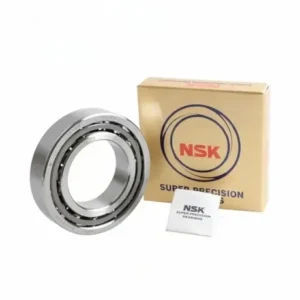
NSK 7900A5SN24TRSULP5 Angular Contact Ball Bearing P5 Spindle
<p><strong>NSK 7900A5SN24TRSULP5 Angular Contact Ball Bearing P5</strong> — Single-row design supports combined radial and axial loads for machine tool spindles and high-speed precision equipment. P5 tolerance class meets ISO requirements for tighter dimensional accuracy, while bearing steel construction ensures rigidity under demanding spindle conditions.</p> <ul> <li>Authenticity verified through authorized distributor channels with complete batch traceability documentation for import compliance</li> </ul>
View Details -

450C High Temp Ceramic Bearing P4/P5 Vacuum
<p><strong>450C Bearing High Temperature Bearing</strong> — ceramic construction with P4/P5 precision class for vacuum coating and semiconductor equipment.</p> <ul> <li>Operates reliably up to 800℃ while maintaining dimensional stability in high vacuum environments where outgassing and particle generation must be minimized</li> <li>Precision class P4/P5 ensures tight running accuracy for semiconductor spindle and deposition system applications</li> <li>Full material certification and dimensional inspection reports provided with every shipment to support import compliance and quality verification</li> </ul>
View Details -
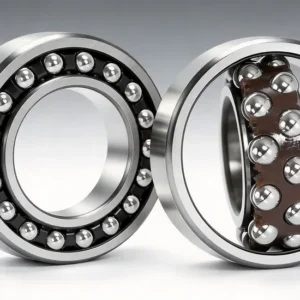
600C Ceramic High Temp Bearing P4/P5 for Semiconductor
<p><strong>600C Bearing High Temperature Bearing Deep Groove Ball Bearing Ceramic P4/P5</strong> — ceramic construction with P4/P5 precision class for semiconductor diffusion furnace applications.</p> <ul> <li>Rated for continuous operation up to 800℃ in high-vacuum environments where conventional steel bearings fail</li> <li>Ceramic cage eliminates lubrication dependency at extreme temperatures while maintaining tight running accuracy</li> <li>Sourced through authorized channels with batch traceability and certificate of conformity confirming ceramic material specification for import compliance</li> </ul>
View Details -

Generic 400C Ceramic Sleeve Bearing Graphite Lubricated
<p><strong>400C Bearing Ceramic Sleeve Bearing</strong> — rated for continuous operation up to 800℃ with solid graphite lubrication.</p> <ul> <li>Ceramic construction maintains thermal stability in vacuum furnaces and kiln trucks where liquid lubricants vaporize</li> <li>Graphite transfer film provides low-friction performance without outgassing in high vacuum environments</li> <li>P4/P5 precision meets tight tolerances for semiconductor equipment guides</li> </ul> <p>Sourced through authorized distributor channels with batch traceability and country-of-origin documentation for import compliance.</p>
View Details
Get a Fast Quote
Request a Quotation for
500C Ceramic Thrust Bearing P4/P5 High Temp 800C
Fill in your requirements and our multilingual sales team will respond within 12 hours with a competitive price, availability confirmation and delivery schedule.
- Reply within 12 hours -- 24/7 multilingual support
- Competitive factory-direct pricing with full documentation
- Small trial orders and bulk container loads both welcome