
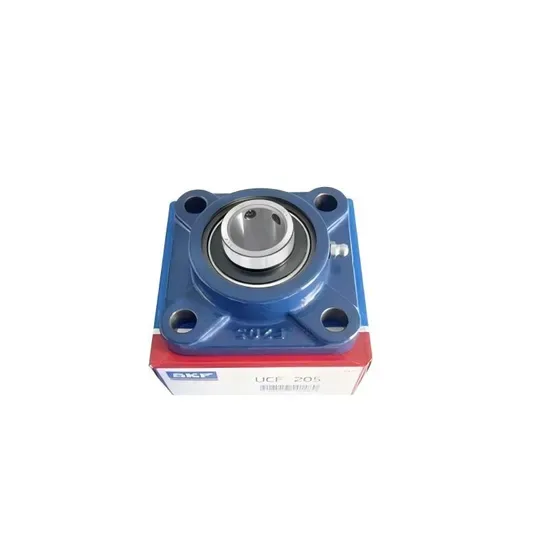
UCF211 Stainless Steel Pillow Block Bearing Heavy Duty
<p><strong>UCF211 Stainless Steel Pillow Block Bearing</strong> — four-bolt square flange unit with spherical raceway design for self-alignment under misaligned shaft conditions. Single row configuration delivers reliable radial load support in conveyor and material handling systems, while stainless steel construction resists corrosion during washdown and high-humidity exposure.</p> <ul> <li>Sourced through authorized distributor channels with full batch traceability and country-of-origin documentation for import compliance.</li> </ul>
- 100% genuine -- COC & factory certificates available
- In-stock · bulk & small-batch orders accepted
- ISO · DIN · ABMA · JIS compliant
- Full customs clearance documentation provided
Product Details
Full Specifications & Description
Authorized Channel Traceability — every UCF211 shipment leaves our warehouse with supplier Certificate of Conformity and material grade documentation traceable back through authorized distributor records.
Technical Specifications
| Parameter | Value |
|---|---|
| Designation | UCF211 (generic brand) |
| Bearing Type | Pillow Block Unit — Four-bolt Square Flange |
| Bore Diameter (d) | 55 mm |
| Feature | Corrosion Resistant, High Temperature, High Speed |
| Number of Rows | Single |
| Raceway | Spherical Raceway |
| Bearing Block Model | F |
| Transport Package | Carton + Wooden Pallet / Export Standard Packing |
The "211" size designation follows common insert bearing nomenclature, but exact bore, housing dimensions, and seal configuration should be confirmed against the specific manufacturer catalog before ordering.
Application Suitability
| Industry | Typical Applications |
|---|---|
| Material Handling | Conveyor drive and return roller shafts |
| Agricultural Machinery | Grain auger support bearings and combine harvester header drives |
| Textile Machinery | Spinning frame roller stations and loom take-up shafts |
| Mining and Crushing | Vibrating screen eccentric shaft supports |
What Stainless Steel Actually Buys You on a Washdown Conveyor
Material grade determines whether the UCF211 stainless steel pillow block bearing heavy duty survives the first caustic rinse or starts pitting within a fortnight.
I remember a poultry processing line in Paraná where the maintenance supervisor showed me a row of flange units that had corroded through their housings in under two months. The inserts were stamped "stainless" but the magnet test told a different story — someone had supplied 400-series martensitic where 316 austenitic was needed for the chlorine washdown cycle. The line had gone down twice, and the product loss on the conveyor between the second seizure and the maintenance crew's arrival was enough to wipe out a quarter's bearing budget. Counterfeit stainless units move through unverified middlemen with enough frequency that material verification is not optional — it is the difference between a bearing that earns its keep and one that costs you an unplanned shutdown [NEED_CITE: counterfeit bearing prevalence in industrial supply chains].
Matching the UCF211 to Corrosive and High-Temperature Lines
The UCF211 stainless steel pillow block bearing heavy duty earns its place wherever water, chemicals, or elevated temperatures would destroy a standard chrome steel insert within weeks. On a washdown conveyor in a food processing plant, the stainless housing and insert resist caustic detergents and high-pressure rinse cycles without the surface degradation that leads to seal failure. The spherical raceway inside the insert lets the unit absorb minor shaft misalignment — common on long conveyor spans where structural deflection under load shifts the shaft axis off true. In my experience sourcing for Latin American mining and agri-processing clients, the units that fail first are almost always the ones where the buyer matched the base number but skipped the material certificate check.
Load Patterns, Speed Envelopes, and Seal Survival
Radial loads on conveyor roller stations are steady but rarely perfectly uniform — belt tension variations and material buildup on rollers introduce cyclic overloads that test the insert's fatigue limit. The single-row spherical raceway configuration handles these radial components while tolerating the angular deflection inherent in pillow block mounting. At higher conveyor speeds, seal friction becomes a limiting factor: contact lip seals keep contaminants out but generate heat that compounds with any process-side temperature elevation. Where ambient temperatures climb above typical workshop levels — near ovens, kilns, or hot-stage material handling — the high-temperature capability of the unit prevents lubricant breakdown from accelerating prematurely [NEED_CITE: bearing lubricant thermal degradation thresholds in high-temperature industrial environments]. Non-contact labyrinth seals reduce friction but sacrifice some ingress protection, making the seal choice an explicit trade-off tied to the contamination profile of the installation site.
Decoding the Specs That Matter on the Data Sheet
The spherical raceway is the engineering feature that separates a pillow block from a rigid flange mount. It permits the insert to self-align within the housing, absorbing static and dynamic shaft misalignment without transferring edge loads to the rolling elements. For a 55 mm bore unit carrying conveyor roller duty, this alignment capacity prevents the localized stress concentrations that drive premature spalling on the inner ring raceway. Corrosion-resistant construction is only meaningful when the entire wetted path — housing, insert rings, and fastener hardware — maintains consistent material specification; a stainless insert in a painted cast iron housing defeats the purpose in a washdown environment. The single-row arrangement concentrates load capacity radially, which suits pillow block applications where axial thrust is minimal or managed by a separate locating bearing elsewhere on the shaft.
The Downtime Math Nobody Quotes on the Purchase Order
A failed pillow block on a main conveyor does not just stop the belt. Upstream processes back up, downstream stations idle, and the maintenance crew spends hours extracting a seized insert from a housing that may itself be damaged during forced removal. When the root cause traces back to a counterfeit or misapplied unit — soft inner rings, incorrect material grade, or a seal incompatible with the contamination environment — the warranty discussion becomes academic because the supplier has disappeared. ISO 15243 classifies bearing damage into distinct categories, and field failures from material substitution or counterfeit components typically show up as surface-origin fatigue or corrosive wear patterns that no amount of relubrication can reverse [NEED_CITE: ISO 15243 rolling bearing damage classification]. Correct specification from an authorized source eliminates this entire failure mode before it starts.
How the Supply Chain Behind Your Pillow Block Actually Works
We source UCF211 units through authorized distributor channels, which means the Certificate of Conformity you receive traces back through documented procurement records rather than a trading company's letterhead. Our cross-reference database matches insert bore, housing bolt pattern, seal type, and material grade — not just the base designation — so when a maintenance engineer needs a substitute for an OEM-specified unit, the replacement fits and performs identically. Batch and lot traceability lets you verify material composition after delivery, and we provide country-of-origin documentation with every shipment so your import paperwork clears customs without a hold. For distributors building regional stock, we support pre-shipment third-party inspection and confirm availability across the order quantities you need.
Documentation & Authenticity
- Supplier Certificate of Conformity accompanying every UCF211 shipment with material grade callout confirming stainless steel specification
- Batch and lot traceability records linking each pillow block unit to its production run and material heat number
- Third-party dimensional inspection reports verifying housing bolt pattern and bore tolerance before dispatch
- Country-of-origin documentation prepared for import compliance across Latin American, African, and Middle Eastern customs regimes
- Material test certificates confirming corrosion-resistant alloy composition for washdown and humid environment applications
- HS code and tariff classification support included with shipping documentation to prevent border delays
Storage, Handling & Mounting
- Keep the UCF211 in its sealed export packing until the day of installation; early exposure to a humid storeroom atmosphere begins surface condensation on stainless components that appear resistant but are not immune to chloride pitting
- Store cartons on wooden pallets above floor level in a covered area where temperature swings stay within a moderate range to prevent condensation cycles inside the packaging
- Handle the four-bolt square flange housing by the mounting feet rather than the seal lips to avoid deforming the contact seal before the unit reaches the shaft
- During mounting, torque the four flange bolts in a diagonal sequence to seat the housing squarely against the mounting surface and avoid distorting the spherical seat alignment
- Confirm shaft diameter tolerance matches the insert bore before pressing or locking the unit in place — an undersized shaft allows creep, an oversized shaft loads the inner ring and collapses the internal clearance
Request a Technical Review Before You Order
Share your conveyor speed, ambient temperature range, and washdown chemical profile so we can confirm whether the UCF211 stainless steel pillow block bearing heavy duty is the right material grade and seal configuration for your line. If you are replacing an OEM-specified unit, provide the equipment nameplate number and we will cross-reference the housing dimensions, insert bore, and seal type against our interchange database. Ask for the documentation package upfront — COC, material certificate, and country-of-origin paperwork — so your procurement and compliance teams can review before the shipment date.
Frequently Asked Questions
Q: When substituting a UCF211 across different manufacturers, what beyond the base number needs to match? A: The insert bore diameter, housing bolt-hole spacing, seal type (contact lip vs. labyrinth), and material grade must all align. Matching only the "211" designation can leave you with a housing that bolts on but an insert whose seal or corrosion resistance does not suit the application.
Q: How do I confirm the stainless steel grade of the insert and housing before installation? A: Request the material test certificate with your shipment. The certificate specifies whether the components are 440C martensitic, 304 austenitic, or 316 marine-grade stainless. For washdown environments with chlorinated cleaners, 316 is typically the appropriate grade.
Q: Which seal type should I specify for a conveyor running in a dusty grain handling facility? A: Contact lip seals provide the strongest barrier against fine particulate ingress but generate slightly more friction. In a grain dust environment where contamination is the primary failure driver, contact seals with a slinger guard offer the most reliable protection over extended service intervals.
Q: What is the proper tightening sequence when mounting the four-bolt square flange? A: Torque the four bolts in a diagonal cross pattern, bringing each to specification gradually in two passes. This seats the housing evenly against the mounting surface and prevents distortion of the spherical seat that would compromise the insert's self-alignment capability.
Q: What lead times and minimum order quantities should a distributor expect for bulk UCF211 orders? A: Lead times depend on current authorized channel stock and order volume. Share your target quantity and destination port, and we will confirm availability, consolidation options, and a realistic dispatch timeline before you commit.
Confirm Your UCF211 Specification Today Send us your application parameters or OEM equipment number and we will return a cross-referenced quote with full documentation within one business day.
You May Also Need
Related Products
-
 SKF
SKF
UCF209 Pillow Block Ball Bearing – Single Row Spherical Raceway for High Speed Applications
<p>Ensure consistent high-speed performance in industrial applications with the <strong>UCF209 pillow block ball bearing</strong>, designed to minimize downtime and maintain precision under demanding conditions. This single row spherical raceway bearing delivers reliable operation in high-temperature environments while resisting corrosion, making it ideal for critical machinery where durability is non-negotiable.</p><ul><li>Spherical raceway design accommodates misalignment, reducing stress on shafts and extending equipment lifespan</li><li>High-speed capabilities support continuous operation in steel mills, mining equipment, and construction machinery</li><li>F-series bearing block ensures secure mounting and easy installation, perfect for maintenance teams needing quick replacements</li></ul>
View Details -
 SKF
SKF
UCP217 Pillow Block Bearing High Temperature Resistant for Automotive Applications
<p>Ensure unwavering performance in high-temperature automotive environments with the <strong>UCP217 Pillow Block Bearing</strong>, designed to eliminate costly downtime and maintain precision under extreme conditions. This single-row spherical raceway unit delivers exceptional corrosion resistance and high-speed capabilities, making it ideal for critical automotive applications where reliability cannot be compromised.</p><ul><li>Spherical raceway design accommodates misalignment, reducing stress on equipment and extending service life</li><li>Engineered to withstand elevated temperatures without sacrificing performance, ensuring consistent operation in demanding settings</li><li>Corrosion-resistant construction protects against harsh automotive fluids and environmental factors</li></ul>
View Details -
 SKF
SKF
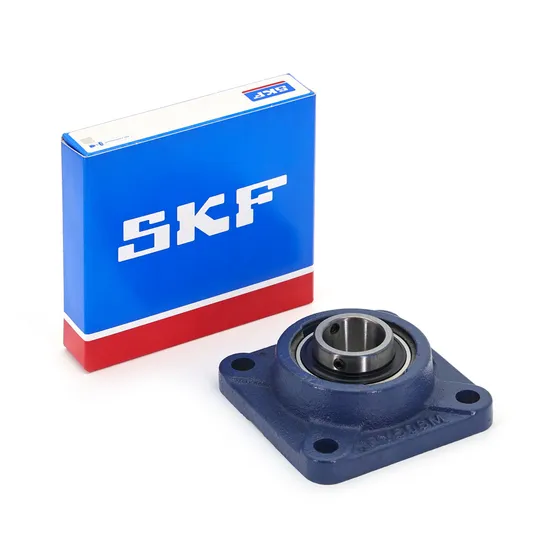
High Load Deep Groove Insert Mounted Bearing FY508M FY509 for Industrial Machinery with Rich Stocks
<p>Ensure your industrial machinery runs smoothly under heavy loads with our <strong>SKF FY508M FY509 High Load Deep Groove Insert Mounted Bearings</strong>. These precision-engineered bearings deliver reliable performance in demanding applications, featuring a single deep groove raceway and bearing steel construction that minimizes downtime and extends equipment lifespan.</p><ul><li>Rich stock availability means same-day shipping for urgent maintenance or production needs</li><li>Compatible with P-type bearing blocks for easy installation and seamless integration</li><li>Grease or oil lubrication flexibility adapts to your specific operating conditions</li><li>Backed by SKF's original factory warranty and complete batch traceability for total peace of mind</li></ul>
View Details -
 SKF
SKF
Pillow Block Bearing SKF UCPX18 Single Spherical Raceway for High-Speed Corrosion-Resistant Use
<p>Ensure uninterrupted high-speed performance in demanding environments with the <strong>SKF UCPX18 Pillow Block Bearing</strong>, a single spherical raceway solution designed to minimize downtime and maximize operational reliability. Its corrosion-resistant construction and high-temperature tolerance make it ideal for harsh industrial settings, while the single row design ensures precise alignment even under variable loads.</p><ul><li>Spherical raceway accommodates misalignment, reducing stress on shafts and extending equipment lifespan</li><li>Engineered for high-speed applications, maintaining stability at elevated rotational velocities</li><li>Comes with bearing block model F for easy installation and secure mounting</li></ul>
View Details
Get a Fast Quote
Request a Quotation for
UCF211 Stainless Steel Pillow Block Bearing Heavy Duty
Fill in your requirements and our multilingual sales team will respond within 12 hours with a competitive price, availability confirmation and delivery schedule.
- Reply within 12 hours -- 24/7 multilingual support
- Competitive factory-direct pricing with full documentation
- Small trial orders and bulk container loads both welcome