

SKF 7007 ACDGB/P4A Angular Contact Bearing P4A Precision Wholesale
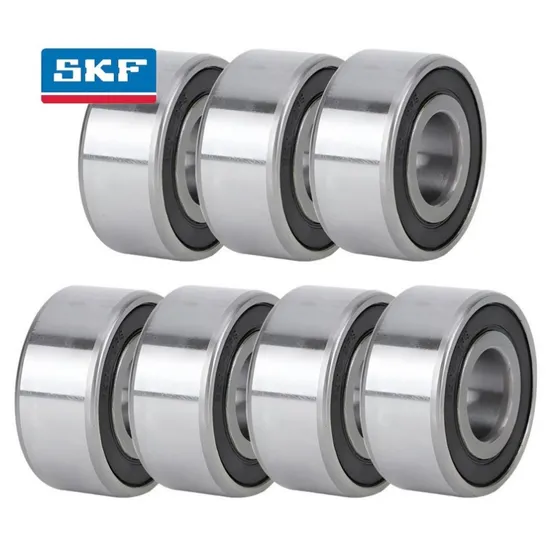
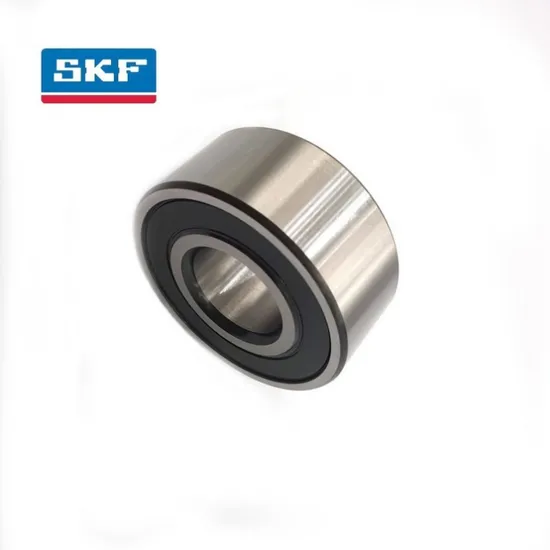
<p><strong>SKF 7007 ACDGB/P4A Angular Contact Ball Bearing 35×62 mm P4A Precision</strong> — 25° contact angle supports combined radial and axial loads in spindle applications. Universal matching with <strong>GB moderate preload</strong> enables flexible back-to-back or face-to-face mounting without separate preload selection, while P4A running accuracy delivers minimal runout for precision machinery.</p> <ul> <li>Sourced through authorized distributor channels with batch-traceable documentation and QR verification for import compliance.</li> </ul>
- 100% genuine -- COC & factory certificates available
- In-stock · bulk & small-batch orders accepted
- ISO · DIN · ABMA · JIS compliant
- Full customs clearance documentation provided
Product Details
Full Specifications & Description
Authorized Channel Sourcing — Every 7007 ACDGB/P4A ships with batch-level traceability back to the original SKF production lot, verified before it leaves our warehouse.
Technical Specifications
| Parameter | Value |
|---|---|
| Designation | SKF 7007 ACDGB/P4A |
| Bearing Type | Angular Contact Ball Bearing |
| Bore Diameter (d) | 35 mm |
| Outside Diameter (D) | 62 mm |
| Weight | 0.100 kg |
| Precision Class | P4A |
| Contact Angle | 25° (ACD) |
| Arrangement | Universal Matching, Moderate Preload (GB) |
| Number of Rows | Single Row |
| Origin | China |
Application Suitability
| Industry | Typical Applications |
|---|---|
| Machine Tool | CNC spindle nose / grinding head main shaft |
| Robotics | Joint actuators requiring minimal axial runout |
| Precision Equipment | High-speed rotary encoder shafts / optical inspection turntables |
When a P0 Swap Burns Out a Spindle: The SKF 7007 ACDGB/P4A Precision Gap
A base number match means nothing if the suffix is wrong — thermal binding follows within days.
A machine tool plant I supported near Monterrey once sourced 7007 angular contact bearings for their CNC spindles. The supplier shipped P0-grade single units instead of P4A paired sets. The spindles overheated in under a week, vibration readings spiked past acceptable limits, and the entire line went dark. With precision spindles, the suffix is the bearing. A cross-reference that ignores clearance, preload class, and running accuracy tolerance is not a cross-reference — it is a liability [NEED_CITE: cross-reference errors in angular contact bearing replacement leading to premature thermal failure]. The SKF 7007 ACDGB/P4A angular contact ball bearing exists precisely for applications where that distinction is non-negotiable.
Spindle Demands That Dictate Every Suffix
The SKF 7007 ACDGB/P4A angular contact ball bearing targets the intersection of high rotational speed and tight axial positioning. In CNC spindle noses, the bearing must sustain combined radial and thrust loads while keeping runout within microns across thermal cycles. The 25° contact angle (ACD) balances axial rigidity with acceptable friction heat generation at elevated RPM — a compromise that 15° designs cannot hold under heavy thrust, and 40° designs overheat at spindle speeds. Our cross-reference database flags every clearance, preload, and precision suffix together so substitution decisions do not rely on the base designation alone.
Thermal Expansion, Preload Drift, and the Speed Envelope
Spindle environments push angular contact bearings through a narrow operating window. Radial and axial loads compound at speed, generating internal friction heat that expands the inner ring and tightens preload beyond the factory-set value. The 25° contact angle in the ACD design manages this by distributing load across a wider raceway arc, reducing contact stress at the ball-race interface. Oil-air or oil-jet lubrication is typical here; grease packing would not survive the thermal cycle of a high-speed grinding spindle. Mounting arrangement — back-to-back (DB) or face-to-face (DF) — shifts the load center and moment rigidity, making the universal matching (GB) capability essential for shops that standardize on one bearing SKU across multiple spindle configurations [NEED_CITE: angular contact bearing mounting arrangement effect on spindle rigidity and thermal behavior].
Reading the Suffix Stack: ACD, GB, and P4A Explained
The ACD internal geometry specifies a 25° contact angle with an optimized raceway curvature, tuned for the combined load profile common in precision rotating equipment. GB indicates universal matching at moderate preload — meaning any two bearings from a GB batch can be paired back-to-back, face-to-face, or in tandem, and the resulting preload will fall within the moderate band without custom shimming. This eliminates the guesswork of pairing unmarked single bearings on the shop floor. P4A precision goes beyond standard ISO class 4 dimensional tolerances by adding a running accuracy specification — controlling bore and OD runout, lateral runout of inner and outer rings, and variation in bore diameter. For a spindle running at high RPM, that running accuracy is what separates quiet operation from harmonic chatter marks on the workpiece.
The Hidden Invoice Behind a Cheap Replacement
Correct selection from a verifiable supply chain protects more than the bearing — it protects the machine, the workpiece, and the production schedule. A counterfeit or mis-specified angular contact bearing in a spindle can cause catastrophic raceway spalling, sending debris through the entire gear train. ISO 15243 classifies these outcomes as fatigue, wear, or smearing depending on the root cause, but the financial result is identical: unplanned downtime measured in shifts, not hours [NEED_CITE: rolling bearing failure mode classification per ISO 15243]. Premature spindle rebuilds, scrapped precision parts, and voided machine warranties compound the initial "savings" from a cheaper source many times over.
What Traceability Looks Like in Practice
We source the SKF 7007 ACDGB/P4A angular contact ball bearing through authorized distributor channels, not parallel market traders. Each shipment arrives with a Certificate of Conformity tied to a specific batch number, and that batch number traces back through the supply chain. When customers request cross-reference validation against NSK, FAG, or NTN equivalents, we match not only the base dimension but the contact angle, preload class, and precision suffix together. Origin documentation accompanies every export order for customs clearance. Dimensional and runout inspection reports verify that the P4A running accuracy specification was met before the bearing left the production facility — because a certificate without a matching inspection report is just paper.
Documentation & Authenticity
- Supplier Certificate of Conformity referencing the specific SKF batch and lot number for this 7007 ACDGB/P4A shipment
- Third-party runout inspection confirming P4A running accuracy — bore lateral runout and OD variation — before dispatch
- QR code verification pathway via SKF official app for on-site authenticity checks at your receiving dock
- Country-of-origin certificate for import compliance, matched to the commercial invoice and packing list
- Material certificate confirming bearing steel specification consistent with SKF production standards
Storage, Handling & Mounting
- Keep matched GB sets sealed in original packaging until the moment of mounting; early exposure risks contamination on the precision-ground raceways of this P4A bearing
- Store flat in a climate-controlled environment below 60% relative humidity to protect the open raceways from condensation corrosion before installation
- Use lint-free gloves when handling the 35 mm bore and 62 mm OD surfaces — fingerprint acids etch micro-corrosion paths that initiate spalling under spindle speeds
- For DB or DF paired mounting, align the factory pairing marks on the outer ring faces before clamping; misaligned marks indicate the preload vectors are opposed incorrectly
- Confirm shaft and housing seat tolerances against ISO 492 class 4 limits before pressing — a loose inner ring fit on a P4A spindle bearing causes fretting corrosion and vibration within the first run-in cycle
Start the Selection Conversation
Share your spindle speed range, expected axial thrust, and operating temperature so we can verify that the ACD 25° contact angle and GB moderate preload match your rigidity requirements. If you are replacing an existing bearing, provide the full OEM equipment number or the complete suffix string from the nameplate — a partial match risks repeating the original failure. Request the documentation package with origin confirmation before placing a bulk order so your import process clears without delays.
Frequently Asked Questions
Q: How do I verify the authenticity of the SKF 7007 ACDGB/P4A I received? A: Scan the QR code on the bearing packaging using the SKF official mobile app. The app cross-references the code against the manufacturer's production database, confirming batch number, production date, and origin. We also supply a Certificate of Conformity with every order so you can reconcile the physical marking against the paperwork independently.
Q: Why must clearance, preload, and precision suffixes all match together during cross-referencing? A: A 7007 base number with C3 clearance behaves fundamentally differently from one with universal GB preload in a paired spindle arrangement. Matching the base designation alone while ignoring the ACD contact angle, GB preload class, or P4A running accuracy leads to thermal binding or insufficient rigidity under cutting loads. Our cross-reference process validates all suffix parameters simultaneously, not sequentially.
Q: What is the difference between ACD and CD contact angle designations? A: ACD specifies a 25° contact angle with optimized internal geometry for combined radial-axial loads typical in spindle applications. CD designates a 15° contact angle, which offers lower axial rigidity but reduced friction at very high speeds. Selecting the wrong angle for your load profile causes either premature thrust-side wear or unnecessary heat generation.
Q: How do GA, GB, and GC preload classes differ for universal matching? A: GA is light preload for high-speed, low-load applications where minimizing friction heat is the priority. GB is moderate preload, balancing rigidity and thermal performance for most CNC spindle duty cycles. GC is heavy preload for applications demanding maximum axial stiffness, such as heavy interrupted cuts, at the cost of higher operating temperature.
Q: Can I mix bearings from different batches when building a DB pair? A: Universal matching (GB suffix) is designed so that any two bearings from production batches meeting the GB tolerance band will produce the specified moderate preload when mounted back-to-back. However, mixing bearings from different manufacturers or different precision classes voids the preload guarantee. Always pair from the same matched set or verified universal batch.
Confirm Your SKF 7007 ACDGB/P4A Specification Send your application parameters or OEM equipment number for a complete cross-reference and documentation package review. [Contact our technical sales team for availability, lead time, and origin confirmation.]
You May Also Need
Related Products
-
 SKF
SKF
Double Row Angular Contact Ball Bearing 3302a Tn9/C3 Nylon Cage for Power Tool High Precision
<p>Boost your power tool's precision and durability with the <strong>SKF 3302a Tn9/C3 Nylon Cage</strong> Double Row Angular Contact Ball Bearing, designed to deliver smooth performance even under heavy radial and axial loads. This high-precision component ensures minimal vibration and extended tool life, addressing the common challenge of premature wear in high-demand applications.</p><ul><li>Nylon cage construction reduces friction and heat buildup, maintaining consistent operation during prolonged use</li><li>TN9/C3 clearance rating provides optimal internal space for thermal expansion, critical for power tools operating at variable speeds</li><li>Directly sourced from SKF official channels, guaranteeing 100% authenticity and traceable quality for reliable, long-term performance</li></ul>
View Details -
 SKF
SKF
Double Row Angular Contact Ball Bearing 3307 D-J1 Steel Cage for Auto Transmission Systems
<p>Ensure smooth, reliable performance in auto transmission systems with the <strong>Double Row Angular Contact Ball Bearing 3307 D-J1</strong>—engineered to handle both radial and axial loads with precision. This SKF bearing features a durable steel cage that maintains optimal ball alignment under high torque, reducing wear and extending service life in critical automotive applications.</p><ul><li>Precision rating options (P0-P6) meet strict OEM specifications for consistent gear shifting and reduced noise</li><li>Double row design delivers enhanced load capacity compared to single row alternatives, ideal for heavy-duty transmission systems</li><li>Directly sourced from SKF official channels, ensuring 100% authenticity and full batch traceability for peace of mind</li></ul>
View Details -
 SKF
SKF
Double Row Angular Contact Ball Bearing 3311 A-2Z/C3 MT33 Shielded for Wind Power Precision Machinery
<p>Ensure peak performance and minimize downtime in your wind power precision machinery with the <strong>SKF 3311 A-2Z/C3 MT33</strong> double row angular contact ball bearing. Engineered to handle combined radial and axial loads with exceptional precision, this shielded bearing delivers reliable operation even in demanding industrial environments.</p><ul><li>Featuring C3 clearance and 2Z shielded design, it maintains optimal lubrication retention while protecting against contaminants, extending service intervals for critical equipment</li><li>Manufactured from high-grade bearing steel with a robust cage structure, this SKF bearing ensures consistent original factory quality backed by complete traceability and official warranty support</li></ul>
View Details -
 SKF
SKF
Double Row Angular Contact Ball Bearing 3207 A-2Z/Mt33 Chrome Steel for High Speed Applications
<p>Ensure high-speed machinery runs smoothly with the <strong>Double Row Angular Contact Ball Bearing 3207 A-2Z/Mt33</strong>, designed to deliver exceptional radial and axial load handling in critical applications. Crafted from durable chrome steel, this SKF bearing maintains precise performance even under demanding conditions, eliminating worries about premature wear or unexpected downtime.</p><ul><li>Engineered with a Mt33 cage configuration for enhanced speed capabilities and reduced friction, ideal for high-velocity industrial equipment</li><li>Double row design provides superior rigidity and alignment, ensuring consistent operation in wind power, automotive, and precision machinery applications</li><li>Comes with 2Z shields to protect against contaminants, extending service life while maintaining optimal lubrication retention</li></ul><p>Backed by SKF's global quality assurance and our direct supply chain, you’ll receive a 100% genuine bearing with full traceability—no middlemen, just reliable performance when you need it most.</p>
View Details
Get a Fast Quote
Request a Quotation for
SKF 7007 ACDGB/P4A Angular Contact Bearing P4A Precision Wholesale
Fill in your requirements and our multilingual sales team will respond within 12 hours with a competitive price, availability confirmation and delivery schedule.
- Reply within 12 hours -- 24/7 multilingual support
- Competitive factory-direct pricing with full documentation
- Small trial orders and bulk container loads both welcome