
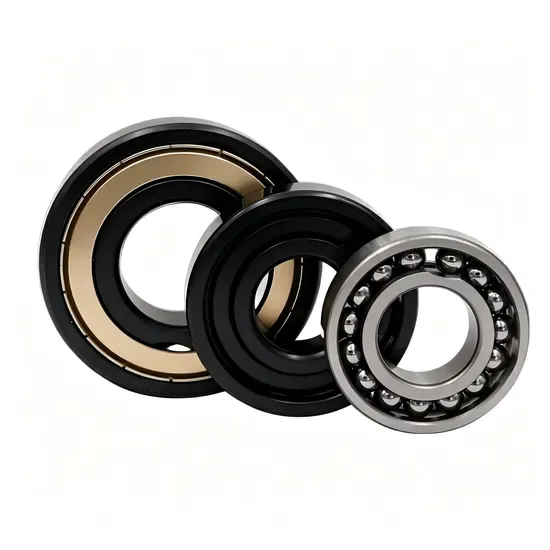
385C Ceramic Slide Bearing 800℃ High Temp for Chemical Pump Valve
<p><strong>385C Ceramic Slide Bearing</strong> — engineered for high-temperature chemical pump and valve applications with operating capability up to 800℃. Ceramic body delivers inherent corrosion resistance and antimagnetic performance in aggressive environments, while P4/P5 precision class ensures dimensional accuracy for tight-clearance sliding fits. High vacuum compatibility supports semiconductor equipment use.</p> <ul> <li>Sourced through authorized channels with batch traceability, country-of-origin documentation, and full import compliance support provided.</li> </ul>
- 100% genuine -- COC & factory certificates available
- In-stock · bulk & small-batch orders accepted
- ISO · DIN · ABMA · JIS compliant
- Full customs clearance documentation provided
Product Details
Full Specifications & Description
Traceable Batch Sourcing — every ceramic slide bearing shipment includes verifiable production lot documentation linking back to the kiln sintering run.
Technical Specifications
| Parameter | Value |
|---|---|
| Designation | 385C Ceramic Slide Bearing |
| Bearing Type | Ceramic Plain / Slide Bearing |
| Operating Temperature Range | Up to 800°C |
| Precision Class | P4 / P5 |
| Cage / Body Material | Ceramic |
| Feature Set | Corrosion Resistant, Antimagnetic, High Temperature, High Speed |
| Vacuum Compatibility | High Vacuum Compatible |
| Application | Chemical Pump, Valve, Semiconductor Equipment |
| Certification | RoHS, CE |
| Customization | Available |
| Package Dimensions | 18.00 cm × 18.00 cm × 12.00 cm |
| Package Gross Weight | 4.000 kg |
The suffix "385C" is a non-standard designation and should be confirmed against the manufacturer catalog for exact dimensional and load data before final specification.
Application Suitability
| Industry | Typical Applications |
|---|---|
| Chemical Processing | Hot acid circulation pump shaft bushings, corrosive valve stem guides |
| Semiconductor Manufacturing | Vacuum chamber wafer transfer arms, CVD reactor internal slides |
| Steel & Metallurgy | Continuous caster roll guides in high-heat zones |
| General Industrial MRO | High-temperature conveyor roller journals, kiln car wheel bushings |
Why Thermal Rating Errors Destroy Chemical Pump Bushings
A slide bearing that softens at process temperature does not announce its failure gradually — it seizes the shaft and cracks the pump casing before the vibration sensor even trips.
Procurement teams often select polymer-lined plain bearings rated for 200–250°C continuous service, only to discover the actual fluid temperature at the pump discharge reaches well beyond that envelope. The result is polymer creep, loss of dimensional tolerance, and metal-on-metal contact inside the stuffing box. [NEED_CITE: plain bearing failure modes under thermal overload in chemical process pumps] Replacement is no longer a bearing swap — it becomes a full pump teardown, casing inspection, and unplanned line shutdown lasting days rather than hours.
Matching the Bearing to Corrosive, High-Heat Pump Service
Chemical pump internals demand a material that holds dimensional stability under sustained thermal exposure while resisting acid attack and solvent permeation. The High Temperature Ceramic Slide Bearing 385C meets this dual requirement because the ceramic body is chemically inert to most mineral and organic acids, eliminating the degradation pathway that destroys PTFE or PEEK inserts. When we supply replacements for hot acid service, we confirm the operating envelope against the process data sheet — temperature, media concentration, and shaft speed — so the bearing selection matches the actual duty point rather than the catalog headline number.
Load Profile, Thermal Expansion, and Lubrication Constraints
Radial loads on a chemical pump shaft bushing are relatively modest compared to rolling element applications, but the sliding velocity combined with process heat creates a demanding tribological situation. At sustained temperatures above 300°C, conventional grease is no longer viable — it carbonizes, forms abrasive residue, and accelerates wear. The ceramic slide surface operates dry or with high-temperature solid lubricant films, removing the grease degradation failure mode entirely. Thermal expansion mismatch between the shaft and housing also shifts running clearance as the pump reaches steady-state temperature, which is why the precision class and dimensional tolerance band must account for hot-fit conditions rather than room-temperature measurements alone. [NEED_CITE: thermal expansion effects on plain bearing clearance in high-temperature pump applications]
What P4/P5 Precision and Ceramic Material Mean for Service Life
The P4/P5 precision class on this bearing governs the bore and OD tolerance band, which directly controls the hot running clearance once the pump reaches operating temperature. A tighter tolerance means less shaft wobble at speed, reduced vibration transmission to the mechanical seal, and extended seal life. The ceramic body material contributes antimagnetic performance — relevant in semiconductor vacuum chambers where magnetic interference can affect ion beam alignment — and inherent corrosion resistance that requires no surface coating to degrade over time. The 800°C upper temperature capability provides a substantial margin above typical chemical pump discharge temperatures, keeping the material well within its stable crystalline phase and avoiding the onset of creep deformation that limits metal and polymer alternatives.
The Hidden Cost of Material Substitution Failures
Specifying a standard bronze or polymer bushing where a ceramic slide bearing is required may save on unit cost, but the downstream expense follows a predictable pattern under ISO 15243 failure classification — surface wear accelerates, clearance opens, vibration rises, and the mechanical seal fails prematurely. [NEED_CITE: ISO 15243 bearing damage classification applied to plain bearing seizure] The pump then enters a cascade: seal leakage triggers environmental compliance reporting, unplanned shutdown disrupts upstream reactor schedules, and the maintenance team replaces not just the bushing but the shaft sleeve, seal cartridge, and possibly the impeller wear ring. Sourcing a verified ceramic bearing with full material certification removes this cascade at its origin.
How Our Sourcing Process Protects Your Specification
We procure High Temperature Ceramic Slide Bearing 385C units through authorized distributor channels and maintain batch-level traceability back to the original production lot. Our cross-reference service does not stop at the base designation — we verify that the ceramic composition, precision class, and dimensional tolerances align with your equipment requirements, including hot-fit clearance calculations where needed. Every shipment ships with material certificates, dimensional inspection reports, and country-of-origin documentation for your import compliance file. When a customer needs to substitute a metal bushing with a ceramic alternative, we provide a side-by-side comparison covering thermal expansion coefficients, surface finish compatibility with the mating shaft, and installation method differences.
Documentation & Authenticity
- Supplier Certificate of Conformity tied to the specific production batch of ceramic slide bearings
- Material composition certificate confirming ceramic body chemistry and sintering density
- Dimensional inspection report verifying P4 or P5 tolerance class on bore and OD
- RoHS and CE compliance documentation included with each shipment
- Country-of-origin certificate supporting customs declaration and import duty classification
- HS code guidance and shipping documentation prepared for international freight forwarding
Storage, Handling & Mounting
- Keep the 385C ceramic bearings in sealed packaging until the moment of installation; ceramic surfaces are hard but brittle and chip easily if dropped on a workshop floor
- Store in a climate-controlled area below 40°C — while the bearing tolerates 800°C in service, packaging adhesives and protective wraps degrade in warehouse heat and complicate clean removal
- Use clean, lint-free gloves during handling; fingerprint oils on ceramic surfaces can carbonize during the first high-temperature heat cycle and create localized stress points
- For pump installation, follow cold-press fitting procedures with controlled axial force; induction heating is not required and may damage housing seals or nearby instrumentation
- After mounting, verify shaft rotation by hand before commissioning to confirm the hot-fit clearance calculation matched actual assembly conditions
Request a Technical Quotation
Share your pump data sheet — process temperature, media composition, shaft diameter, and operating speed — so we can confirm the High Temperature Ceramic Slide Bearing 385C matches your duty point and provide a dimensioned cross-reference. If you have an OEM equipment number or an existing bearing drawing, send it along for direct interchange verification. We will return a formal quotation with lead time, batch availability, and the full documentation package your procurement file requires.
Frequently Asked Questions
Q: How do I verify the ceramic material composition and temperature rating before accepting the shipment? A: Each batch ships with a material certificate detailing ceramic chemistry and a Certificate of Conformity. You can request third-party laboratory testing on a sample unit for independent validation of composition and thermal stability.
Q: Can this ceramic slide bearing replace a metal bushing in my existing pump without housing modification? A: Substitution requires checking dimensional compatibility — bore, OD, and width — along with thermal expansion behavior differences between the original metal bushing and the ceramic replacement. We provide a cross-reference comparison covering all three dimensions plus hot-fit clearance analysis.
Q: What precision class should I specify — P4 or P5 — for a chemical pump shaft bushing? A: P4 offers tighter bore and OD tolerances, which improves shaft concentricity and reduces vibration at the mechanical seal. P5 is acceptable for lower-speed or less critical pump positions. The choice depends on your shaft speed and seal sensitivity.
Q: What customization options are available for non-standard dimensions? A: Custom bore diameters, OD sizes, and width dimensions are available based on your housing and shaft drawings. Custom orders include the same material certification and dimensional inspection documentation as standard catalog sizes.
Q: What is the typical lead time and minimum order quantity? A: Standard sizes ship from available stock with typical multi-week lead times for restocking. Custom dimensions require a production run with a quotation-specific timeline. MOQ depends on the customization scope and is confirmed during the technical review.
Get Your Bearing Selection Verified Today Send us your pump operating parameters or OEM part number for a complete technical review, cross-reference match, and formal quotation with full traceability documentation.
Get a Fast Quote
Request a Quotation for
385C Ceramic Slide Bearing 800℃ High Temp for Chemical Pump Valve
Fill in your requirements and our multilingual sales team will respond within 12 hours with a competitive price, availability confirmation and delivery schedule.
- Reply within 12 hours -- 24/7 multilingual support
- Competitive factory-direct pricing with full documentation
- Small trial orders and bulk container loads both welcome