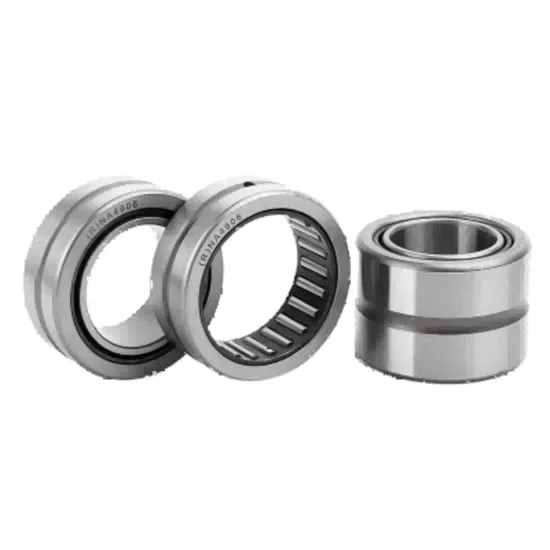
INA NK2020 Needle Roller Bearing P6 Precision Wholesale
<p><strong>INA NK2020 Needle Roller Bearing P6 Precision</strong> — Without inner ring, steel cage, Chrome Steel GCr15 construction for compact radial-load applications where the shaft serves as the raceway.</p> <ul> <li>P6 precision class delivers tighter ISO tolerance class 6 dimensional control than standard P0, critical for textile spindles and gearbox assemblies.</li> <li>Steel cage maintains dimensional stability under moderate-speed industrial operating conditions.</li> </ul> <p>Sourced through authorized INA distributor channels with full batch traceability documentation, Certificate of Conformity, and GCr15 material certification for import compliance verification.</p>
- 100% genuine -- COC & factory certificates available
- In-stock · bulk & small-batch orders accepted
- ISO · DIN · ABMA · JIS compliant
- Full customs clearance documentation provided
Product Details
Full Specifications & Description
Authorized Channel Sourcing — Batch-traceable INA needle rollers verified through Schaeffler distributor documentation with full material certification.
Technical Specifications
| Parameter | Value |
|---|---|
| Designation | INA NK2020 |
| Bearing Type | Needle Roller Bearing without Inner Ring |
| Bore Diameter (d) | 20 mm |
| Outside Diameter (D) | 28 mm |
| Width (B) | 20 mm |
| Cage Material | Steel Cage |
| Precision Class | P6 |
| Material | Chrome Steel GCr15 |
| Seal or Shield Type | Open |
| Number of Rows | Single Row |
| Origin | Germany (subject to batch verification) |
Note: The suffix "2020" in NK2020 remains an unverified designation requiring confirmation against the current INA catalog for exact dimensional series and needle complement details.
Application Suitability
| Industry | Typical Applications |
|---|---|
| Industrial Machinery | Conveyor idler shafts, linear guide slides |
| Textile Machinery | Spindle quills, yarn tensioner arms |
| Automotive Powertrain | Transmission layshafts, rocker arm pivots |
| Machine Tool | Slide way guides, indexing table pivots |
The Hidden Cost of Overlooking Suffix Precision on NK Needle Rollers
A base-number match does not guarantee field survival when cage type and needle complement are ignored.
I still see procurement teams in the Middle East and Africa sourcing needle bearings by matching the "NK" prefix and bore diameter alone, without checking cage material or dimensional series suffixes. On a textile mill line in Dubai, a batch of NK-type bearings with pressed steel cages was installed in high-vibration spinning frames designed for machined cages. The cages fractured within six weeks, scattering needle elements into the gear train and causing unplanned downtime that far exceeded the cost of the bearings themselves [NEED_CITE: rolling bearing failure mode classification per ISO 15243]. Counterfeit needle rollers with soft chrome steel elements compound this risk — they pass visual inspection but spall prematurely under sustained radial load.
Matching the INA NK2020 to Compact Radial Load Envelopes
The INA NK2020 needle roller bearing without inner ring is engineered for applications where the shaft itself serves as the inner raceway, eliminating the space and weight penalty of a separate inner ring. This configuration demands a hardened and ground shaft surface — typically HRC 58-62 with a surface roughness suitable for rolling contact — to prevent accelerated wear. In textile spindles and automotive gearboxes, this design yields a significantly lower cross-section than deep groove or angular contact alternatives while maintaining equivalent radial load capacity. We routinely cross-check cage clearance, needle complement, and dimensional series against OEM equipment numbers before release, catching mismatches that a base-number-only search would miss.
Load Spectra, Speed Limits, and Shaft Raceway Demands
Needle roller bearings without an inner ring impose strict requirements on the mating shaft. The shaft surface must achieve adequate hardness and finish to function as a raceway, or fatigue spalling will originate from the shaft rather than the bearing. Radial loads in industrial gearboxes and printing presses are typically steady-state, but textile machinery often introduces cyclic loading from reciprocating components — a condition that accelerates cage fatigue if the cage material is underspecified. Operating temperatures in these environments generally remain moderate, but localized heat from insufficient lubrication can degrade grease life rapidly. The steel cage in this configuration provides dimensional stability under vibration, though it requires consistent oil film thickness to avoid metal-to-metal contact between needles and cage pockets [NEED_CITE: needle roller bearing lubrication requirements under oscillating loads].
Decoding the GCr15 Construction and P6 Tolerance Band
Chrome Steel GCr15 delivers the surface hardness and through-hardening depth needed for rolling contact fatigue resistance, making it the standard material for needle elements and outer rings in industrial needle bearings. The P6 precision class imposes tighter dimensional and geometric tolerances than standard P0, controlling bore and outside diameter deviations, radial runout, and width variation to levels that reduce vibration in moderate-speed applications. The steel cage — as opposed to polyamide alternatives — sacrifices some high-speed capability for thermal stability and resistance to lubricant incompatibility, which matters when maintenance teams re-grease with whatever is available on the shop floor. Without an inner ring, the full radial load capacity comes from needle-to-shaft contact, meaning the shaft surface must be ground to raceway quality or the bearing will fail prematurely regardless of its own precision grade.
What Incorrect Cage Selection Really Costs on the Floor
Installing a bearing with the correct bore and OD but the wrong cage material or needle complement leads to failures that rarely get traced back to the selection error. Pressed cages in high-vibration applications crack at pocket edges, releasing needles that score adjacent surfaces and destroy housings. Mismatched clearance causes thermal binding when the shaft expands under load, generating heat that degrades lubricant and accelerates wear across the entire assembly. Counterfeit bearings with cloned markings and substandard steel produce identical field symptoms, making failure analysis inconclusive and warranty claims impossible [NEED_CITE: counterfeit bearing detection methods in industrial supply chains]. These failures carry costs measured in unplanned downtime, secondary component damage, and lost production — not just the replacement bearing price.
How We Reduce Procurement Risk for NK Series Bearings
Every INA NK2020 needle roller bearing we supply is sourced through authorized Schaeffler distributor channels with batch-level traceability documentation. Our cross-reference database matches not only the base designation but also cage type, needle complement, clearance class, and precision grade across SKF, NSK, IKO, and NTN equivalents — preventing the substitution errors that cause field failures. Before shipment, we provide Certificate of Conformity, material certification confirming GCr15 composition, and dimensional inspection data for bore, OD, and width. For import-dependent buyers, we supply country-of-origin documentation and HS code verification to clear customs without delays. When a standard substitution involves an unusual suffix combination, our engineering team reviews the application parameters — load, speed, temperature, mounting envelope — to confirm suitability before quotation.
Documentation & Authenticity
- Supplier Certificate of Conformity referencing the specific INA batch and lot number for full supply chain traceability
- Material certificate confirming GCr15 chrome steel composition with chemical analysis report
- Third-party dimensional inspection report verifying bore, outside diameter, and width against P6 tolerance limits
- Country-of-origin documentation suitable for import compliance and customs clearance in Middle East, Africa, and Latin America markets
- QR code verification pathway via Schaeffler official apps to confirm authenticity against the manufacturer's database
Storage, Handling & Mounting
- Retain original sealed plastic tube packaging until the moment of installation to prevent contamination of the exposed needle elements and steel cage
- Store in a climate-controlled environment below 60% relative humidity to protect the GCr15 chrome steel surfaces from corrosion, particularly in coastal warehouse locations
- Inspect shaft raceway hardness (HRC 58-62 minimum) and surface finish before pressing the INA NK2020 onto the shaft — a soft or rough shaft will destroy the needle rollers within hours of operation
- Use a clean, lint-free cloth and fresh gloves during handling; fingerprint acids on the thin outer ring can initiate corrosion pits that propagate under cyclic radial loading
- Apply the specified grease or oil immediately after mounting, as the open bearing configuration provides no integrated seal against contaminant ingress
Request Technical Verification Before You Commit
Share your application parameters — radial load, shaft speed, operating temperature range, and lubrication method — so we can confirm whether the INA NK2020 needle roller bearing without inner ring matches your duty cycle or whether an alternative suffix or series is required. If you are replacing an existing bearing, provide the OEM equipment number or the full designation from the nameplate so we can run a cross-reference check covering cage, clearance, and precision alignment. Request the documentation package in advance to verify origin and batch traceability before placing a bulk order. Confirm current stock availability and lead time, as less common needle roller designations can require scheduled procurement through authorized channels.
Frequently Asked Questions
Q: When cross-referencing NK-type needle roller bearings, what beyond the base number must match? A: The bore diameter alone is insufficient. Needle complement (full vs. caged), cage material (steel vs. polyamide), dimensional series (width and OD for the same bore), and precision class must all align with the original specification. A mismatch in any of these parameters can cause cage fatigue, thermal binding, or premature spalling even when the bearing physically fits the housing.
Q: What is the difference between P0, P6, P5, and P4 precision classes for needle roller bearings? A: Each ascending class tightens the allowable deviations in bore diameter, outside diameter, width variation, and radial runout. P0 is the standard commercial grade. P6 reduces these deviations for applications requiring lower vibration. P5 and P4 are reserved for precision spindles and machine tool applications where running accuracy directly affects product quality. Selecting a lower class than the application demands leads to excess vibration and noise; selecting a higher class than necessary increases cost without measurable field benefit.
Q: Steel cage vs. polyamide cage — which suits high-temperature needle roller applications? A: Steel cages tolerate higher continuous temperatures and resist degradation from incompatible lubricants, making them the default choice for industrial gearboxes and environments where maintenance re-greasing practices are inconsistent. Polyamide cages offer lower weight and better needle guidance at high speeds but have a lower thermal ceiling and can become brittle with age or chemical exposure. The operating temperature range and lubrication discipline at the installation site should drive this decision.
Q: What shaft hardness and surface finish are required when using needle roller bearings without an inner ring? A: The shaft must serve as the inner raceway, requiring a surface hardness of HRC 58-62 and a ground finish suitable for rolling contact. A shaft that is too soft will develop brinelling and spalling under the concentrated line contact of the needle rollers. A shaft that is too rough will abrade the needle surfaces, generating debris that contaminates the cage pockets and accelerates wear across the entire assembly.
Q: Can the suffix designation on this bearing be confirmed against INA's current catalog? A: Certain suffix combinations or legacy designations may not appear in current online catalogs. We verify all unconfirmed suffixes directly through authorized Schaeffler distributor channels before shipment to ensure the delivered product matches the technical requirements of your application.
Secure Your Genuine INA Needle Roller Supply Send us your equipment number, application parameters, or required documentation checklist — we will return a verified cross-reference, stock confirmation, and traceability package within one business day.
You May Also Need
Related Products
-
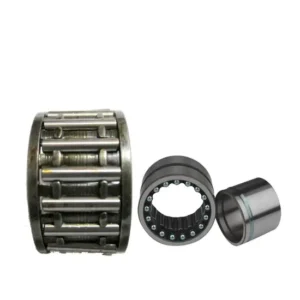
INA NKI65/35-XL Needle Roller Bearing 65x90x35mm
<p><strong>INA NKI65/35-XL Needle Roller Bearing 65×90×35 mm</strong> — X-Life series delivers enhanced load capacity and extended service intervals for heavy-duty gearbox applications. Open type construction supports custom lubrication strategies matched to operating temperature and contamination levels in power transmission systems. Sourced through authorized INA channels with full batch traceability, Certificate of Conformity, and country-of-origin documentation ready for import compliance.</p>
View Details -
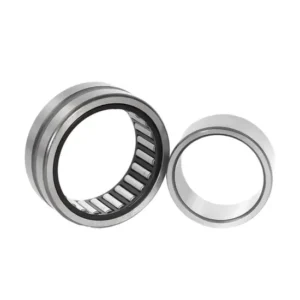
INA RNA4902 Needle Roller Bearing P6 Precision Wholesale
<p><strong>INA RNA4902 Needle Roller Bearing Without Inner Ring 15×28×13 mm P6</strong> — engineered for compact radial spaces where the shaft functions as a raceway, eliminating the inner ring to maximize load capacity. GCr15 bearing steel delivers the hardness needed for demanding motor and gearbox applications, while the <strong>open type</strong> design supports flexible grease or oil bath lubrication schemes.</p> <ul> <li>Sourced through authorized distributor channels with batch traceability and Certificate of Conformity included for import documentation.</li> </ul>
View Details -
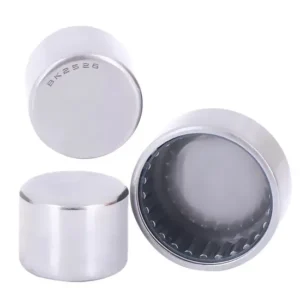
INA BK1512 Needle Roller Bearing Closed End Drawn Cup
<p><strong>INA BK1512 Needle Roller Bearing Closed End Drawn Cup</strong></p> <ul> <li><strong>Structure</strong>: Drawn cup with closed end for effective sealing against contamination</li> <li><strong>Material</strong>: Chrome steel construction for dimensional stability under cyclic loading</li> <li><strong>Application</strong>: Automotive transmission systems requiring compact cross-section solutions Sourced through authorized distributor channels with full batch traceability documentation.</li> </ul>
View Details -
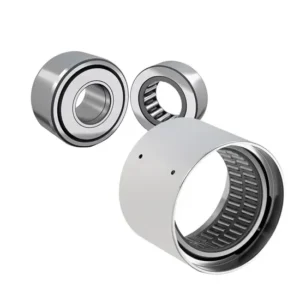
INA NK8/16-TV-XL Needle Roller Bearing 8x15x16mm
<p><strong>INA NK8/16-TV-XL Needle Roller Bearing 8×15×16 mm</strong> — Single-row design without inner or outer rings suits compact radial envelopes in gearboxes and electric motors.</p> <ul> <li><strong>TV</strong> polyamide cage reduces friction and noise at higher speeds versus steel alternatives</li> <li>XL premium series designation for extended service life in demanding applications</li> </ul> <p>Sourced through authorized INA distributor channels with full batch traceability and country-of-origin documentation for import compliance.</p>
View Details
Get a Fast Quote
Request a Quotation for
INA NK2020 Needle Roller Bearing P6 Precision Wholesale
Fill in your requirements and our multilingual sales team will respond within 12 hours with a competitive price, availability confirmation and delivery schedule.
- Reply within 12 hours -- 24/7 multilingual support
- Competitive factory-direct pricing with full documentation
- Small trial orders and bulk container loads both welcome