

INA HK1616 Needle Roller Bearing P6 Precision Wholesale
<p><strong>INA HK1616 Needle Roller Bearing P6 Precision</strong> — Open-end drawn cup design in chrome steel, delivering compact radial load capacity for transmission and gearbox assemblies. P6 precision class ensures tighter ISO tolerances than standard P0, supporting accurate shaft alignment under high-cycle operation. Sourced through authorized distributor channels with batch traceability and origin documentation for import compliance.</p> <ul> <li>Structure: Open end</li> <li>Material: Chrome steel</li> <li>Precision: P6</li> <li>Applications: Transmissions, gearboxes, powertrains</li> </ul>
- 100% genuine -- COC & factory certificates available
- In-stock · bulk & small-batch orders accepted
- ISO · DIN · ABMA · JIS compliant
- Full customs clearance documentation provided
Product Details
Full Specifications & Description
Authorized Sourcing Channel — Every INA HK1616 we supply traces back through verified distributor documentation with batch-level origin confirmation.
Technical Specifications
| Parameter | Value |
|---|---|
| Designation | INA HK1616 |
| Bearing Type | Drawn Cup Needle Roller Bearing |
| Bore Diameter (d) | 16 mm |
| Outside Diameter (D) | 22 mm |
| Width (B) | 16 mm |
| Structure | Open End |
| Material | Chrome Steel |
| Precision Class | P6 |
| Cage Material | Drawn Cup (integral) |
| Seal or Shield Type | Open |
| Arrangement | Single Row |
| Number of Rows | 1 |
| Origin | To be confirmed at order |
Application Suitability
| Industry | Typical Applications |
|---|---|
| Automotive & Heavy Vehicle | Transmission input shaft support, output shaft needle track |
| Industrial Machinery | Compact gearbox intermediate shaft, transfer case idler gear |
| Material Handling | Conveyor drive reducer low-speed stage |
| Agricultural Machinery | PTO driveline universal joint support |
What P6 Precision Actually Prevents Inside a Transmission Case
A tighter bore-to-shaft fit at P6 eliminates the micro-movement that accelerates drawn cup wall fretting.
I once traced a repeated gearbox return to a transmission shop that swapped an HK1616 by base number alone. The replacement had thinner drawn cup walls and a reduced needle complement — it looked identical on the shelf but could not carry the same radial load under continuous mesh forces. Within a few hundred hours, the needle tracks were scored and the output shaft seized. The shop lost the rebuild contract over a bearing that cost less than a single hour of labor. That kind of mismatch is far more common than most procurement teams realize. Counterfeit drawn cup bearings with softer shell steel and cloned markings enter the supply chain through unverified middlemen with alarming frequency [NEED_CITE: counterfeit bearing infiltration in automotive aftermarket supply chains]. A P6-precision INA HK1616 needle roller bearing from a documented channel removes that variable entirely.
How This Bearing Fits a Transmission Envelope
Transmission designers choose drawn cup needle rollers because they deliver maximum radial capacity within the smallest possible cross-section. The INA HK1616 needle roller bearing occupies only a 22 mm outer diameter while carrying load across a full 16 mm width of chrome steel needles — giving shaft designers room to keep housing walls thin and gearbox weight down. When we source this designation, we verify both wall thickness of the drawn cup and the actual needle complement count before shipment, because those two dimensions are exactly where off-spec parts deviate. A rebuild shop in the American Midwest learned that lesson the expensive way; we make sure our customers do not repeat it.
Load Spectrum and Thermal Reality Inside a Gearbox
Inside an enclosed transmission, the bearing sees continuous radial load from gear mesh forces with occasional shock peaks during shifting events. Shaft speeds in intermediate stages typically stay moderate, but oil splash temperatures can climb well above ambient, thinning the lubricant film between needles and the drawn cup track. Chrome steel construction gives the INA HK1616 the hardness and fatigue resistance needed for those high-cycle mesh loads, while the open-end design lets transmission oil flow freely through the needle set — flushing wear debris out rather than trapping it. Thermal expansion of the shaft and housing must be accounted for during fit selection; an interference fit that is too aggressive will close the internal clearance once the gearbox reaches operating temperature [NEED_CITE: thermal expansion effects on bearing internal clearance in enclosed gear drives].
Reading the Specs That Actually Matter
The drawn cup itself serves as the outer raceway — there is no separate outer ring. That means the cup wall thickness and its surface hardness directly govern load capacity and fatigue life. Chrome steel hardened to the expected needle roller range provides the contact fatigue resistance the needle tips demand over millions of load cycles. The P6 precision class holds tighter ISO tolerances on bore and outside diameter than standard P0 production, which matters when the drawn cup is press-fit into a transmission housing bore: a looser OD tolerance band risks a fit that creeps under load, while an overly tight one can ovalize the thin cup wall during installation. The open-end configuration means no integrated seals — contamination exclusion is the responsibility of the gearbox housing seals and the transmission fluid filtration system.
The Hidden Expense of a Wrong Needle Bearing
A correct INA HK1616 needle roller bearing from a traceable source runs to its calculated L10 life under the designed load spectrum. A substituted part with thinner cup walls or fewer needles concentrates contact stress on a smaller loaded zone, accelerating surface fatigue on both the needle tips and the shaft journal. ISO 15243 classifies the resulting damage as surface distress and eventual spalling — failure modes that do not announce themselves until the gearbox vibrates audibly or the shaft locks entirely [NEED_CITE: rolling bearing failure mode classification per ISO 15243]. The downstream cost is never just the bearing. It is the torn-down transmission, the replacement shaft, the missed delivery window, and the customer confidence that walks out the door with the failed unit.
Why Procurement Engineers Keep Coming Back
Every INA HK1616 we quote ships with documentation that traces it back through an authorized distributor channel — not a broker chain with gaps. We verify the drawn cup wall thickness and needle complement count against published specifications before release, catching the exact deviation that caused the Midwest transmission shop to lose its contract. When buyers need to cross-reference this designation against another brand for a legacy assembly, we match on bore, OD, width, and needle count together — not the base number alone. Country-of-origin paperwork and HS code details are prepared upfront so import clearance does not stall at the port. For buyers who have been burned by soft cup walls and cloned QR codes before, that documentation trail is the product just as much as the bearing itself.
Documentation & Authenticity
- Supplier Certificate of Conformity referencing the specific batch and lot number of your HK1616 shipment
- QR code verification pathway via INA official apps so your receiving team can confirm authenticity on the dock
- Material certificate confirming chrome steel chemistry consistent with drawn cup needle roller requirements
- Dimensional inspection report covering cup OD, bore, and width against P6 tolerance bands before dispatch
- Country-of-origin documentation and HS code data prepared for your import filing
Storage, Handling & Mounting
- Keep the HK1616 sealed in its original plastic tube packaging until the moment of press-fit — the open-end drawn cup has no seal to protect the needle surfaces from ambient moisture or dust ingress
- Store cartons in a dry environment below 60% relative humidity; chrome steel drawn cup walls are thin and corrode faster than heavy-ring bearing races
- Use clean lint-free gloves during handling — fingerprint residue on the drawn cup OD can compromise the interference fit inside the transmission housing bore
- Press-fit the cup into the housing using a flat mandrel that contacts the full cup face evenly; driving on the open end edge risks ovalizing the thin wall and binding the needles
- Fill the needle set with the specified transmission oil before shaft insertion — dry start-up on an open-end needle bearing causes immediate track scoring
- Verify housing bore roundness before installation; an out-of-round bore will distort the drawn cup and create uneven needle loading visible only after the gearbox is running under load
Request a Quotation or Technical Review
Share your transmission application parameters — shaft speed, radial load, operating oil temperature, and housing bore tolerance — so we can confirm the HK1616 is dimensionally and fit-compatible with your assembly. If you are replacing a bearing specified under a different brand designation, provide the OEM equipment number and we will return a cross-reference matched on all critical dimensions, not just the base number. Documentation packages including origin paperwork and inspection reports can be reviewed before you commit to a production order.
Frequently Asked Questions
Q: How can I verify that an INA HK1616 needle roller bearing is genuine before installation? A: INA provides official verification apps that read the QR code on the product packaging. A genuine bearing returns a match against the manufacturer's production database with batch and lot details. We also supply a Certificate of Conformity with each shipment and recommend your receiving team scan every package before it enters inventory.
Q: What should I check when cross-referencing the HK1616 to another brand? A: Match bore diameter, outside diameter, width, and needle complement count together. Base number cross-references that ignore the drawn cup wall thickness or the number of needles inside the cage can result in a bearing that fits the bore but cannot carry the load. We provide a full dimensional comparison when you request an interchange.
Q: Does P6 precision matter for a drawn cup needle bearing in a standard transmission? A: Yes. P6 holds tighter tolerances on the drawn cup OD and bore than P0 grade. In a press-fit housing installation, that tighter band means the cup seats without excessive force and without loosening under thermal cycling — both failure modes that lead to gearbox returns.
Q: What lubrication approach is recommended for the open-end HK1616? A: The open-end design relies on the surrounding transmission oil splash or circulation system. Before initial shaft insertion, pre-fill the needle set with the specified gear oil to prevent dry contact. Re-lubrication intervals depend on the gearbox oil change schedule rather than on a separate greasing cycle.
Q: Can you supply country-of-origin documentation for customs clearance? A: Yes. We prepare country-of-origin certificates and HS code details alongside the shipment documentation package so your import broker has everything needed for port clearance without delays.
Secure Your Next HK1616 Shipment With Full Traceability Send us your application parameters or OEM part number and receive a matched quote with documentation review before you commit. Contact: sales@company-bearings.com
You May Also Need
Related Products
-
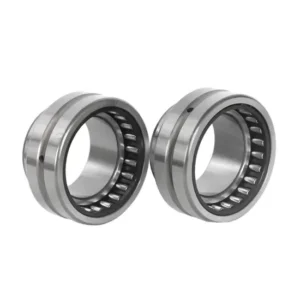
INA NA4902 Needle Roller Bearing P6 Precision Wholesale
<p><strong>INA NA4902 Needle Roller Bearing P6</strong> — open type with integrated inner ring, delivering P6 precision grade for industrial machinery requiring tighter dimensional tolerance than standard P0.</p> <ul> <li>Chrome steel construction ensures hardness and fatigue resistance under continuous radial loads</li> <li>Compact radial cross-section suits space-constrained material handling and general MRO applications</li> <li>Each shipment includes independent third-party dimensional inspection verifying ISO tolerance compliance</li> </ul>
View Details -
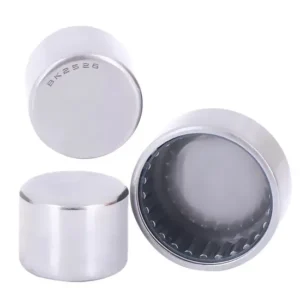
INA BK1512 Needle Roller Bearing Closed End Drawn Cup
<p><strong>INA BK1512 Needle Roller Bearing Closed End Drawn Cup</strong></p> <ul> <li><strong>Structure</strong>: Drawn cup with closed end for effective sealing against contamination</li> <li><strong>Material</strong>: Chrome steel construction for dimensional stability under cyclic loading</li> <li><strong>Application</strong>: Automotive transmission systems requiring compact cross-section solutions Sourced through authorized distributor channels with full batch traceability documentation.</li> </ul>
View Details -
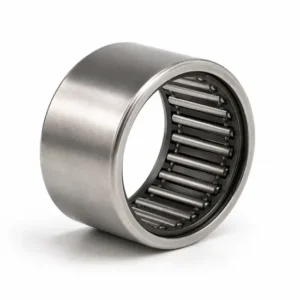
INA HK0912 Drawn Cup Needle Bearing P6 Precision Wholesale Supplier
<p><strong>INA HK0912 Drawn Cup Needle Bearing 9×13×12 mm</strong> — P6 precision class meets ISO 3245 tolerances for transmission-grade dimensional accuracy. The open-end drawn cup design delivers a compact cross-section with high radial load capacity, ideal for through-shaft mounting in gearbox assemblies.</p> <ul> <li>Bearing steel construction ensures core hardness and fatigue resistance under cyclic loading</li> <li>Open type requires external lubrication and sealing solutions for contamination control</li> </ul> <p>Sourced through authorized distributor channels with batch-level traceability, country-of-origin documentation, and Certificate of Conformity provided for import compliance.</p>
View Details -
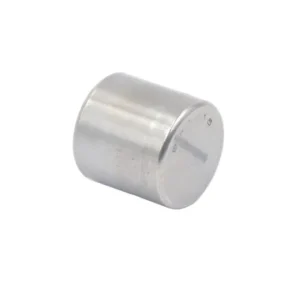
INA BK1010 Needle Roller Bearing Wholesale Supplier
<p><strong>INA BK1010 Drawn Cup Needle Roller Bearing 10×14×10 mm</strong> — Closed-end (BK) cup design seals the bearing cavity from one side, providing axial guidance while keeping contaminants out of motor and gearbox housings. GCr15 bearing steel construction delivers high surface hardness and fatigue resistance under compact radial envelope constraints.</p> <ul> <li>Batch-traceable documentation with Certificate of Conformity and country-of-origin paperwork included for import compliance</li> </ul>
View Details
Get a Fast Quote
Request a Quotation for
INA HK1616 Needle Roller Bearing P6 Precision Wholesale
Fill in your requirements and our multilingual sales team will respond within 12 hours with a competitive price, availability confirmation and delivery schedule.
- Reply within 12 hours -- 24/7 multilingual support
- Competitive factory-direct pricing with full documentation
- Small trial orders and bulk container loads both welcome