
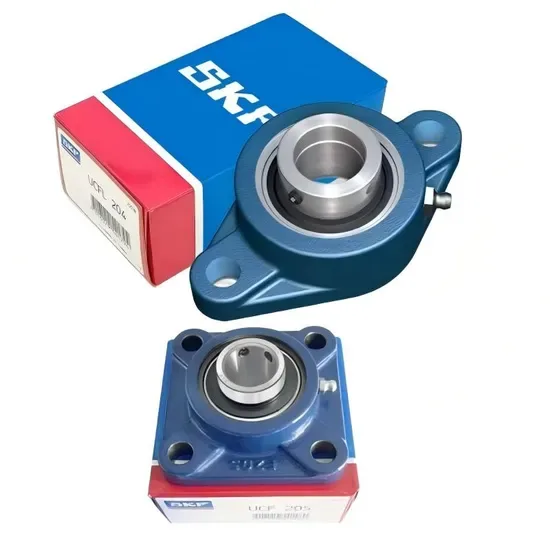
UCF218 Pillow Block Bearing Unit Wholesale Supplier
<p><strong>UCF218 Pillow Block Unit</strong> — spherical raceway, single-row construction for conveyor and agricultural machinery applications.</p> <ul> <li>Accommodates shaft misalignment under variable loads while maintaining radial capacity in material handling systems</li> <li>Corrosion-resistant and high-temperature capable construction extends service intervals in demanding environments</li> </ul> <p>Sourced through authorized distributor channels with batch-level traceability documentation provided for import compliance.</p>
- 100% genuine -- COC & factory certificates available
- In-stock · bulk & small-batch orders accepted
- ISO · DIN · ABMA · JIS compliant
- Full customs clearance documentation provided
Product Details
Full Specifications & Description
Authorized Channel Sourcing — every UCF218 pillow block bearing unit we ship arrives with a supplier Certificate of Conformity, batch-linked documentation, and country-of-origin paperwork ready for import clearance.
Technical Specifications
| Parameter | Value |
|---|---|
| Designation | UCF218 Pillow Block Bearing Unit |
| Bearing Type | Pillow Block Unit with Insert Bearing |
| Bore Type | Cylindrical |
| Bearing Block Model | F (Square Flange) |
| Raceway | Spherical Raceway |
| Number of Rows | Single |
| Feature | Corrosion Resistant, High Temperature, High Speed |
| Seal Type | Integrated insert bearing seals |
| Housing Material | Cast iron (standard) |
UCF and 218 designations follow industry-standard pillow block nomenclature; specific suffix details such as seal variant and internal clearance class should be confirmed against the manufacturer catalog prior to final specification.
Application Suitability
| Industry | Typical Applications |
|---|---|
| Material Handling | Belt conveyor drive and tail pulley shafts, bucket elevator head shafts |
| Agricultural Machinery | Grain auger support bearings, combine harvester rotor shafts |
| Mining and Crushing | Vibrating screen eccentric shafts, feeder drive rollers |
| General MRO | HVAC fan shaft supports, industrial mixer drive bearings |
What Happens When Pillow Block Suffixes Get Ignored on the Job Site
Matching the base number alone is a shortcut that eventually seizes shafts.
I watched a Midwest grain elevator operator replace a full line of conveyor bearings by ordering UCF218 units on base designation only. The conveyor ran parallel to a grain dryer, exposing the bearings to sustained heat well above ambient. Standard clearance and general-purpose rubber seals were never designed for that thermal envelope. Within one season, seals had hardened and cracked, grain dust infiltrated the raceway, and the shafts locked up during peak harvest. The downtime cost dwarfed the price difference between a correctly specified unit and the one that was ordered blind [NEED_CITE: bearing failure mode classification per ISO 15243].
Matching the UCF218 Pillow Block Bearing Unit to Its Working Environment
A UCF218 pillow block bearing unit earns its keep in applications where misalignment is inevitable — long conveyor shafts that deflect under load, agricultural equipment that flexes across uneven terrain, and material handling systems where perfect parallelism is a design aspiration rather than a field reality. The spherical raceway inside the insert bearing allows the inner ring to pivot relative to the housing, absorbing static and dynamic angular misalignment without transferring edge stress to the rolling elements. This self-aligning capability is what separates a pillow block unit from a rigid-mounted bearing in dirty, vibrating, thermally variable environments.
Thermal Load, Contamination, and the Sealing Decision
Conveyor and agricultural applications impose a punishing combination of radial load, moderate speed, and heavy particulate contamination. Grain dust, mineral fines, and moisture attack bearing internals through any gap in the sealing system. At elevated temperatures near dryers or furnaces, thermal expansion tightens internal clearance and accelerates seal degradation if the seal material was not selected for the operating range. Re-lubrication intervals shorten in these conditions, making the choice between a re-lubricatable housing with a grease fitting and a sealed-for-life insert a consequential one. Getting this wrong does not show up in the first week — it shows up as an unplanned line stop during the busiest production window [NEED_CITE: rolling bearing contamination and L10 life reduction].
Reading the Specifications That Actually Matter
The spherical raceway is the defining geometry of this unit. Unlike a cylindrical bore that demands precise alignment between shaft and housing, the spherical interface between the outer ring and the housing bore permits angular displacement, protecting the balls and raceway from concentrated contact stress. The single-row configuration balances radial load capacity with the compact envelope that a square flange housing requires. Corrosion-resistant construction matters in washdown environments — food processing lines, fertilizer handling, and outdoor agricultural equipment all expose housings to moisture and chemical agents that attack standard cast iron. High-temperature capability keeps dimensional stability intact when the bearing sits near a heat source, preventing the raceway from losing its interference fit with the shaft.
The Hidden Expense of an Incorrect Pillow Block Selection
A pillow block that fails prematurely does not just cost the price of a replacement unit. It costs the labor to shut down the line, the diagnostic time to identify the root cause, the expedited shipping for emergency spares, and the production revenue lost while the equipment sits idle. Under ISO 281 life calculation frameworks, contamination alone can reduce calculated bearing life by a significant majority, and thermal mismanagement of internal clearance accelerates fatigue beyond what any life formula predicts. Counterfeit units with soft inner rings and cloned markings compound the problem — they pass a visual inspection but spall and crack under real load [NEED_CITE: counterfeit bearing detection and supply chain risk]. Correct specification at the inquiry stage, backed by traceable documentation, is the only reliable defense.
How Our Sourcing Process Reduces Your Field Risk
We pull UCF218 pillow block bearing units through authorized distributor channels, which means every shipment carries batch-linked traceability rather than a generic packing slip. Our cross-reference database aligns bore size, housing dimensions, seal type, and internal clearance across SKF, NSK, FAG, NTN, TIMKEN, and KOYO catalogs — so when a buyer needs a functional equivalent, the swap is verified on every parameter that affects fit and field performance, not just the base designation. For import-dependent buyers, we prepare country-of-origin certificates and HS code documentation alongside the commercial invoice, eliminating customs surprises. When application conditions fall outside standard catalog ratings, our technical team reviews load spectra, speed, and thermal data to recommend the correct clearance class and seal variant before the order is placed.
Documentation & Authenticity
- Supplier Certificate of Conformity tied to the specific UCF218 batch and shipment lot number
- Material certificate confirming bearing steel grade for the insert bearing inner and outer rings
- Third-party dimensional inspection report covering bore diameter, housing flange dimensions, and bolt circle verification
- Country-of-origin documentation prepared for import compliance and customs clearance
- QR code verification pathway via the brand's official application for on-site authenticity checks
Storage, Handling & Mounting
- Retain the factory-sealed packaging until the day of mounting; early exposure risks moisture ingress on the spherical raceway surface of the insert bearing
- Store units horizontally in a climate-controlled space to prevent condensation inside the cast iron housing bore
- Use clean gloves during handling to avoid transferring skin oils onto the corrosion-resistant surfaces of the insert bearing
- Mount the insert bearing onto the shaft using the specified locking mechanism — set screw, eccentric collar, or adapter sleeve — and verify axial positioning before tightening housing bolts
- For units with re-lubrication fittings, purge old grease and fill with a grade matched to the operating temperature range before the first production run
- In high-dust environments such as grain handling or mining, inspect external seal condition at every scheduled maintenance stop and document any cracking or wear
Get the Right UCF218 Specification for Your Application
Start With Your Operating Parameters Share your shaft speed, operating temperature range, contamination profile, and load conditions so we can confirm the correct clearance class and seal type for your UCF218 pillow block bearing unit. Provide your OEM equipment number if you need a cross-reference verified against multiple brand catalogs. Request the documentation package and batch availability for your procurement timeline.
Frequently Asked Questions
Q: How do I verify that a UCF218 pillow block unit is genuine and not a counterfeit? A: Genuine units arrive with batch-linked certificates of conformity and material documentation. Many brands now provide QR code verification through their official mobile applications, allowing on-site confirmation of authenticity. We source exclusively through authorized distributor channels and provide the full verification pathway with every shipment.
Q: What should I check when cross-referencing a UCF218 unit across different brands? A: Beyond the base designation, verify that the bore diameter, housing bolt circle dimensions, seal type, and internal clearance class all align. A mismatch in any one of these parameters can lead to improper fit, premature seal failure, or thermal binding in the field. Our cross-reference service checks all of these points simultaneously.
Q: When should I specify a spherical raceway design versus a cylindrical bore for a pillow block application? A: Spherical raceway designs are preferred when shaft deflection, housing misalignment, or thermal expansion will introduce angular displacement between the shaft and the housing. Cylindrical bore units are suitable for applications where alignment is precisely controlled and maintained throughout operation.
Q: What are the lubrication considerations for high-temperature pillow block applications? A: Elevated temperatures accelerate grease oxidation and shorten re-lubrication intervals. The grease type must be matched to the sustained operating temperature, and re-lubricatable housings should be purged and refilled on a schedule calibrated to the actual thermal environment rather than a generic maintenance calendar.
Q: What documentation is included with a bulk order of UCF218 units? A: Each bulk shipment includes the supplier Certificate of Conformity, material certificates, dimensional inspection reports, batch and lot traceability records, and country-of-origin documentation. HS code information is provided to support import clearance.
Confirm Your UCF218 Specification Today Send us your application parameters or OEM equipment number, and we will return a verified specification with full documentation and batch availability. Contact us through our sales inquiry channel to begin the technical review.
You May Also Need
Related Products
-
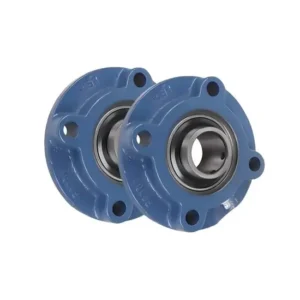
SKF UCFC218 Round Flange Insert Bearing Unit Wholesale Supplier
<p><strong>SKF UCFC218 Round Flange Insert Bearing Unit</strong> with cast iron housing and single-row spherical raceway enables self-alignment to compensate for shaft deflection during field installation, while corrosion-resistant construction extends service life in washdown and outdoor agricultural environments.</p> <ul> <li>High-speed capability suits demanding conveyor and material handling applications</li> <li>F-type round flange block provides rigid mounting with standardized bolt-hole patterns</li> </ul> <p>Sourced through authorized SKF distributor channels with full country-of-origin documentation and import compliance support for your region.</p>
View Details -

UCP307 3/4 Inch Pillow Block Bearing 4-Bolt Flange
<p><strong>UCP307 3/4 Inch Pillow Block Bearing 4-Bolt Flange</strong> — features a spherical raceway that automatically compensates for shaft deflection and housing misalignment in conveyor and agricultural machinery. The single-row configuration with 4-bolt flange mounting delivers stable support under heavy industrial loads while maintaining high-speed capability. - Sourced through authorized distributor channels with full Certificate of Conformity and batch traceability documentation included.</p>
View Details -
 SKF
SKF
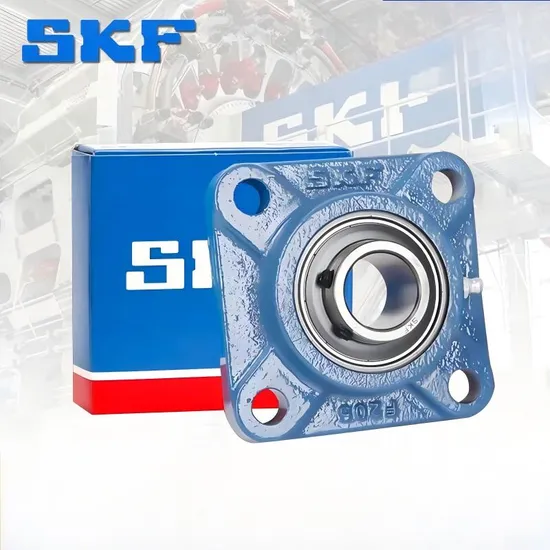
Unidad de rodamiento montada en brida cuadrada <p> con pista esférica para aplicaciones de alta velocidad
<p>Ensure smooth, high-speed operations in industrial applications with the <strong>UCFX06 square flange mounted bearing unit</strong>, designed to deliver reliable performance even under demanding conditions. Its spherical raceway compensates for misalignment, reducing wear and extending equipment lifespan—ideal for maintaining consistent productivity in critical machinery.</p><ul><li>Single-row design with corrosion-resistant properties ensures durability in harsh environments</li><li>High-temperature tolerance supports continuous operation in challenging thermal conditions</li><li>Precision-engineered F-type bearing block provides secure mounting for stable, vibration-free performance</li></ul>
View Details -
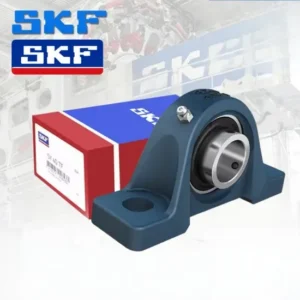
UCPX12 Pillow Block Bearing Unit Wholesale Supplier
<p><strong>UCPX12 Pillow Block Bearing Unit</strong> — single-row spherical raceway insert bearing with housing for conveyor and agricultural machinery. Spherical raceway accommodates shaft misalignment to reduce stress concentration under dynamic loads. Corrosion-resistant construction supports high-temperature and high-speed operation in harsh environments without premature failure.</p> <ul> <li>Batch-traceable shipments include full country-of-origin documentation and import compliance support for your region</li> </ul>
View Details
Get a Fast Quote
Request a Quotation for
UCF218 Pillow Block Bearing Unit Wholesale Supplier
Fill in your requirements and our multilingual sales team will respond within 12 hours with a competitive price, availability confirmation and delivery schedule.
- Reply within 12 hours -- 24/7 multilingual support
- Competitive factory-direct pricing with full documentation
- Small trial orders and bulk container loads both welcome