
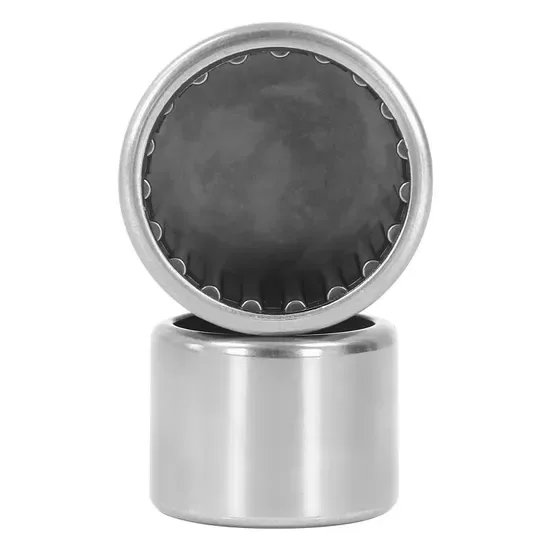
INA BK1212 Closed End Drawn Cup Needle Roller Bearing Wholesale
<p><strong>INA BK1212 Closed End Drawn Cup Needle Roller Bearing 12×18×12 mm P0</strong> — Closed-end shell retains grease and blocks contaminant ingress on one side, extending relubrication intervals in compact textile and printing machinery envelopes. Bearing steel construction and P0 precision meet standard industrial radial load requirements where space is limited.</p> <ul> <li>Batch-traceable supply with full country-of-origin documentation and HS code support for smooth import clearance</li> </ul>
- 100% genuine -- COC & factory certificates available
- In-stock · bulk & small-batch orders accepted
- ISO · DIN · ABMA · JIS compliant
- Full customs clearance documentation provided
Product Details
Full Specifications & Description
Authorized Channel Sourcing — Every INA BK1212 shipment traces back through verified distributor records with batch-level documentation retained on file.
Technical Specifications
| Parameter | Value |
|---|---|
| Designation | INA BK1212 |
| Bearing Type | Closed End Drawn Cup Needle Roller Bearing |
| Bore Diameter (d) | 12 mm |
| Outside Diameter (D) | 18 mm |
| Width (B) | 12 mm |
| Cage Material | Steel (integrated drawn cup) |
| Seal or Shield Type | Closed end (one side sealed by cup base) |
| Clearance Class | Standard |
| Precision Class | P0 |
| Bore Type | Smooth (for press-fit housing) |
| Arrangement | Single row |
| Number of Rows | 1 |
| Origin | Manufacturer's production facilities (verify per batch) |
Application Suitability
| Industry | Typical Applications |
|---|---|
| Textile Machinery | Spindle support journals, yarn guide rollers, warp beam pivot points |
| Printing Equipment | Impression cylinder auxiliary supports, paper feed roller ends |
| Packaging Machinery | Form-fill-seal jaw pivot bushings, conveyor diverter arms |
| Industrial Machinery | Small electric motor shaft supports, instrument gimbal pivots, light-duty linear guide carriages |
When a Closed-End Cup Fails on a High-Cycle Textile Spindle
Specifying an open-end drawn cup where a sealed end is required invites contaminant ingestion from the blind side of the housing, accelerating needle scoring long before the calculated L10 life.
The INA BK1212 needle roller bearing closed end drawn cup serves applications where one side of the bearing sits flush against a housing shoulder or cap, making a separate end seal redundant. Procurement teams sometimes substitute open-end HK equivalents to cut unit cost, overlooking the ingress path that remains on the closed side. On textile spindles running sustained high speeds in fiber-laden air, lint and sizing dust penetrate that open face and embed in the grease film, turning the needle-to-cup contact into a lapping operation. Field returns from such mismatches routinely show needle ends worn flat and cup bore surfaces cross-hatched with abrasive tracks, failures that ISO 15243 classifies under abrasive particle contamination [NEED_CITE: rolling bearing failure mode classification per ISO 15243]. The downtime cost of rethreading a warp end after an unplanned spindle stop dwarfs the price difference between an HK and a BK variant.
Matching the BK1212 Envelope to Compact Pivot Points
The 12 mm bore, 18 mm outside diameter, and 12 mm width give this bearing a cross-section that fits into pivot and rocker arm locations where space for a conventional machined ring bearing simply does not exist. Textile and printing machinery designers rely on drawn cup geometry to carry meaningful radial loads inside thin-walled housings. When a client asked us to replace a worn spindle bushing on older twisting frames, the INA BK1212 needle roller bearing closed end drawn cup dropped into the existing housing bore with no re-machining required. Our cross-reference check confirmed dimensional parity with the original equipment fit, and the closed cup base eliminated the need for a separate end cap that had been vibrating loose on the prior design.
Load Spectrum and Environmental Demands at the Roller Journal
Drawn cup bearings operate with the housing bore acting as the outer raceway, which means housing roundness and surface finish directly control load distribution across the needles. The radial loads in these small pivot applications are moderate but continuous, and any shock impulse — a yarn break snap-back, a paper web tension spike — concentrates stress on a limited number of needle contacts. Temperature rise is generally modest in these duty cycles, yet in printing presses situated near drying ovens or in textile dye houses, ambient heat elevates grease base oil oxidation and shortens relubrication intervals. Because the closed end seals one face by geometry, contamination defense depends entirely on the mating housing seal or cap on the open side; specifying this bearing without confirming the open-side sealing arrangement leaves half the contamination path unaddressed [NEED_CITE: drawn cup needle bearing sealing best practices]. Installation relies on a press-fit arbor that contacts only the outer cup rim, since driving the cup through the needles will collapse the cage and scrap the part before it ever sees service.
Why the Drawn Cup Shell and Closed Base Define Performance
The drawn cup is deep-drawn from bearing steel strip, a forming process that work-hardens the shell and gives it hoop strength sufficient to retain needle alignment under radial load without a separate outer ring. This integral construction keeps the outside diameter compact and the envelope weight low. The closed end — the cup base left intact on one side — serves as a built-in shield that retains factory-packed grease and blocks particle entry from that direction. The P0 precision class covers the dimensional tolerances appropriate for general industrial machinery where sub-micron running accuracy is not a design requirement. Needle complement and cage geometry together govern the load sharing among rollers; in a 12 mm bore size the needle count is already modest, so any housing out-of-roundness quickly unloads individual needles and invites skidding on the lightly loaded ones. That is why we always confirm housing bore tolerances with the buyer before shipping, rather than assuming a standard H7 reamed bore is present in the field.
What a Wrong Cup Specification Really Costs the Maintenance Budget
Substituting an open-end variant in a blind-bore housing means fabricating or sourcing a separate end cap, adding a component that can work loose under vibration and expose the needle ends to airborne debris. Counterfeit drawn cups compounded this risk: a batch of look-alike bearings I inspected for a Vietnam textile client some years ago showed cup walls that were noticeably softer than spec, and the closed ends were formed from thin material that collapsed under press-fit installation. The needles then ran against a distorted raceway, generating spalling within weeks. ISO 281 life calculations assume geometrically correct raceways and verified material hardness; when either assumption breaks down, the predicted L10 figure becomes meaningless [NEED_CITE: bearing life calculation assumptions per ISO 281]. The resulting unplanned stops, emergency freight for replacements, and warranty disputes represent costs that never appear on the original purchase order.
Why Maintenance Engineers Route BK1212 Orders Through Our Desk
Sourcing genuine INA BK1212 drawn cup needle bearings requires documentation that survives scrutiny at the receiving dock. We procure through authorized distributor channels and retain batch-level traceability records, so every shipment carries a verifiable lineage back to the manufacturer's production facilities. For buyers facing cross-reference pressure — when a machine manual calls out a legacy designation or a competing brand — we match bore, outside diameter, width, and closure type together rather than swapping on base number alone. Our inspection team verifies cup wall hardness and bore dimensions against tolerance before release, a discipline shaped by past field failures that none of us want repeated. Country-of-origin documentation accompanies export shipments to clear customs without last-minute holds, and the INA official app QR verification pathway remains available for any batch we supply. When application questions arise — press-fit tooling selection, housing bore finish requirements, relubrication intervals — the same engineers who checked the parts handle the follow-up call.
Documentation & Authenticity
- Supplier Certificate of Conformity issued against the specific BK1212 batch, listing quantity, lot code, and procurement channel for buyer-side receiving inspection.
- Third-party dimensional inspection report confirming bore diameter, outside diameter, width, and cup wall thickness within P0 tolerances before dispatch.
- Country-of-origin documentation prepared per destination country import requirements, including HS code reference for drawn cup needle roller bearings to prevent customs delays.
- QR code verification pathway through the INA official application, enabling buyers to authenticate each package against manufacturer records before breaking the seal.
- Material and hardness test confirmation on the drawn cup shell, verifying bearing steel grade and work-hardened surface condition consistent with genuine production.
Storage, Handling & Mounting
- Retain the BK1212 in its sealed plastic tube packaging until the moment of press-fit installation; early exposure to workshop air allows moisture and particulate to settle on the needle complement inside the closed cup.
- Store tubes horizontally on shelving away from direct sunlight and thermal cycling; drawn cup shells are thin-walled and temperature swings can promote condensation inside any partially opened package.
- Use a dedicated press-fit arbor that contacts only the outer cup rim during installation; applying force through the closed end or through the needles will distort the shell and compromise needle alignment in the 12 mm bore.
- Confirm the housing bore is reamed to the specified tolerance and surface finish before pressing in the BK1212, because the drawn cup relies entirely on the housing as its outer raceway.
- For the open side of the bearing, ensure the mating shaft seal or housing cap is installed immediately after mounting; the closed cup base protects only one face, leaving the other dependent on external sealing hardware.
- Handle with clean, lint-free gloves; fiber contamination from cotton workshop gloves can lodge between needles and initiate abrasive wear patterns consistent with ISO 15243 particle ingress classification [NEED_CITE: bearing handling contamination protocols].
Request a Quotation or Technical Review
Share your housing bore drawings and operating parameters so our team can confirm the INA BK1212 needle roller bearing closed end drawn cup fits your envelope and load spectrum without substitution risk. Provide the OEM equipment plate number if you are replacing existing bearings, and we will cross-reference the original specification against current INA production designations including closure type verification.
Frequently Asked Questions
Q: How can I confirm the authenticity of an INA BK1212 drawn cup bearing before installing it? A: Scan the package QR code through the INA official application, which links the batch to the manufacturer's distribution records. We also supply a Certificate of Conformity tied to the specific lot, and the authorized channel paperwork allows full upstream traceability if your quality system requires it.
Q: What should I check when cross-referencing the BK1212 to another brand's drawn cup needle bearing? A: Verify bore diameter, outside diameter, width, and closure type as a matched set. Some catalogs list open-end and closed-end variants under similar base numbers, so confirming the closed cup geometry is essential to avoid specifying an HK series part where a BK is required.
Q: When should I specify a closed-end BK series instead of an open-end HK drawn cup? A: Use the BK series when one side of the bearing seats against a blind housing shoulder or a solid end cap, where the integral cup base replaces a separate seal and retains grease without additional hardware. If both sides of the bearing are accessible and independently sealed by the housing design, an open-end variant may be appropriate instead.
Q: What installation tooling is recommended for the BK1212 to avoid cup distortion? A: A stepped press-fit arbor sized to contact only the outer cup rim, never the closed end or the needle complement. The drawn cup shell is thin-walled, and off-axis or misdirected force will ovalize the bore and bind the needles before the bearing reaches service.
Q: Can the BK1212 be relubricated after installation? A: The closed end retains the factory grease charge, and relubrication access depends on whether the housing design includes a grease passage leading to the open side of the bearing. In sealed-for-life pivot applications, the initial grease fill is intended to last the service interval without replenishment.
Confirm Fit and Availability for Your Next Maintenance Window Send your application parameters or OEM equipment number so we can verify designation, match cross-references, and return a quotation with documentation scope and lead time within one business cycle.
You May Also Need
Related Products
-
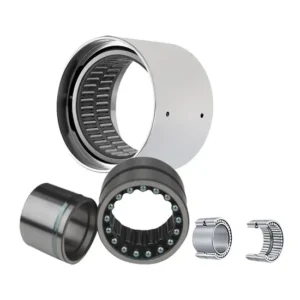
INA RNAO50X62X20 Needle Roller Bearing 50x62x20mm Genuine
<p><strong>RNAO50X62X20 Needle Roller Bearing 50×62×20 mm</strong> — without inner and outer ring design delivers compact radial cross-section for space-constrained assemblies. Single row caged construction ensures controlled roller spacing and consistent load distribution under radial forces. Open type supports relubrication in maintenance-accessible applications like industrial machinery and material handling equipment.</p> <ul> <li>Sourced through authorized INA distributor channels with full batch traceability and Certificate of Conformity for import compliance</li> </ul>
View Details -
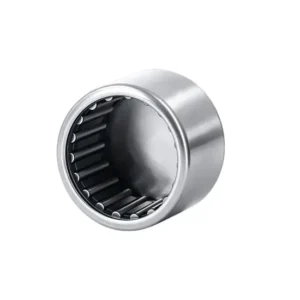
INA BK2016 Closed End Needle Roller Bearing 20x26x16mm
<p><strong>INA BK2016 Closed End Needle Roller Bearing 20×26×16 mm</strong> — drawn outer ring with sealed end retains factory grease and blocks contaminant ingress in dusty industrial environments, while GCr15 through-hardened steel ensures core toughness under continuous radial loads.</p> <ul> <li>Sourced through authorized channels with full Certificate of Conformity, batch traceability, and country-of-origin documentation for import clearance.</li> </ul>
View Details -
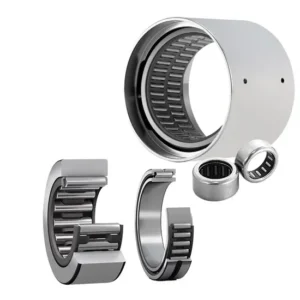
INA NA4906-RSR-XL Needle Roller Bearing 30x47x18mm Wholesale
<p><strong>INA NA4906-RSR-XL Needle Roller Bearing 30×47×18 mm</strong> — single lip seal (RSR) on one side provides basic contamination protection for compact radial load applications in industrial and automotive equipment.</p> <ul> <li>Bearing steel construction with single-row needle roller complement delivers high radial capacity within the slim 30×47×18 cross-section</li> <li>Cross-brand interchange matched on seal type, clearance, and cage specifications available upon request</li> </ul> <p>Sourced through authorized INA distributor channels with full batch traceability and country-of-origin documentation for import compliance.</p>
View Details -
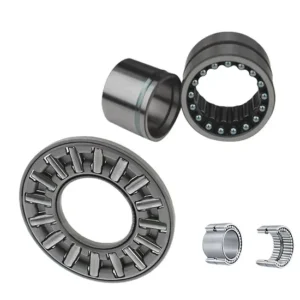
INA NK32/20-F-XL Needle Roller Bearing 32x42x20mm
<p><strong>INA NK32/20-F-XL Needle Roller Bearing 32×42×20 mm</strong> — Single row, open type without inner ring for direct shaft mounting in space-constrained envelopes.</p> <ul> <li><strong>F suffix</strong> machined steel cage delivers stable roller guidance under radial loads in automotive and material handling equipment.</li> <li>Sourced through authorized INA distributor channels with full batch traceability and country-of-origin documentation for import compliance.</li> </ul>
View Details
Get a Fast Quote
Request a Quotation for
INA BK1212 Closed End Drawn Cup Needle Roller Bearing Wholesale
Fill in your requirements and our multilingual sales team will respond within 12 hours with a competitive price, availability confirmation and delivery schedule.
- Reply within 12 hours -- 24/7 multilingual support
- Competitive factory-direct pricing with full documentation
- Small trial orders and bulk container loads both welcome