
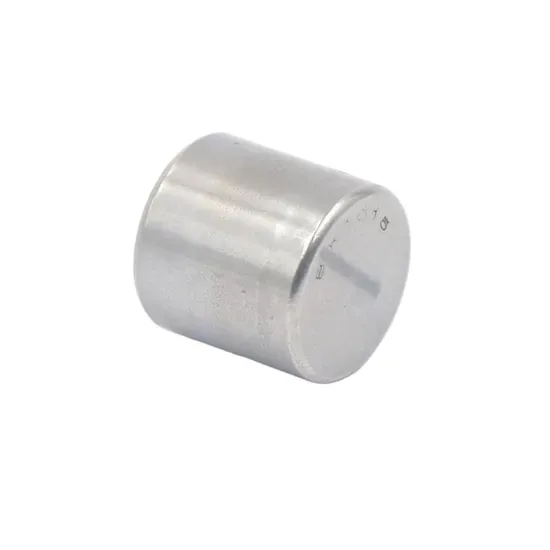
INA BK1010 Needle Roller Bearing Wholesale Supplier
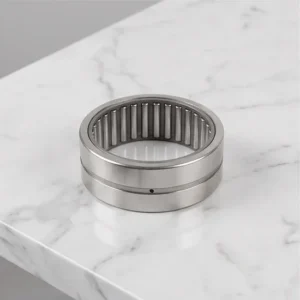
<p><strong>INA BK1010 Drawn Cup Needle Roller Bearing 10×14×10 mm</strong> — Closed-end (BK) cup design seals the bearing cavity from one side, providing axial guidance while keeping contaminants out of motor and gearbox housings. GCr15 bearing steel construction delivers high surface hardness and fatigue resistance under compact radial envelope constraints.</p> <ul> <li>Batch-traceable documentation with Certificate of Conformity and country-of-origin paperwork included for import compliance</li> </ul>
- 100% genuine -- COC & factory certificates available
- In-stock · bulk & small-batch orders accepted
- ISO · DIN · ABMA · JIS compliant
- Full customs clearance documentation provided
Product Details
Full Specifications & Description
Authorized Channel Sourcing — every INA BK1010 batch arrives with Certificate of Conformity and lot traceability back to the Schaeffler production run.
Technical Specifications
| Parameter | Value |
|---|---|
| Designation | INA BK1010 |
| Bearing Type | Drawn Cup Needle Roller Bearing with Closed End |
| Bore Diameter (d) | 10 mm |
| Outside Diameter (D) | 14 mm |
| Width (B) | 10 mm |
| Material | GCr15 Bearing Steel |
| Structure | Closed Cup (BK series) |
| Seal or Shield Type | Closed end — one side sealed by drawn cup base |
| Standards | ISO 1206 |
| Cage Material | unverified suffix — requires manufacturer catalog confirmation |
Application Suitability
| Industry | Typical Applications |
|---|---|
| Electric Motors | Motor shaft support in fractional-horsepower and servo motors |
| Gearboxes | Planetary gear carrier pivots and input shaft needle positions |
| Industrial Machinery | Conveyor pivot points, textile spindle guides, packaging actuator linkages |
| Automotive and Heavy Vehicle Repair | Steering column universal joints, transmission shift forks |
What Happens When a Drawn Cup Wall Fails Before the Rollers Do
A soft drawn cup deforms radially before the needle elements reach fatigue life — and no one checks cup hardness on arrival.
On a quarry conveyor in West Africa, I watched a maintenance crew replace a seized pivot bearing that had lasted barely three weeks. The replacement looked identical to the INA BK1010 it replaced: same 10 mm bore, same 14 mm OD, same closed-end stamping. But the cup wall on the counterfeit unit was noticeably thinner under caliper measurement, and the needles left a visible scratch when dragged across a file — a quick field hardness check that genuine GCr15 rollers pass without marking. Within the first week the cup had ovalized under radial load, the rollers skewed, and the shaft scored. That pivot lock-up took the entire conveyor offline for two shifts. [NEED_CITE: premature bearing failure cost in unplanned downtime per ISO 14224]
The core issue with compact drawn cup needle roller bearings is that their performance depends entirely on the case depth and core hardness of a component most buyers never inspect: the outer cup itself. When procurement focuses only on matching the base designation and ignores material traceability, the result is a bearing that passes dimensional go/no-go gauges but collapses under operating load.
Matching the INA BK1010 to Motor and Gearbox Load Profiles
The INA BK1010 needle roller bearing fits applications where radial envelope space is severely constrained but radial load capacity cannot be compromised. In servo motor housings and planetary gear carriers, the 14 mm outer diameter allows designers to keep shaft-to-housing distances tight while the full-complement or caged needle array carries loads that a similarly sized ball bearing could not sustain. The closed cup end eliminates the need for a separate axial seal on one side of the assembly, reducing both part count and the risk of contamination ingress through an open bearing face in gearbox environments where oil splash lubrication is standard.
Radial Shock, Thermal Expansion, and the Clearance Question
Drawn cup bearings operate directly on the housing bore, which means thermal expansion of the surrounding structure feeds straight into the bearing's internal geometry. In a gearbox that cycles from ambient to sustained running temperature, differential expansion between a cast iron housing and a steel shaft can close internal clearance rapidly. The BK series relies on interference fit between the drawn cup OD and the housing bore for retention — if the housing bore tolerances drift toward the loose end of the specification, the cup can creep under shock loads typical in mining conveyors or heavy agricultural PTO drives. [NEED_CITE: drawn cup needle roller bearing housing bore tolerance requirements per ISO 1206] On the lubrication side, the closed end traps grease effectively but also prevents relubrication from that face, so initial fill quantity and grease compatibility with operating temperature range must be verified before installation.
Inside the BK Designation and GCr15 Material Choice
The BK prefix in the INA BK1010 identifies a drawn cup needle roller bearing with a closed end, distinguishing it from the HK series which is open on both sides. This closed end serves a dual function: it provides axial location for the needle roller set and acts as a barrier against contaminant entry from one direction, which is critical in motor applications where the bearing sits near a ventilation gap. The GCr15 bearing steel specification (equivalent to 100Cr6 / AISI 52100) provides through-hardening capability to approximately HRC 58–62, giving the needle rollers and cup the contact fatigue resistance needed for sustained radial loading. The drawn cup manufacturing process — deep-drawing a steel strip into a precision cup — produces a work-hardened outer shell that adds structural rigidity beyond what the base material hardness alone would deliver.
The Hidden Cost of Substituting on Dimension Alone
When a maintenance team swaps in a non-genuine drawn cup bearing that matches the 10×14×10 mm envelope but lacks material certification, the failure rarely announces itself early. A soft cup ovalizes gradually, increasing vibration signature at frequencies that standard condition monitoring may attribute to imbalance rather than bearing degradation. By the time the shaft shows scoring or the cage fragments, the damage has propagated to adjacent components — a repair scope that escalates from a bearing exchange to a shaft regrind or housing bore sleeving. [NEED_CITE: rolling bearing failure mode classification per ISO 15243] Correct selection with verified origin and material documentation keeps the failure boundary within the bearing itself, protecting the more expensive surrounding hardware.
Why Procurement Engineers Source This INA BK1010 Through Us
Every INA BK1010 we supply moves through authorized distributor channels, which means the Certificate of Conformity traces back to the specific production lot at the manufacturer's production facilities — not to a trading company warehouse that mixed batches. When a buyer needs to cross-reference the BK1010 against an NSK or IKO drawn cup equivalent for a multi-brand MRO inventory, our interchange comparison matches on cup wall specification, needle grade, and end closure geometry rather than just outer dimensions. We provide origin identification documentation that satisfies import verification requirements in markets where customs authorities demand country-of-origin proof for industrial components. Third-party dimensional inspection reports covering bore, OD, width, and cup wall thickness accompany bulk shipments so that receiving inspection does not depend on faith alone.
Documentation & Authenticity
- Supplier Certificate of Conformity referencing the INA BK1010 production batch and heat lot number for full traceability
- GCr15 material certificate confirming chemical composition and hardness values against the bearing steel specification
- Third-party dimensional inspection report verifying 10 mm bore, 14 mm OD, and 10 mm width within ISO 1206 tolerances
- Country-of-origin documentation prepared for customs and import clearance in destination markets
- HS code classification support for needle roller bearing category under international tariff schedules
Storage, Handling & Mounting
- Keep the INA BK1010 sealed in original packaging until the moment of pressing into the housing bore — the drawn cup's anti-corrosion coating is thin and handling with bare hands introduces moisture that initiates surface staining on the 14 mm OD
- Press-fit installation only using a mandrel that contacts the closed cup end face evenly; never apply mounting force through the open end or the needle roller set, as the GCr15 needles will brinell into the shaft
- Verify housing bore roundness and surface finish before installation — the thin drawn cup wall of the BK1010 conforms to bore irregularities rather than bridging them, and an out-of-round housing directly translates to uneven needle loading
- For gearbox applications with oil splash lubrication, confirm that the oil type is compatible with any factory-applied preservative on the needle rollers to prevent additive interaction during initial run-in
Request a Quotation with Full Traceability
Share your operating parameters — radial load, shaft speed, housing material, and ambient temperature range — so we can confirm the INA BK1010 suits your application or recommend a cross-brand alternative with matched specifications. Provide your OEM equipment number if you are replacing an existing bearing, and we will verify the cross-reference including end closure type and material grade. Request the documentation package in advance of shipment if your procurement process requires pre-approval of origin certificates or third-party inspection reports.
Frequently Asked Questions
Q: How can I verify that the INA BK1010 I received is genuine and not a counterfeit? A: Authenticity verification starts with the batch and lot number printed on the packaging, which can be traced through the manufacturer's official channels. We supply a Certificate of Conformity that links your specific units to a production run. Field checks include verifying that the needle rollers resist scratching when drawn across a file — genuine GCr15 at HRC 58–62 will not mark — and confirming the cup wall thickness matches the ISO 1206 specification rather than being noticeably thinner.
Q: What are the critical housing bore tolerances for installing a BK1010 drawn cup needle roller bearing? A: The drawn cup relies on an interference fit with the housing bore for retention and structural support. Housing bore tolerances must fall within the range specified by ISO 1206 to prevent cup creep under load or excessive installation force that could deform the thin cup wall. We provide dimensional inspection data with each shipment so receiving teams can verify conformance before mounting.
Q: Can the BK1010 be relubricated through the closed end? A: No. The closed cup design seals one end permanently, so relubrication must occur through the open end or through the housing if a lubrication port is provided. For applications where relubrication intervals are critical, the sealed end should face the contaminant source, and the open end should be accessible for grease replenishment or connected to an automatic lubrication system.
Q: What cross-brand equivalents exist for the INA BK1010, and how do I ensure interchangeability? A: Other manufacturers produce drawn cup needle roller bearings in the same 10×14×10 mm envelope with closed-end designs. However, interchangeability requires matching not just dimensions but also cup material grade, needle hardness, and end closure thickness. Our cross-reference comparison covers these parameters across major needle bearing brands so that substitutions do not introduce a weak point into the assembly. [NEED_CITE: drawn cup needle roller bearing interchangeability criteria]
Q: Why does the cage material matter for a drawn cup bearing of this size? A: At 10 mm bore and 14 mm OD, the needle rollers are small and closely spaced. Cage material determines the maximum operating speed, temperature tolerance, and chemical compatibility with the lubricant. A cage specification mismatch can lead to cage deformation or chemical degradation in certain gearbox oil environments. The specific cage variant for your batch is confirmed against the manufacturer catalog at the time of order.
Secure Your INA BK1010 with Full Documentation Send us your application parameters or OEM equipment number to receive a quotation with verified lead time and the complete traceability package.
You May Also Need
Related Products
-
INA NA4903-RSR-XL Needle Roller Bearing 17x30x14mm
<p><strong>INA NA4903-RSR-XL Needle Roller Bearing 17×30×14 mm</strong> — Compact radial design with single lip seal provides reliable contamination protection while maintaining low friction in space-constrained mounting envelopes. Bearing steel construction supports demanding industrial loads across machinery and material handling applications.</p> <ul> <li>Sourced through authorized INA distributor channels with batch-traceable documentation and QR verification support for import compliance</li> </ul>
View Details -
INA HK2216 Drawn Cup Needle Roller Bearing GCr15 P6 Wholesale
<p><strong>INA HK2216 Drawn Cup Needle Roller Bearing</strong> — Open-end drawn cup configuration supports direct shaft contact for maximum radial load capacity in compact heavy machinery assemblies. Manufactured from GCr15 steel with P6 precision class, ensuring consistent hardness and ISO tolerance compliance under demanding industrial conditions. </p> <ul> <li>Sourced through authorized distributor channels with complete batch traceability documentation available for import compliance.</li> </ul>
View Details -
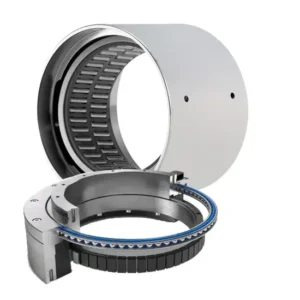
INA NK45/20-TV-XL Needle Roller Bearing 45x55x20mm
<p><strong>INA NK45/20-TV-XL Needle Roller Bearing 45×55×20 mm</strong> — Compact needle roller design without inner or outer ring, delivering high radial load capacity within a minimal envelope for space-constrained gearboxes and transmissions.</p> <ul> <li><strong>TV polyamide cage</strong> reduces rotational mass and friction, suited to moderate-speed operation where low noise and smooth running are required.</li> <li>Open type design allows customized external lubrication and sealing arrangements based on contamination and thermal conditions.</li> </ul> <p>Sourced through authorized INA distributor channels with full batch traceability and origin documentation for import compliance.</p>
View Details -
INA NK45/30-TV-XL Needle Roller Bearing 45x55x30mm
<p><strong>INA NK45/30-TV-XL Needle Roller Bearing 45×55×30 mm</strong> — without inner ring design allows the shaft to function directly as the raceway, saving space in compact assemblies. The TV polyamide cage reduces operating weight and noise, suitable for electric motors and material handling equipment at moderate speeds.</p> <ul> <li>Open type requires external lubrication and sealing arrangements</li> <li>Sourced through authorized channels with batch traceability and INA QR verification for import compliance</li> </ul>
View Details
Get a Fast Quote
Request a Quotation for
INA BK1010 Needle Roller Bearing Wholesale Supplier
Fill in your requirements and our multilingual sales team will respond within 12 hours with a competitive price, availability confirmation and delivery schedule.
- Reply within 12 hours -- 24/7 multilingual support
- Competitive factory-direct pricing with full documentation
- Small trial orders and bulk container loads both welcome