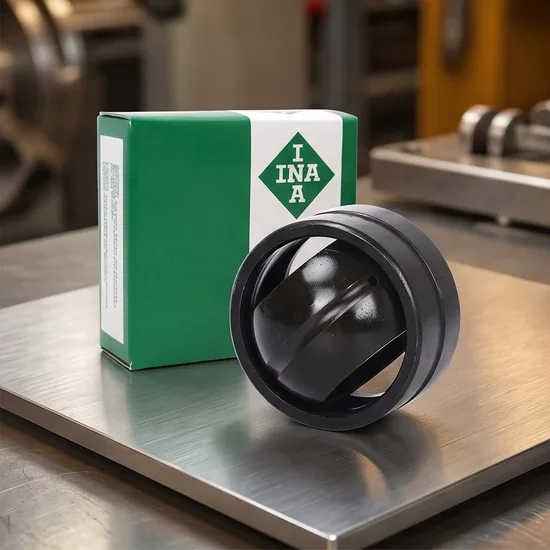
INA SA10T SA12T SA15T Female Thread Rod End Wholesale Supplier
<p><strong>INA SA10T SA12T SA15T Female Thread Rod End Spherical Plain Bearing</strong> — steel/steel sliding contact surfaces with zinc-plated finish for corrosion resistance in general industrial environments. Female thread design enables direct mounting onto hydraulic cylinder piston rods and linkage mechanisms without adapters. - Sourced through authorized INA distributor channels with batch traceability and country-of-origin documentation for seamless import compliance.</p>
- 100% genuine -- COC & factory certificates available
- In-stock · bulk & small-batch orders accepted
- ISO · DIN · ABMA · JIS compliant
- Full customs clearance documentation provided
Product Details
Full Specifications & Description
Traceable Sourcing Chain — Every SA10T, SA12T, and SA15T rod end ships with a supplier-issued Certificate of Conformity linked to its production batch, supported by country-of-origin paperwork so your import documentation stays clean from port to plant.
Technical Specifications
| Parameter | Value |
|---|---|
| Designation | INA SA10T / SA12T / SA15T |
| Bearing Type | Spherical Plain Rod End (Female Thread) |
| Bore Diameter (d) | 10 mm / 12 mm / 15 mm |
| Thread Type | Female Thread |
| Surface Treatment | Zinc Plated |
| Feature | High Precision, Smooth Operation |
| Origin | China |
| Standards Reference | ISO 12240 |
The "T" suffix in the SA series designation is noted but remains unverified against the current manufacturer catalog; confirm exact meaning with engineering documentation before final specification.
Application Suitability
| Industry | Typical Applications |
|---|---|
| Agricultural Machinery | PTO linkage pivot joints, boom arm articulation points |
| Industrial Automation | Pneumatic cylinder rod clevis connections, conveyor diverter arms |
| Mining and Crushing | Hydraulic cylinder linkages on jaw crusher toggle plates |
| Material Handling | Forklift mast tilt cylinder connections, stacker arm pivots |
When a Wrong Suffix Grounds an Entire Hydraulic Line
A single-letter suffix error on a rod end can misalign a cylinder within weeks and destroy the spherical contact surface.
On a crushing site near Belo Horizonte, a previous vendor supplied male-thread SAB12 rod ends when the equipment drawing called for female-thread SA12t units. The mismatched thread direction meant the jam nut could not seat flush, introducing angular misalignment under load. Within three weeks, the spherical sliding surface was scored beyond recovery, and the hydraulic cylinder itself needed reseating. That kind of field failure traces back to a catalog line that someone did not read carefully enough [NEED_CITE: rod end thread mismatch causing misalignment failure]. Cross-reference errors are not limited to base numbers — clearance, material pairing, and thread geometry all need to match, or the downtime cost lands on the maintenance team, not the supplier.
Matching the Rod End to Your Cylinder and Linkage Envelope
Selecting the correct bore diameter across the SA10T, SA12T, and SA15T range starts with the piston rod thread specification and the available mounting envelope. Female-thread rod ends screw directly onto externally threaded rods, which means thread pitch, hand direction, and engagement length must all be confirmed before the part leaves the shelf. For hydraulic cylinder connections on mobile equipment, the articulation angle under peak stroke determines whether the standard spherical clearance is sufficient or whether a wider internal clearance variant is needed. We have walked buyers through OEM equipment numbers to verify that the female thread specification on the replacement matches the original — a step most catalog-only suppliers skip entirely.
Load Reversals, Contamination, and the Sliding Surface
The steel-on-steel sliding contact surface in the SA series is designed for oscillating loads and slow rotational movement, not continuous high-speed rotation. In agricultural linkage pivots and crusher cylinder connections, the rod end experiences repeated load reversals combined with dust and moisture ingress. Zinc plating on the external housing provides a first line of corrosion defense, but the sliding contact zone itself depends on regular re-lubrication and effective external sealing to survive abrasive environments [NEED_CITE: steel-on-steel spherical plain bearing wear in contaminated conditions]. Temperature swings common in outdoor mining and agricultural service also affect the interference fit between the rod end body and the mounting thread, making correct initial torque essential.
Reading the Specification Table Beyond the Bore Number
The bore diameter — 10 mm, 12 mm, or 15 mm — tells you the rod end fits the shaft, but it says nothing about load capacity or articulation range. The steel-on-steel sliding pair provides high static load capability suitable for heavy linkages, yet it requires periodic maintenance to prevent metal-to-metal galling. Female thread construction concentrates stress at the thread root under axial load, so the thread engagement depth and the presence of a locking mechanism directly affect fatigue life. Zinc plating thickness and coverage uniformity influence how long the housing resists white rust in humid or washdown environments, which matters for agricultural sprayers and food-grade material handling systems.
The Downtime Math Nobody Quotes Upfront
Installing a rod end with an incorrect sliding surface material or insufficient thread engagement does not always fail immediately — it fails during peak production when the linkage is under maximum load. Premature wear on the spherical surface leads to increasing play, which transfers vibration into the cylinder seals and accelerates hydraulic fluid leakage. Unplanned downtime on a mobile crusher or an automated sorting line compounds quickly when replacement parts are not on site and the original supplier cannot confirm batch availability [NEED_CITE: ISO 15243 bearing failure classification for plain bearings]. Sourcing verified INA SA10T, SA12T, and SA15T units through authorized channels with full traceability documentation eliminates the guesswork that turns a minor component into a major production interruption.
How Our Sourcing Process Protects Your Maintenance Schedule
Every shipment of INA SA10T SA12T SA15T female thread rod end spherical plain bearing units we supply moves through authorized distributor channels with batch-level traceability from the manufacturer's production facilities. We verify thread direction, bore diameter, and suffix interpretation against your equipment drawing before the order is confirmed — not after a field failure. Our cross-reference database checks sliding surface material, clearance class, and thread specification simultaneously, so a substitution from an equivalent brand maintains functional parity. Country-of-origin documentation accompanies each consignment for customs clearance, and a Certificate of Conformity ties every rod end to its production lot. For buyers managing inventory across multiple sites, we provide pre-shipment dimensional spot checks on request to catch deviations before they reach your storeroom.
Documentation & Authenticity
- Supplier Certificate of Conformity listing batch and lot numbers for each SA10T, SA12T, or SA15T shipment
- Third-party dimensional inspection reports covering bore tolerance and thread gauge verification on request
- Country-of-origin certificate aligned with HS code requirements for import customs processing
- Material certificate confirming steel grade of the rod end body and sliding contact surfaces
- QR code or label verification pathway to confirm authenticity through brand official channels
Storage, Handling & Mounting
- Keep SA series rod ends in original sealed packaging until installation to preserve the zinc-plated surface from warehouse humidity
- Store female-thread units vertically or in compartmented bins to prevent thread damage from contact with other hardware
- Apply clean-thread engagement practices during mounting — contaminated threads on hydraulic cylinder rods accelerate wear at the jam nut interface
- Verify thread pitch and hand direction against the equipment manual before torque application; forced engagement of mismatched threads damages both the rod end and the piston rod
- Re-lubricate the steel-on-steel sliding surface after installation per the maintenance schedule, as the factory grease film is intended for storage protection, not full service life
- For outdoor agricultural or mining equipment, inspect the zinc plating for transit damage and apply supplemental corrosion protection to any exposed housing areas before commissioning
Getting the Right Rod End to Your Dock
Share your equipment OEM number or the specific application parameters — load direction, articulation angle, operating environment — so we can verify the correct SA series variant and cross-reference if needed. Request the documentation package including Certificate of Conformity and country-of-origin paperwork before placing your bulk order. Confirm batch availability and lead time for the exact bore sizes and quantities your maintenance schedule requires.
Frequently Asked Questions
Q: How can I verify the authenticity of the INA rod end bearings I receive? A: Each unit ships with a supplier Certificate of Conformity linked to the production batch. You can also check packaging markings, label quality, and use the brand's official verification app where QR codes are present. For critical applications, request a third-party dimensional inspection before the parts enter your inventory.
Q: What does the "T" suffix mean on INA SA10T, SA12T, and SA15T rod ends? A: The "T" suffix in this SA series context requires confirmation against the current manufacturer catalog. Before finalizing your specification, request the full suffix interpretation from the engineering documentation we provide with each quotation.
Q: How do I choose the correct rod end bore size for my hydraulic cylinder? A: Match the bore diameter — 10 mm, 12 mm, or 15 mm — to the piston rod thread specification and confirm thread pitch and direction. Consider the maximum articulation angle under stroke and the load direction to ensure the steel-on-steel sliding pair is suitable for your duty cycle.
Q: Is zinc plating sufficient for rod ends used in corrosive or washdown environments? A: Zinc plating provides baseline corrosion resistance for general industrial and outdoor use. In continuous washdown or highly corrosive chemical environments, evaluate whether supplemental sealing or a stainless steel alternative is required for the sliding contact zone.
Q: Can I substitute a different brand rod end if INA units are unavailable? A: Cross-brand substitution is possible when the replacement matches not only the base bore and thread size, but also the sliding surface material pair, clearance, and load rating. We perform full cross-reference checks across SKF, NSK, FAG, TIMKEN, NTN, and KOYO catalogs to confirm functional equivalence before recommending an alternative.
Confirm Your INA SA Series Rod End Requirement Send us your OEM equipment number or application parameters, and we will return a verified specification match with full documentation and batch availability.
Contact: [NEED_CITE: sourcing inquiry via company website or authorized distributor channel]
You May Also Need
Related Products
-
GE20ES GE25ES GE30ES Spherical Plain Bearings Wholesale Supplier
<p><strong>GE20ES GE25ES GE30ES Spherical Plain Bearing</strong> — chrome bearing steel with hardened inner ring and grease lubrication for radial load applications.</p> <ul> <li>ES suffix requires manufacturer catalog confirmation before final selection</li> <li>Heat-treated inner ring resists wear under oscillating conditions in heavy machinery</li> </ul> <p>Batch-traceable documentation package with country-of-origin certificates available for import compliance and material verification.</p>
View Details -
 SKF
SKF
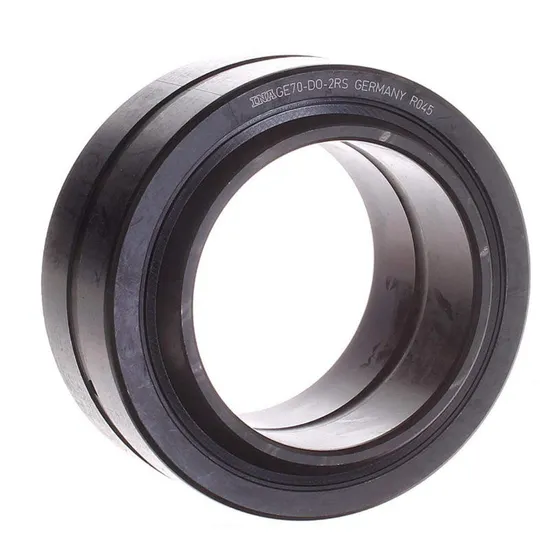
GE400-DO-2RS4 Radial Spherical Plain Bearing for High-Speed Industrial Machinery 400mm Bore
<p>Ensure peak performance in high-speed industrial machinery with the <strong>GE400-DO-2RS4 radial spherical plain bearing</strong>, engineered to deliver smooth radial movement and reduced downtime for critical applications. This 400mm bore bearing combines precision Po rating with durable bearing steel construction, ensuring reliable operation even under heavy loads—perfect for maintaining consistent productivity in demanding environments.</p><ul><li>400mm bore diameter paired with 540mm outer diameter for robust load distribution</li><li>131.000kg single unit weight designed for industrial-grade stability</li><li>Direct supply from authorized channels guarantees full traceability and original factory quality</li></ul>
View Details -
 SKF
SKF
GE40-DO-E P2 Precision Radial Bearing for Heavy Machinery Joint Applications with Bearing Steel Construction
<p>Ensure smooth, precise operation in heavy machinery joints with the <strong>GE40-DO-E P2 radial bearing</strong>, crafted from high-grade bearing steel for exceptional durability under extreme loads. This P2 precision-rated component minimizes vibration and extends equipment lifespan, addressing the critical need for reliable performance in industrial applications like steel mills and construction machinery.</p><ul><li>40mm bore diameter paired with 62mm outer diameter ensures perfect fit in standard joint assemblies</li><li>0.300kg single weight balances strength and maneuverability during installation</li><li>Direct supply from authorized channels guarantees full traceability and original factory quality</li></ul>
View Details -
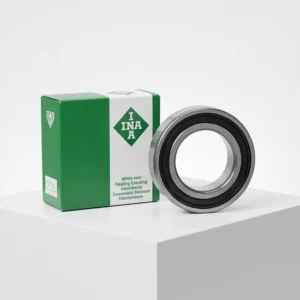
INA GEZ30ES GEZ35ES GEZ40ES Spherical Plain Bearings Steel on Steel
<p><strong>INA GEZ30ES / GEZ35ES / GEZ40ES Spherical Plain Bearing</strong> — steel-on-steel sliding surface in chrome bearing steel for oscillating and slow-rotating motion under high radial loads, delivering high wear resistance in industrial joint applications. </p> <ul> <li>Sized in inch dimensions for direct fit into existing equipment envelopes without modification. </li> <li>Sourced through authorized channels with Certificate of Conformity, batch traceability, and full country-of-origin documentation for import compliance.</li> </ul>
View Details
Get a Fast Quote
Request a Quotation for
INA SA10T SA12T SA15T Female Thread Rod End Wholesale Supplier
Fill in your requirements and our multilingual sales team will respond within 12 hours with a competitive price, availability confirmation and delivery schedule.
- Reply within 12 hours -- 24/7 multilingual support
- Competitive factory-direct pricing with full documentation
- Small trial orders and bulk container loads both welcome