INA GE20ES PTFE Lined Spherical Plain Bearing Wholesale Supplier
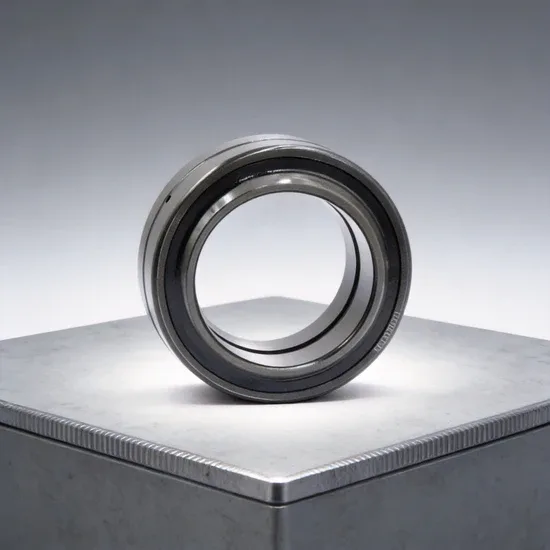
<p><strong>INA GE20ES PTFE Lined Spherical Plain Bearing</strong> features a PTFE composite liner that delivers self-lubricating, maintenance-free articulation without grease replenishment. The low-friction sliding surface supports smooth pivot movement in automation equipment joints where contamination from lubricant bleed must be avoided. Sourced through authorized channels with batch traceability, country-of-origin documentation, and liner material certification provided for import clearance.</p>
- 100% genuine -- COC & factory certificates available
- In-stock · bulk & small-batch orders accepted
- ISO · DIN · ABMA · JIS compliant
- Full customs clearance documentation provided
Product Details
Full Specifications & Description
Authorized Channel Sourcing — Every GE20ES PTFE lined self-lubricating spherical plain bearing we ship carries full batch traceability back to INA's production records, not just a reseller invoice.
Technical Specifications
| Parameter | Value |
|---|---|
| Designation | INA GE20ES |
| Bearing Type | Spherical Plain Bearing |
| Bore Diameter (d) | 20 mm |
| Liner Material | PTFE Composite |
| Lubrication | No Grease Required |
| Feature | Low Friction |
| Origin | China |
The suffix ES on this designation remains unverified against the manufacturer catalog; confirm exact suffix meaning with technical documentation before finalizing cross-reference substitutions.
Application Suitability
| Industry | Typical Applications |
|---|---|
| Automation Equipment | Articulating joints on robotic arm linkages, linear actuator pivot points, conveyor diverter arms |
| Industrial Machinery | Packaging machine toggle mechanisms, indexing table pivot bearings, pneumatic cylinder clevis joints |
| Material Handling | AGV steering linkages, lift gate hinge bearings, telescopic boom pivot points |
Why Liner Integrity Matters More Than the Base Designation
A GE20ES PTFE lined self-lubricating spherical plain bearing fails within weeks when the liner is recycled PTFE paste instead of bonded composite.
I have seen this exact scenario play out on a job site: a Middle East client ordered a batch of spherical plain bearings for crane boom cylinders, and the PTFE lining started flaking almost immediately. The joints seized, and the crane operator was put at serious risk. Post-failure inspection revealed the supplier had substituted recycled PTFE paste for proper bonded lining — something that passes casual visual inspection but falls apart under articulating load [NEED_CITE: common failure modes of PTFE lined spherical plain bearings per ISO 15243]. When the liner delaminates, you are left with steel-on-steel contact, rapid wear, and unplanned downtime that costs far more than the original bearing purchase.
How the GE20ES Fits Automation Linkage Demands
Automation equipment pivots need smooth articulation without the contamination risk of grease bleed. The GE20ES PTFE lined self-lubricating spherical plain bearing handles this by eliminating re-lubrication entirely. In robotic arm elbow joints or pneumatic cylinder clevis mounts, even small amounts of grease leakage can contaminate optical sensors or product surfaces. The PTFE composite liner keeps friction low across the full oscillation range while staying clean. We have supplied these to automation integrators who previously dealt with grease-related sensor fouling, and the switch to maintenance-free plain bearings resolved the issue without redesigning the linkage geometry.
Load Patterns and Operating Environment for Maintenance-Free Joints
The GE20ES is built for slow oscillation under radial and combined loads, not high-speed rotation. In automation applications, pivot joints typically see moderate radial loads with frequent directional reversals rather than continuous rotation [NEED_CITE: spherical plain bearing load classification per DIN ISO 12240]. Temperature exposure in most automation settings stays within the PTFE composite liner's operating window, but if the joint sits near a heat source such as a welding cell, liner degradation accelerates. Unlike steel-on-steel spherical plain bearings that tolerate periodic re-greasing to flush contaminants, the maintenance-free design depends entirely on liner integrity — meaning contamination exclusion through proper sealing at the housing level becomes the buyer's responsibility.
PTFE Composite Liner vs. Steel-on-Steel: The Selection Tradeoff
The core engineering decision here is liner material. PTFE composite provides self-lubricating, low-friction performance that eliminates maintenance intervals — ideal for joints that are difficult to access or where grease contamination is unacceptable. Steel-on-steel designs like the standard GE series without the PTFE liner can handle heavier loads and shock impacts but require regular grease replenishment. If your application involves heavy shock loading or continuous oscillation under high specific pressure, a steel-on-steel bearing with scheduled re-lubrication may outlast a PTFE-lined unit. Conversely, for clean-room automation or food-grade packaging lines where grease is prohibited, the GE20ES PTFE lined self-lubricating spherical plain bearing is the correct choice. The liner's wear rate depends on surface pressure and oscillation frequency, so matching the bearing to the actual load spectrum — not just the peak load — determines service life [NEED_CITE: PTFE liner wear mechanisms in spherical plain bearings].
The Hidden Cost of a Mis-Specified or Counterfeit Liner
A counterfeit plain bearing with inferior liner material does not just wear out faster — it can seize the joint entirely, transferring damage to the shaft, housing, and connected components. In crane and heavy equipment applications, a seized pivot joint creates a safety hazard beyond equipment damage. Even in lighter automation settings, an unexpected joint failure on a multi-axis system can cause cascade damage to actuators and tooling [NEED_CITE: rolling bearing and plain bearing failure classification per ISO 15243]. The cost of unplanned downtime, replacement labor, and secondary damage routinely dwarfs the price difference between a verified genuine bearing and an unverified alternative. Warranty claims are void when counterfeit components are identified during failure analysis.
How We Source and Verify Spherical Plain Bearings
Every GE20ES we supply moves through authorized distributor channels with complete batch and lot traceability. We provide Certificate of Conformity documentation that traces back to the manufacturer's production records, not just a trading company stamp. For cross-reference requests — matching an INA designation to SKF, FAG, or NTN equivalents — we align liner material, bore diameter, outside diameter, and width together, because a base-number match alone misses critical fit differences. Our pre-shipment inspections include dimensional verification and liner material confirmation, so you receive what was specified. Country-of-origin documentation accompanies every shipment for import clearance.
Documentation & Authenticity
- Supplier Certificate of Conformity with batch and lot numbers traceable to INA production records
- PTFE composite liner material confirmation via manufacturer declaration or third-party lab certificate
- Pre-shipment dimensional inspection report covering bore, OD, width, and radial internal clearance
- Country-of-origin certificate for customs clearance and import compliance in your destination market
- HS code documentation and import support for spherical plain bearing shipments
Storage, Handling & Mounting
- Keep the GE20ES in original sealed packaging until installation; premature exposure to shop-floor dust contaminates the PTFE liner surface and accelerates wear on first articulation
- Store PTFE-lined spherical plain bearings away from direct UV exposure, which degrades composite liner material over extended storage periods
- Handle with clean, lint-free gloves to avoid transferring oils or particulates onto the PTFE sliding surface — finger residue compromises the low-friction interface
- During press-fit mounting into the housing, apply force only to the outer ring; driving through the inner ring damages the PTFE liner bond and causes premature delamination
- Verify housing bore tolerance before installation — an oversized housing bore allows outer ring creep, which wears through the liner at the parting line
- This bearing requires no grease at installation or during service; applying grease to the PTFE liner attracts contaminants and defeats the maintenance-free design
Inquiry & Technical Review
Share your application parameters — oscillation angle, frequency, radial load, and operating temperature — so we can confirm the GE20ES suits your specific load spectrum. If you are replacing an existing bearing, provide the OEM equipment number or current bearing designation for cross-reference verification. We can prepare the full documentation package including origin confirmation and HS code details before you commit. Confirm batch availability and lead time by sending your quantity requirement and destination port.
Frequently Asked Questions
Q: How do I verify that a GE20ES spherical plain bearing is genuine when sourcing through a multi-brand supplier? A: Request the supplier's Certificate of Conformity with batch and lot numbers, then cross-check the origin documentation against the manufacturer's production records. For PTFE-lined bearings, ask for liner material confirmation — genuine bonded PTFE composite has a distinct layered structure visible under magnification, unlike recycled paste that appears homogeneous. We provide full traceability documentation with every shipment.
Q: What must align when cross-referencing spherical plain bearings between brands? A: Bore diameter, outside diameter, width, and liner material must all match — not just the base designation. A bearing with the same bore and OD but a steel-on-steel contact surface instead of PTFE composite liner will perform completely differently in a maintenance-free application. We run cross-reference checks across all six major brands with these parameters verified together.
Q: When should I choose a PTFE-lined self-lubricating bearing over a steel-on-steel type? A: Choose PTFE-lined when the application prohibits grease contamination, the joint is difficult to access for re-lubrication, or operating conditions involve frequent slow oscillation under moderate load. Choose steel-on-steel when the application involves heavy shock loads, continuous high-pressure oscillation, or where scheduled maintenance intervals already exist.
Q: What are typical failure modes of counterfeit plain bearings in automation equipment? A: The most common failure is liner delamination — recycled or poorly bonded PTFE flakes off under articulating load, leaving bare metal contact. This causes rapid wear, increased friction, joint seizure, and potential damage to connected actuators. Substandard outer rings may also exhibit dimensional drift, causing housing fit issues and outer ring creep.
Q: What documentation and lead times should I expect for bulk orders? A: Bulk orders ship with Certificate of Conformity, dimensional inspection reports, material certificates confirming PTFE liner composition, country-of-origin documentation, and HS code details. Lead times vary by quantity and batch availability; we confirm the specific timeline at the quotation stage based on your required delivery date.
Secure Your GE20ES Supply with Full Traceability Send us your application parameters or OEM equipment number, and we will return a technical match review with documentation samples before you commit.
You May Also Need
Related Products
-

FAG GE10ES GE12ES GE15ES Spherical Plain Bearings Wholesale Supplier
<p><strong>FAG GE10ES / GE12ES / GE15ES Spherical Plain Bearing GCr15 steel-on-steel radial joint bearing</strong> — engineered for high static and dynamic radial load conditions in industrial machinery and automation equipment. GCr15 bearing steel with hardened sliding surfaces provides wear resistance under heavy loads. Grease lubrication ensures consistent performance and extended service intervals.</p> <ul> <li>Sourced through authorized channels with Certificate of Conformity and batch traceability documentation for import compliance.</li> </ul>
View Details -

INA CF8 CF10 CF12 Cam Follower Bearing Stud Type
<p><strong>INA CF8 CF10 CF12 Cam Follower Bearing Stud Type</strong> — Bearing steel construction with stud-type structure enables direct mounting without separate shaft support, ideal for high-load automation machinery cycles.</p> <ul> <li>CF series cam followers deliver reliable track-following performance in demanding industrial applications</li> <li>Sourced through authorized distributor channels with batch-traceable Certificate of Conformity and country-of-origin documentation for import compliance</li> </ul>
View Details -

PHS8 PHS10 PHS12 Female Thread Rod End Bearing Wholesale
<p><strong>PHS8 PHS10 PHS12 Female Thread Rod End Bearing</strong> — bearing steel construction with zinc coating surface treatment for corrosion resistance in industrial and agricultural linkage environments. Female thread design allows direct mounting to linkage rods without additional adapters, reducing assembly complexity. Optional lubrication capability supports varying operational conditions and maintenance intervals across mechanical linkage applications. </p> <ul> <li>Traceable batch documentation available with every shipment for import compliance verification</li> </ul>
View Details -
 SKF
SKF
GE100-FO-2RS FAG Radial Spherical Plain Bearings for Industrial Machinery with Bearing Steel
<p>Ensure smooth, reliable motion in your industrial machinery with the <strong>GE100-FO-2RS FAG radial spherical plain bearing</strong>, crafted from high-grade bearing steel to deliver long-lasting performance under heavy loads. This precision-engineered component eliminates frustrating downtime caused by premature wear, keeping your equipment operating at peak efficiency.</p><ul><li>100mm bore diameter paired with 160mm outer diameter for robust load distribution in industrial applications</li><li>Po precision rating ensures consistent performance in critical machinery operations</li><li>Single unit design with 6.000kg gross weight provides secure installation and reliable operation</li></ul>
View Details
Get a Fast Quote
Request a Quotation for
INA GE20ES PTFE Lined Spherical Plain Bearing Wholesale Supplier
Fill in your requirements and our multilingual sales team will respond within 12 hours with a competitive price, availability confirmation and delivery schedule.
- Reply within 12 hours -- 24/7 multilingual support
- Competitive factory-direct pricing with full documentation
- Small trial orders and bulk container loads both welcome