Natebon Roller Slewing Bearing Custom for Heavy Machinery
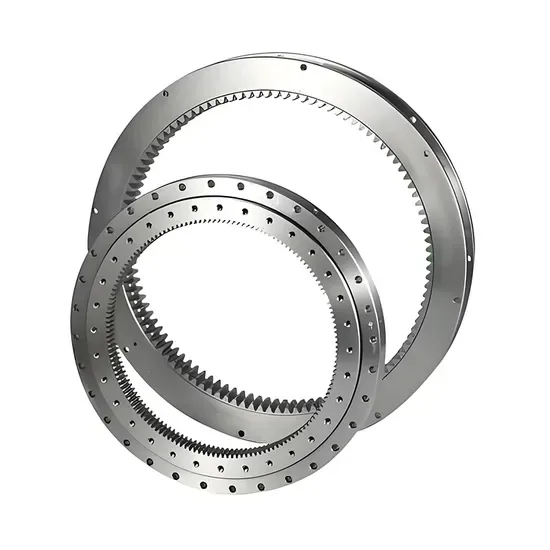
<p><strong>Roller Slewing Bearing</strong> — Single-row, crossed-roll, and three-row roller slewing bearings in bearing steel for large-size, low-speed, high-load heavy machinery applications.</p> <ul> <li>Vacuum, antimagnetic, cold-resistant, corrosion-resistant, and heat-resistant feature options available for harsh environments</li> <li>Customizable nonstandard configurations to match specific mounting envelopes and load requirements</li> <li>Country-of-origin documentation and material certificates provided with every shipment for import clearance and buyer verification</li> </ul>
- 100% genuine -- COC & factory certificates available
- In-stock · bulk & small-batch orders accepted
- ISO · DIN · ABMA · JIS compliant
- Full customs clearance documentation provided
Product Details
Full Specifications & Description
Genuine Heavy-Duty Slew Ring Supply — Every Natebon Roller Slewing Bearing Custom for Heavy Machinery ships with traceable material certification and country-of-origin files verified against production batch records.
Technical Specifications
| Parameter | Value |
|---|---|
| Designation | Natebon Roller Slewing Bearing |
| Bearing Type | Slewing Bearing (Single-Row / Crossed Roll / Three-Row Roller) |
| Material | Bearing Steel |
| Main Types | Single-Row, Crossed Roll, Three-Row Roller |
| Key Structural Components | Ring, Rolling Elements, Sealing Strip, Spacer/Cage |
| Core Features | Large Size, Low Speed, High Load Capacity |
| Feature Options | Vacuum, Antimagnetic, Cold-Resistant, Corrosion-Resistant, Heat-Resistant |
| Standard or Nonstandard | Nonstandard |
| Customization | Available |
| Origin | China |
No standardized suffix designation applies to this nonstandard product family; exact internal geometry and seal configuration are confirmed per order against the manufacturer's production drawing.
Application Suitability
| Industry | Typical Applications |
|---|---|
| Construction Machinery | Excavator slew platform, crane turntable, concrete pump boom rotation joint |
| Mining and Crushing | Stacker-reclaimer rotation axis, rotary breaker table, dragline slew gear |
| Material Handling | Ladle turret in steelmaking, ship-loader rotation bearing, bucket-wheel drive |
| Industrial Automation | Indexing table for heavy workpiece positioning, rotary welding positioner base |
| Heavy Machinery | Tunnel boring machine cutter head rotation, wind turbine yaw drive interface |
What Happens When a Slewing Ring Cross-Reference Ignores the Seal Path
A base-number match that skips seal geometry and clearance is a failure waiting to happen.
I once pulled a slew ring off a stacker-reclaimer in southern Africa after eight months of service. The replacement had been cross-referenced by outer diameter and bolt-hole pattern alone. What nobody checked was the seal groove profile — the substitute used a single-lip seal where the OEM specified a labyrinth-type sealing strip with an integrated grease channel. Grease migrated past the seal within weeks, dust infiltrated the raceway, and spalling followed [NEED_CITE: slewing bearing contamination failure modes per ISO 15243]. That kind of mismatch never shows up on a drawing overlay; it only appears once the equipment is down and costing real money.
Matching Load Spectra to the Right Roller Configuration
The choice between single-row, crossed-roll, and three-row roller configurations is not a catalog exercise — it follows directly from the load spectrum at the mounting envelope. Single-row four-point contact ball slew rings handle moderate combined loads with lower friction, suited to slower indexing tables and lighter boom rotations. Crossed-roll arrangements resist moment loads from frequent directional reversal, common in excavator platforms that stop and swing under full bucket load. Three-row roller designs separate axial, radial, and moment loads onto dedicated rolling element rows, which is what a ladle turret or tunnel boring machine demands when the axial thrust alone would crush a single-row design. Getting the Roller Slewing Bearing with Lubricator for Heavy Machinery matched to the actual duty cycle — not just the peak load — is where field life is won or lost.
Field Conditions That Push Slew Rings Past Their Envelope
Heavy machinery slew rings rarely fail from pure overload; they fail from the accumulated effect of thermal cycling, contaminated lubricant, and shaft deflection under eccentric loading. In a mining conveyor transfer point, ambient temperature swings of tens of degrees between day and night shift the internal clearance repeatedly, and a grease that channels at high temperature leaves the raceway starved. Where the sealing strip cannot exclude fine particulate — cement dust, coal fines, desert sand — the rolling elements lap the raceway into premature wear rather than classic fatigue spalling [NEED_CITE: abrasive particle ingress and bearing wear rate correlation]. Mounting matters as much as selection: a slew ring bolted onto a structure with poor flatness sees localized edge loading that no amount of grease can compensate for.
Reading the Spec Sheet Beyond Outer Diameter
The structural components — ring, rolling elements, sealing strip, spacer or cage — each carry a performance decision. The ring material is bearing steel, but the heat treatment depth on the raceway determines whether the surface can survive contact stress at low speed and high load without subsurface crack initiation. The sealing strip is the first defense in dusty or wet environments; a contact seal keeps contaminants out but adds rotational friction, while a non-contact labyrinth seal runs cooler but requires the equipment builder to manage external contamination paths. Spacer or cage design controls rolling element spacing and prevents skidding during start-up under partial load — a poorly spaced row of rollers will develop smearing damage before the grease film stabilizes. Customization in ring geometry, bolt-hole pattern, and gear integration is what makes this a nonstandard product family built around the actual machine, not a shelf size.
The Downtime Multiplier in Underspecified Slew Rings
Correct sourcing — verified material, matched seal geometry, documented heat treatment — is a fraction of the cost of a single unplanned shutdown on a 200-tonne crane or a continuous-process steel ladle turret. When a slew ring fails catastrophically, the machine is not just stopped; the structure above it may need jacking, the gear mesh requires re-alignment, and the replacement lead time on a nonstandard size stretches into weeks [NEED_CITE: unplanned heavy machinery downtime cost per hour in mining operations]. ISO 281 life calculations assume correct lubrication, clean operation, and proper mounting — none of which hold when the seal was wrong or the grease specification was guessed. A Roller Slewing Bearing with Lubricator for Heavy Machinery that arrives without traceable documentation is a liability that only reveals itself under load.
How We Keep the Supply Chain Honest
We source through authorized distributor channels with batch-level traceability, so the bearing steel grade on the certificate matches the heat number on the ring. Cross-referencing a slew ring is not a diameter lookup; we verify seal groove profile, bolt pattern, gear module, and clearance class together before proposing a substitute. Every shipment carries country-of-origin documentation prepared for customs clearance, not as an afterthought. For nonstandard sizes, we coordinate dimensional inspection reports that confirm raceway geometry and runout against the manufacturer's drawing before the crate closes. The goal is not just to ship a part — it is to make sure the engineer on the receiving end can verify what they got without needing to trust a handshake.
Documentation & Authenticity
- Supplier Certificate of Conformity tied to the production batch and heat number of each ring set, not a generic type certificate
- Material certificate confirming bearing steel grade with chemical composition and heat treatment hardness values
- Country-of-origin documentation formatted for import customs clearance in the destination market
- Third-party dimensional inspection report covering raceway diameter, gear module, and bolt-hole position per the nonstandard drawing
- HS code classification support and shipping documentation aligned to the destination country's import requirements
- QR code or lot number traceability linking the physical product back to the manufacturer's production records
Storage, Handling & Mounting
- Keep the single-row or three-row roller assembly in its original wrapping until the mounting surface is prepared; premature exposure invites corrosion on the large-diameter raceway before installation even begins
- Store flat on a level, dry surface — never lean a large-diameter nonstandard slew ring on edge, as the thin-section ring can deform under its own weight and alter the bolt-hole alignment
- Inspect the sealing strip for shipping damage before mounting; a nicked lip seal on a corrosion-resistant variant compromises the feature that justified the specification in the first place
- Apply the specified grease through all lubrication ports evenly after mounting, rotating the ring slowly to distribute lubricant across every rolling element path before the machine takes full load
- Use a calibrated torque sequence on the mounting bolts following the manufacturer's crossing pattern to avoid ring distortion that creates localized raceway loading
Confirm the Right Configuration Before You Commit
Share your load spectrum, speed range, operating temperature, and mounting envelope drawing so we can match the correct roller configuration and seal type to the application. If you are replacing an existing slew ring, provide the OEM equipment number or the ring's outer diameter, gear specification, and bolt pattern for cross-reference verification. Request the documentation package — material certificate, dimensional report, country-of-origin files — before confirming the order to ensure import readiness.
Frequently Asked Questions
Q: How do I verify the material certificate and country-of-origin documentation for a nonstandard slewing bearing? A: The material certificate should carry the heat number that matches the ring marking, and the country-of-origin document should reference the same production batch. We provide both linked to the shipment's Certificate of Conformity so customs clearance and quality verification trace back to the same source.
Q: What are the structural differences between single-row, crossed-roll, and three-row roller slewing bearings? A: Single-row designs use one set of rolling elements to carry combined loads and are suited to moderate-duty rotation. Crossed-roll arrangements use alternating roller orientation to handle moment loads from frequent reversal. Three-row roller designs separate axial, radial, and moment loads onto dedicated rows for the heaviest combined load applications.
Q: How do I specify customization parameters for a nonstandard slewing bearing? A: Provide the load conditions (axial, radial, moment), speed range, operating temperature, environmental contamination level, and the physical mounting envelope including bolt pattern and gear requirements. We translate these into the correct internal geometry, seal type, and material treatment.
Q: What sealing and lubrication options suit heavy-machinery slewing bearing applications? A: Contact sealing strips offer the highest contamination exclusion for dusty or wet environments but add rotational friction. Labyrinth-type non-contact seals run cooler and suit high-temperature or higher-speed applications where external sealing is managed by the equipment design. Lubrication ports and integrated grease distribution channels can be built into the ring to simplify field maintenance.
Verify Your Roller Slewing Bearing Specification Today Send your application parameters or OEM equipment number so we can confirm the right configuration, documentation, and lead time for your project.
You May Also Need
Related Products
-
 SKF
SKF
Spherical Roller Bearing 22236 22238 CC W33 Chrome Steel for Low Noise Conveyor
<p>Minimize conveyor downtime with precision-engineered <strong>Spherical Roller Bearings</strong> designed for low-noise operation and reliable performance in material handling systems. These SKF 22236 CC W33 and 22238 models feature double-row, self-aligning construction with Chrome Steel Gcr15 material, ensuring exceptional load capacity and alignment flexibility to handle misalignment common in conveyor applications.</p><ul><li>Self-aligning design compensates for shaft deflection, reducing premature wear and extending equipment lifespan</li><li>Low-noise operation enhances workplace comfort while maintaining operational efficiency</li><li>W33 suffix indicates lubrication grooves and oil holes for easy maintenance, critical for continuous conveyor runs</li></ul>
View Details -
 SKF
SKF
Spherical Roller Bearing 21313EK 33mm Width for Auto Parts Stable Supply
<p>Ensure uninterrupted performance for your auto parts with the reliable <strong>SKF Spherical Roller Bearing 21313EK</strong>, designed to deliver smooth operation and reduce downtime in critical applications. This 33mm width bearing maintains consistent precision even under heavy loads, making it an ideal choice for maintaining the integrity of your equipment.</p><ul><li>Direct supply from SKF official channels guarantees 100% authenticity and full batch traceability</li><li>33mm width specification ensures perfect fit and alignment in automotive component assemblies</li><li>Stable inventory support enables same-day shipping for urgent replacement needs</li></ul>
View Details -
 SKF
SKF
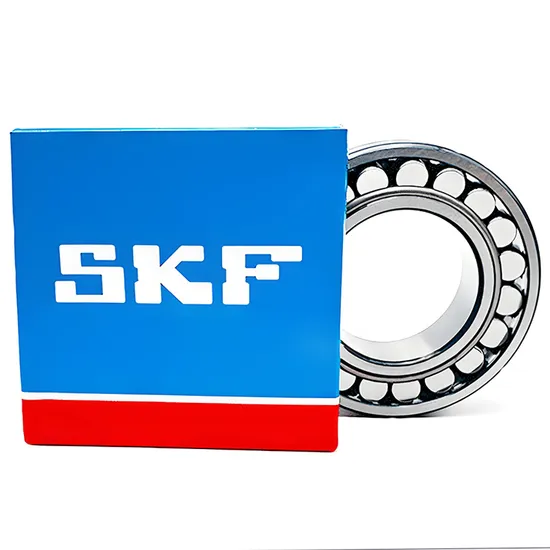
Self-Aligning Spherical Roller Bearings SKF 22214 70x125x31mm for Wind Power Generation
<p>Ensure reliable wind power generation operations with SKF 22214 self-aligning spherical roller bearings, engineered to deliver exceptional load capacity and misalignment compensation. As a direct supplier with exclusive SKF official channels, we guarantee 100% genuine bearings (70x125x31mm) that minimize downtime in critical wind turbine applications.</p> <ul> <li>Double-row roller design handles radial and axial loads with precision ratings from P0 to P2, ideal for high-torque wind power environments</li> <li>Available clearances (C0/C3/C4) accommodate thermal expansion, ensuring consistent performance under varying operating conditions</li> <li>Same-day shipping from our extensive inventory and 7-15 day global delivery keep your maintenance schedules on track</li> </ul> <p>Backed by SKF's original factory warranty and complete traceability documentation, these bearings are the trusted choice for OEM purchasers and maintenance teams seeking long-term reliability.</p>
View Details -
 SKF
SKF
Self-Aligning Roller Bearing 22228W33C3 100x215x47mm for Wind Power Heavy-Duty Equipment
<p>Ensure reliable performance for your wind power heavy-duty equipment with the <strong>Self-Aligning Roller Bearing 22228W33C3</strong>, designed to minimize downtime and maintain precision under extreme loads. This 100x215x47mm SKF spherical roller bearing features double-row rollers and C3 clearance, delivering exceptional radial load capacity and self-aligning capability to accommodate shaft misalignment in critical machinery.</p><ul><li>100% original SKF quality with full traceability, backed by official factory warranty</li><li>Spherical aligning design reduces stress on shafts and housings, extending equipment lifespan</li><li>Optimized for wind power applications, handling heavy-duty operations with consistent reliability</li></ul>
View Details
Get a Fast Quote
Request a Quotation for
Natebon Roller Slewing Bearing Custom for Heavy Machinery
Fill in your requirements and our multilingual sales team will respond within 12 hours with a competitive price, availability confirmation and delivery schedule.
- Reply within 12 hours -- 24/7 multilingual support
- Competitive factory-direct pricing with full documentation
- Small trial orders and bulk container loads both welcome