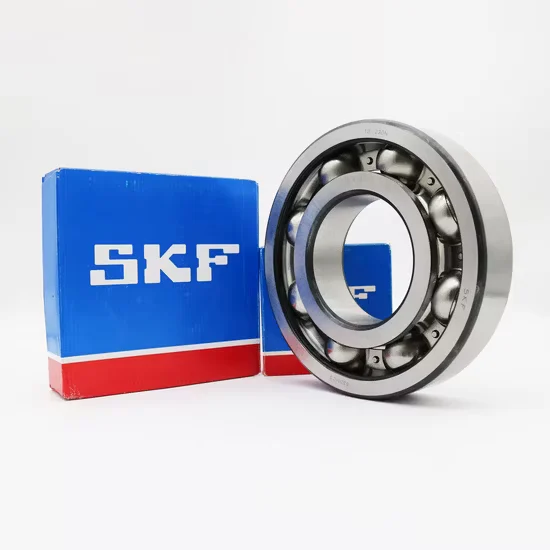
Matching the correct model number is never enough for helicopter main rotor applications. Helicopter main rotor bearings operate under extreme vibration and alternating loads; procuring genuine SKF bearings requires strict verification of clearance classes, cage materials, and traceability documents to prevent catastrophic failure.
I still remember a call from a palm oil plantation in Sumatra. Their main drivetrain had seized twice in a single month. The procurement manager sent me a photo of a torn spherical roller bearing, asking why the replacement kept failing. The model was correct, but the internal clearance was standard — in a high-vibration environment, standard clearance collapses under thermal expansion and dynamic load, leading to rapid fatigue spalling. We switched to a C3 clearance variant, and the unit ran substantially longer without intervention. Helicopter main rotor systems face even harsher conditions than ground-based industrial drivetrains, and the same principle applies: model matching alone is a trap.
The lessons from that Sumatra case carry directly into aviation MRO procurement. Below, I break down what actually matters when sourcing SKF bearings for helicopter main rotor systems.
Why Helicopter Main Rotor Bearings Demand More Than Standard Specs?
Helicopter main rotor hubs generate vibration spectra and load reversals that industrial bearing selection logic simply does not account for. In a standard conveyor or pump application, radial loads are relatively steady, and vibration stays within predictable bands. A helicopter main rotor, by contrast, subjects its bearings to continuous cyclic loading as blade pitch changes, aerodynamic forces shift, and the drivetrain transmits torque through complex gear arrangements.
I once inspected a set of bearings pulled from a mining helicopter’s hoist drivetrain. The outer ring showed classic edge-stress patterns — the bearing had been running with insufficient internal clearance, causing the rollers to skid rather than roll under peak load. In ground-based equipment, this might take months to manifest. In a rotor system, the accelerated fatigue cycle compresses failure timelines dramatically.
The core issue is that standard industrial clearance classes (C0/normal) are designed for moderate operating conditions. When vibration amplitude increases and thermal gradients develop across the bearing ring, the effective clearance shrinks. If it reaches zero or goes negative, the rollers are preloaded beyond design intent, generating excess heat, accelerating lubricant breakdown, and initiating subsurface fatigue cracks.
This is why helicopter main rotor bearing specifications typically call for C3 or C4 clearance as a baseline — the extra internal space accommodates thermal growth and dynamic deflection without sacrificing load-carrying capacity. Procuring SKF bearings for helicopter main rotor systems without confirming clearance class is essentially gambling with airworthiness.
How to Match SKF Bearing Clearance and Cage to Rotor Conditions?
Clearance class and cage material are the two most overlooked variables in rotor bearing procurement, and getting either wrong shortens service life significantly.
Let me walk through the logic I use when a client sends an inquiry for a 22320 series bearing for a rotor application. First, I need the operating temperature range. Helicopter main rotor hubs can experience significant thermal gradients — the inner ring, mounted close to the gearbox output shaft, runs hotter than the outer ring seated in the hub housing. This differential expansion reduces effective clearance. If the baseline clearance is too tight, the bearing operates in a preloaded state within minutes of reaching operating temperature.
Second, I assess the vibration profile. Rotor systems generate broadband vibration with distinct harmonic peaks tied to blade-pass frequency and gear-mesh frequency. High-amplitude vibration demands sufficient clearance to prevent roller skewing and edge loading.
For cage material, the decision hinges on temperature and speed. Standard pressed steel cages are adequate for many industrial applications, but in high-temperature rotor environments, they can deform under centrifugal and vibrational forces. Machined brass cages (designated by the suffix M in SKF nomenclature) offer superior thermal stability and guidance accuracy. Polymer cages provide weight savings and reduced friction but have upper temperature limits that must be respected.
I recall a case where a maintenance team at a Southeast Asian offshore platform specified a 22320 with a pressed steel cage for a helicopter support winch drivetrain. The ambient temperature regularly exceeded typical industrial baselines, and the continuous vibration degraded the cage within a short service window. Switching to a machined brass cage variant resolved the issue. The cage is not just a spacer — it is a load-guiding component that directly affects roller alignment, lubricant distribution, and heat generation.
When sourcing SKF bearings for helicopter main rotor applications, always confirm both clearance suffix (C3, C4) and cage suffix (M for machined brass, or the appropriate polymer designation) against the specific rotor operating parameters.
What Documents Prove Your SKF Bearings Are Genuine?
Genuine verification in aviation bearing procurement requires multiple independent document checks — a single certificate is never sufficient.
Counterfeit bearings have been found in aviation supply chains across multiple regions, and the consequences of installing a fake bearing in a main rotor system are not financial — they are fatal. I have seen counterfeit SKF bearings with convincing packaging, laser-etched markings, and fabricated inspection certificates. The bearings inside were dimensional approximations made from inferior steel, with no heat treatment control and no traceability.
When I supply SKF bearings for helicopter main rotor applications, the documentation package I provide includes several cross-verifiable elements:
- Original manufacturer certificate of conformity — stating the batch number, manufacturing date, and compliance with applicable SKF production standards.
- Batch traceability code — laser-marked on the bearing and matching the certificate. This code allows verification against SKF’s production records.
- Packaging authenticity features — SKF uses specific holographic labels, color-coded boxes, and tamper-evident seals that counterfeiters frequently fail to replicate accurately.
- Authorized distributor status proof — confirming the supplier holds current authorization from SKF to distribute their products in the relevant territory.
A single document can be forged. A batch of documents with cross-matching codes, consistent markings, and verifiable authorization creates a verification chain that is substantially harder to compromise. As an ISO 9001 certified full-category bearing supplier, we maintain complete documentation trails for every SKF bearing we dispatch, and we support client-side verification at every stage.
How to Avoid Counterfeit Bearings in Aviation Supply Chains?
Building a multi-layer verification protocol is the only reliable defense against counterfeit bearings entering aviation MRO inventory.
The aviation bearing supply chain is fragmented. A bearing may pass through manufacturers, authorized distributors, regional agents, trading companies, and secondary market dealers before reaching the maintenance hangar. Each handoff introduces contamination risk. I have traced counterfeit bearings back to secondary market dealers who purchased "surplus stock" from unknown sources — the dealers themselves were unaware the products were fake.
Here is the verification framework I recommend for any MRO operation procuring SKF bearings for helicopter main rotor systems:
-
Source from authorized channels only. Verify the supplier’s authorization status directly with SKF or through publicly available authorization databases. Avoid brokers who cannot provide verifiable authorization documentation.
-
Require complete documentation before shipment. The supplier must provide the certificate of conformity, batch traceability data, and proof of authorized status before the bearing leaves their warehouse. Do not accept promises of "documents to follow."
-
Conduct incoming inspection. Verify physical markings against documentation. Check packaging authenticity features. Measure critical dimensions on a sample basis if the order volume justifies it.
-
Maintain chain-of-custody records. Document every handoff from supplier to warehouse to installation. If a bearing fails and investigation is required, unbroken custody records are essential for root-cause analysis and liability determination.
-
Periodically audit your supply base. Supplier authorization can lapse. Warehouses can be compromised. Regular audits ensure your verification protocols remain effective over time.
As a full-category bearing supplier with ISO 9001 certification, we apply this same rigor internally. Every SKF bearing we supply undergoes document verification before dispatch, and we maintain traceability records that support our clients’ own audit requirements. When you are sourcing SKF bearings for helicopter main rotor systems, your supplier’s verification discipline is your first line of defense.
Conclusion
Helicopter main rotor bearing procurement is a technical discipline, not a catalog exercise. Clearance class, cage material, and document verification are as critical as model number matching. Counterfeit bearings in aviation supply chains demand multi-layer verification protocols. Working with an ISO 9001 certified supplier who maintains complete traceability and supports application-based technical selection is not optional — it is foundational to rotor system airworthiness.
SKF bearings mentioned in this article
Open a product page to check the SKF reference discussed above.
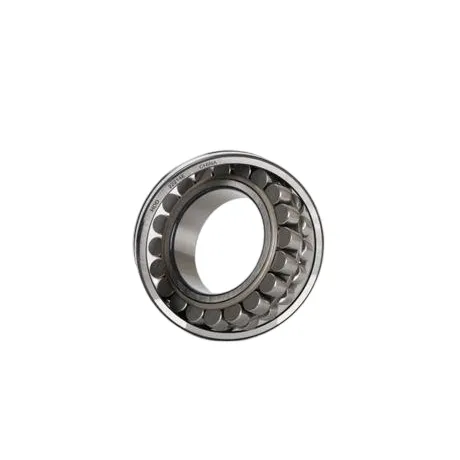 Spherical Roller Bearing 22320E Zv3 Roller Bearing 73mm Width for Wheel Hub Stable Supply with 100% Original SKF Quality View Product
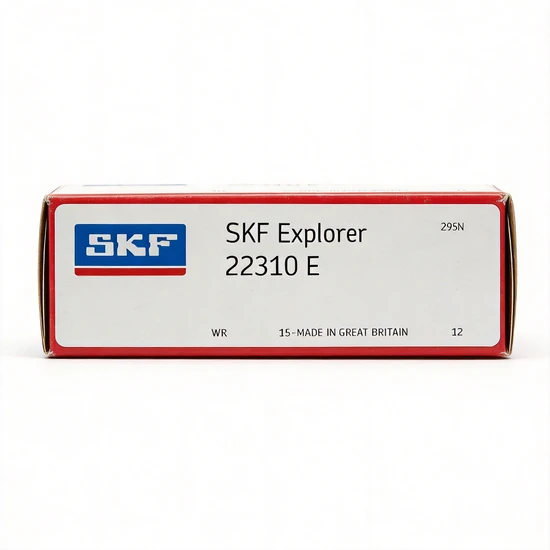 Spherical Roller Bearing 22320EK Spherical Roller Bearing 73mm Width for Heavy-Duty Industrial Machinery View Product
 Deep Groove Ball Bearing 22320E Spherical Roller Bearing 73mm Width for Wind Power Generation & Industrial Machinery View Product
 Spherical Roller Bearing High Precision SKF Spherical Roller Bearing 22320 E-K/C4 for Conveyor Systems Chrome Steel Gcr15 View Product
Related target industries
These notes apply to the following gearbox, reducer and drive shaft service areas.