The lowest unit price often hides massive expediting and downtime costs.
Accurate procurement of SKF heavy-duty bearing lead times requires strict planning that integrates stock availability, factory scheduling, and shipping logistics to prevent costly production halts. Relying solely on supplier promises without verifying physical inventory or production slots is a primary cause of extended downtime in mining and heavy industry sectors.
I still recall the silence on the other end of the line when a gold mine client in South Africa realized their crusher was down. I had quoted a standard delivery window based on routine patterns, assuming the manufacturer’s schedule was open. It was not. The delay stretched to four months because I failed to verify the actual factory scheduling status against the urgent spot delivery expectation. That incident shifted my entire approach from price-focused quoting to data-driven lead time management. Today, every inquiry for SKF heavy-duty bearing lead times begins with a verification of true stock versus transit claims.
Understanding these variables is critical for MRO managers and OEMs who cannot afford guesswork. The following sections break down how to calculate, verify, and optimize these timelines effectively.
What Factors Dictate SKF Bearing Factory Scheduling?
Factory scheduling is not a static queue but a dynamic allocation of finite production capacity.
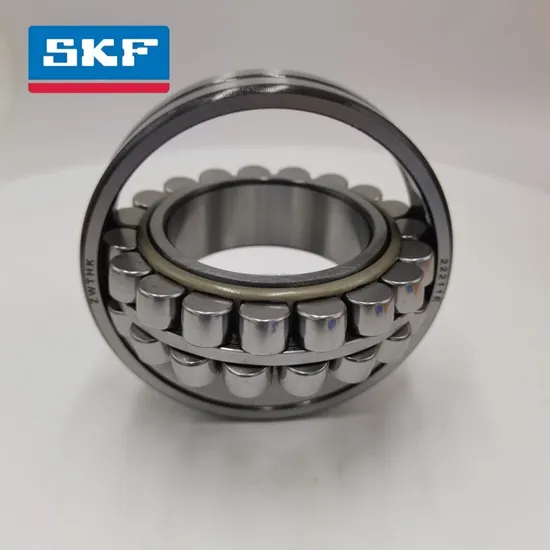
When a specific SKF spherical roller bearing delivery time is quoted as "standard," it often assumes a baseline production slot that may already be overbooked during peak industrial seasons. The difference between a standard slot and an urgent expedited slot can mean the difference between weeks and months.
| Production Slot Type | Availability Status | Typical Lead Time Characteristic | Verification Method |
|---|---|---|---|
| Standard Production | High Volume Queue | Extended, subject to batch consolidation | Check manufacturer’s published quarterly outlook |
| Expedited/Urgent | Limited Capacity | Significantly reduced, premium cost applied | Confirm dedicated production line allocation |
| Custom/Special Order | Project-Based | Highly variable, dependent on material sourcing | Review engineering approval and raw material stock |
A European wind farm operator once faced a critical gearbox failure. They requested a batch of large-diameter bearings with a tight deadline. By consulting cross-brand equivalents and verifying which manufacturing facilities had immediate capacity for similar dimensional tolerances, we reduced the effective wait time by a noticeable margin compared to sticking rigidly to a single backordered SKU. This approach highlights that heavy equipment bearing procurement planning must include flexibility in brand or series selection when exact matches are stuck in long production queues.
The key is to distinguish between off-the-shelf standard items and those requiring custom heat treatment or machining. For standard items, the bottleneck is often not the machining itself but the batching process. Manufacturers prefer to run full batches to optimize furnace usage. If your order does not fill a batch, it waits. Understanding this allows buyers to anticipate delays before they happen. When evaluating SKF heavy-duty bearing lead times, always ask if the item is part of a current production run or waiting for batch consolidation.
How to Verify True Spot Inventory vs. Transit Stock?
"In stock" claims from some suppliers often mean "in transit" rather than physically in the warehouse.
This distinction is vital for emergency MRO scenarios. A supplier may claim availability based on goods currently on a vessel or in customs clearance, which introduces unpredictable delays. True spot inventory means the item is physically present in a local or regional warehouse, ready for immediate dispatch.
| Inventory Claim Type | Physical Location | Risk Level | Proof Required |
|---|---|---|---|
| True Spot Stock | Local/Regional Warehouse | Low | Warehouse entry log or photo verification |
| In Transit | On Vessel/Air Freight | Medium | Bill of Lading or Air Waybill copy |
| Backorder | Manufacturer Facility | High | Official production schedule confirmation |
| Virtual Stock | Unspecified/Third-Party | Very High | No direct verification possible |
I have encountered numerous cases where a "two-week delivery" promise turned into a six-week ordeal because the goods were still clearing customs at a congested port. For SKF bearing stock availability, buyers must demand proof of physical location. A simple request for a recent warehouse entry timestamp or a live video check can reveal the truth.
Consider a mixed-batch order for a steel plant maintenance shutdown. Consolidating items that are truly in stock allows for immediate shipment of critical spares, while backordered items can follow later. This strategy prevents the entire maintenance window from being held hostage by a single missing component. When assessing SKF heavy-duty bearing lead times, never accept a verbal assurance of stock. Require documentation that places the bearing in a reachable logistics hub, not just somewhere in the global supply chain.
How to Optimize Global Shipping and Customs Clearance?
Shipping mode selection directly impacts the final delivery date more than production speed in many cases.
Even if a bearing leaves the factory quickly, poor logistics planning can add weeks to the timeline. Sea freight is cost-effective but vulnerable to port congestion and scheduling gaps. Air freight is fast but expensive and limited by cargo space for heavy items.
| Shipping Method | Cost Implication | Speed Characteristic | Reliability Factor |
|---|---|---|---|
| Sea Freight (LCL) | Low | Slow, subject to consolidation delays | Vulnerable to port bottlenecks |
| Sea Freight (FCL) | Medium | Moderate, faster than LCL | More predictable scheduling |
| Air Freight | High | Fastest, direct routing | Subject to flight availability and weight limits |
| Express Courier | Very High | Immediate for small parcels | Not suitable for heavy-duty bearings |
For heavy equipment bearing procurement planning, consolidating shipments can optimize both freight costs and lead times. Instead of sending multiple small parcels via express courier, combining them into a single consolidated container or air freight pallet reduces handling time and customs clearance complexity. I once helped a client in the Middle East consolidate a mixed-brand order, which simplified the customs documentation process and avoided the delays associated with multiple separate entries.
Customs clearance is another hidden variable. Incomplete documentation or misclassified HS codes can stall goods at the border for days or weeks. Ensuring that all traceability documents and certificates are prepared in advance accelerates this phase. When calculating SKF heavy-duty bearing lead times, always add a buffer for customs processing, especially in regions with stringent import regulations for industrial components.
How to Build a Fail-Safe Procurement Plan for MRO?
Reactive buying is the most expensive procurement strategy due to downtime penalties.
A fail-safe plan moves away from emergency purchasing toward proactive safety stock management. This involves analyzing historical failure rates and lead time variability to maintain a buffer of critical spares.
| Procurement Strategy | Response Time | Cost Efficiency | Downtime Risk |
|---|---|---|---|
| Reactive Buying | Slow (Emergency) | Low (High expediting fees) | Very High |
| Just-in-Time | Moderate | High | Medium (Supply chain disruption risk) |
| Proactive Safety Stock | Immediate | Medium (Inventory holding cost) | Low |
| Hybrid Approach | Flexible | Optimized | Low to Medium |
For MRO managers, the goal is to minimize unplanned production downtime. Keeping a strategic reserve of high-wear SKF spherical roller bearing delivery time sensitive items ensures that minor failures do not escalate into major shutdowns. This approach requires accurate data on SKF heavy-duty bearing lead times to determine appropriate reorder points.
A mining site operator implemented a hybrid approach after experiencing repeated delays. They kept critical bearings in local stock while using reliable suppliers for less urgent replacements. This balance reduced their emergency procurement frequency significantly. By integrating verified lead time data into their ERP system, they could predict when to replenish stock before it ran low. This proactive stance transforms SKF bearing stock availability from a constant worry into a managed variable.
Conclusion
Lead time accuracy is more valuable than marginal unit price savings.
Mastering SKF heavy-duty bearing lead times requires a holistic view of production, inventory, and logistics. By verifying true stock, understanding factory scheduling, and optimizing shipping, buyers can secure their operations against costly delays. Proactive planning and reliable supplier partnerships form the backbone of resilient industrial supply chains.
SKF bearings mentioned in this article
Open a product page to check the SKF reference discussed above.
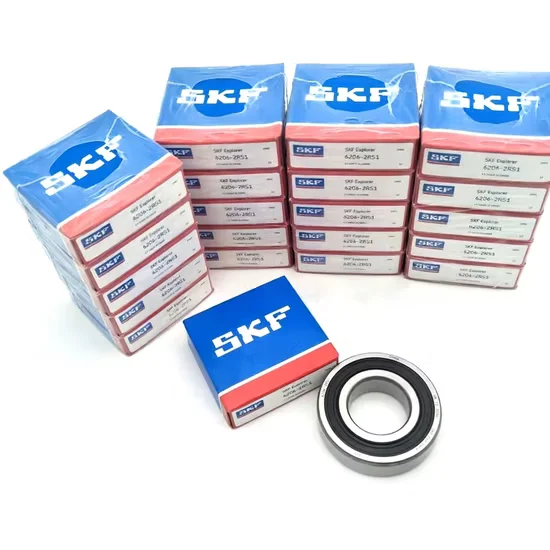 Deep Groove Ball Bearings SKF 6206 Deep Groove Ball Bearing for Electric Tool Heavy-Duty Series View Product
 Spherical Roller Bearing Self-Aligning Spherical Roller Bearing 22208 SKF 40x80x23mm for Wind Power Heavy-Duty Applications View Product
 Spherical Roller Bearing 22218 SKF Spherical Roller Bearing 100x215x47mm for Heavy-Duty Machinery with Self-Aligning Feature View Product
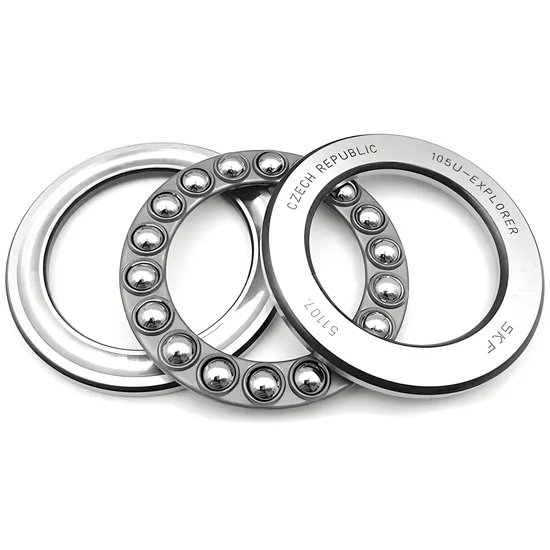 Thrust Ball Bearing High-Precision SKF 51314 51414 Thrust Ball Bearings with ISO9001 Certification for Heavy-Duty Machinery View Product
Related target industries
These notes apply to the following gearbox, reducer and drive shaft service areas.